












- WIADOMOŚCI
- ANALIZA
How the U.S. decision to leave the JCPOA affected energy relations between China and Iran

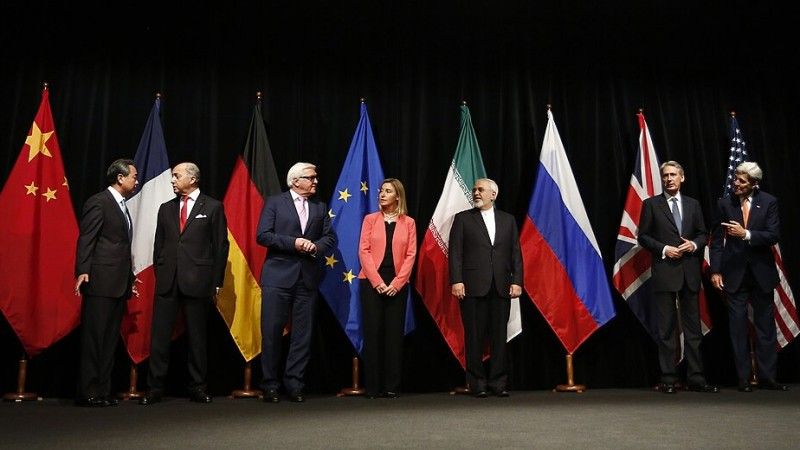
The U.S. withdrawal from the JCPOA in 2018 and the subsequent imposition of unilateral sanctions severely impacted Iran’s economy, halving its oil exports, devaluing its currency, and significantly increasing inflation rates. This move also influenced Iran-China relations, as Iran sought to mitigate economic repercussions by strengthening ties with non-Western countries. Despite China’s substantial financial assets and strategic interests in Iranian markets, the partnership remains constrained by ongoing secondary sanctions and geopolitical complexities. While Chinese-Iranian relations seem asymmetric, weakening this alliance in the long term will underscore the complicated balance of power and economic interests shaping the region.
However, the extent to which the U.S. withdrawal has impacted the relationship is not as substantial as many observers suggest. Contrary to prevailing assumptions, China and the U.S. share converging interests in certain aspects of foreign policy, particularly regarding Iran and Middle East stability. Additionally, Iran leverages its relationship with China to counteract American dominance and advance its interests.
JCPOA Overview
In 2015, Iran and the P5+1 (U.S., UK, France, Russia, China, and Germany) signed the JCPOA to prevent Iran from developing its ballistic missile program by limiting uranium enrichment and reducing centrifuges. The International Atomic Energy Agency (IAEA) was granted access to monitor compliance. In exchange, economic sanctions were lifted, reintegrating Iran into the global economy and stabilizing global oil markets. The JCPOA aimed to reduce Iran’s destabilizing influence in the Middle East.
U.S. Withdrawal
In May 2018, President Trump announced the U.S. withdrawal from the JCPOA, citing violations of the agreement’s spirit. Despite Iran’s compliance, the decision received support from Saudi Arabia and Israel, while France, Germany, Britain, China, and Russia criticized it. This move severely impacted Iran’s economy, nearly halving its revenue, plunging the country into recession, devaluing its currency, and causing record inflation. Iran, the second-largest crude oil producer in the Middle East in 2018, saw its revenue nearly halved due to the sanctions.
Economic Sanctions - Impact on Iran

Impact on Oil Exports
Sanctions reimposed in November 2018 cut Iranian crude oil exports by 80% from April 2018 to October 2019. The „maximum pressure” policy aimed to reduce exports to zero, leading to levels below 500,000 bpd by November 2019. A rebound occurred in subsequent years, likely due to the Biden administration’s less aggressive sanction enforcement and increased Chinese shadow market purchases. Despite stricter measures in 2022, export numbers remained stable.

Economic Consequences
Sanctions have had a devastating impact on Iran’s oil production and exports, preventing needed investment and barring it from legally exporting crude oil. Despite sanctions, Iran increased shipments of crude oil, primarily to China, in 2022 and 2023 (charts 1 and 2). The Iranian economy, heavily reliant on oil production, saw real GDP growth fall to -1.8% in 2018 and -3.1% in 2019, before rebounding to 4.7% in 2021 and 5% in 2023. Inflation soared from 6.8% in 2016 to 26.9% in 2018, peaking at 45.8% in 2022.
The correlation between GDP and inflation highlights the desired state for a country’s economic health and space for development, which is characterized by low inflation and high GDP growth. In 2016, Iran achieved this with an inflation rate of 6.8% and a GDP growth rate of 8.8%. However, after the U.S. left the nuclear deal and re-imposed sanctions, this correlation shifted unfavorably. Sanctions led to high inflation and reduced GDP growth, reflecting a challenging environment for Iran’s economic development.

Frustration over the sanctions is high among Iranians, with the rial plummeting by about 60% and inflation reaching up to 37%. The cost of food and medicine has soared by 40% to 60%, according to EU figures. The currency crisis has constrained Iran’s energy companies and slowed project progress. To cope with sanctions, Iran successfully diversified from oil to non-oil exports, increasing non-oil exports from $753 million in 1979 to $37 billion in 2018. However, new U.S. sanctions in 2019 on iron, steel, aluminum, and copper sectors, made it more difficult to shift from crude oil exports to non-oil exports.
Strategic Shift
The Iranian government has focused on neighboring countries and other Asian states, returning to the „Look East Policy.” In May 2019, the Iranian Deputy Oil Minister stated that the country was selling oil in the „grey market” as a counteraction to sanctions. Sanctions isolated Iran economically, prompting a »resistance economy« approach. Increased global engagement enhanced resilience, maintaining critical imports and exports. Iran has strategically leveraged its relationship with China to mitigate the impact of sanctions. The ongoing competition between China and the U.S. for global supremacy poses significant challenges for Western economic diplomacy. Until oil sanctions are lifted, Iran will likely continue exploiting illicit trade to generate billions of dollars in revenue.
China’s Role
Energy Needs
China, with its impressive growth rate, has driven a surge in oil demand, averaging over 600,000 barrels per day in the last decade. As a net importer since the early 1990s, China relies on global markets for energy needs.

Bilateral Relations
The tense relationship between Iran and the U.S., coupled with the declining presence of Western powers in the Middle East, created a power niche that China has successfully exploited. The absence of a colonial past and principles like „respect for sovereignty” have contributed to positive China-Iran relations. Both countries share a historical sense of greatness and anti-Western sentiments. The energy trade has particularly benefited this relationship, with China’s escalating energy requirements being met by Iranian oil exports.
Energy Relations Dynamics
Oil Trade
The U.S. withdrawal from the JCPOA and reinstatement of sanctions significantly impacted Iran’s oil trade. Despite ongoing sanctions, Iran continued to export more than 1.5 million barrels of oil per day in 2023. China utilized the petro-yuan for transactions, allowing it to continue the oil trade without relying on the U.S. dollar. Although Iran continues to export oil, U.S. restrictions significantly reduce its earnings.


Investment Agreements
Despite China’s substantial financial assets, investments in Iran remain limited due to secondary sanctions and uncertainties surrounding the JCPOA. The 2021 Comprehensive Strategic Partnership (CSP) agreement depends on the JCPOA’s restoration. China’s engagement with Iran lags behind its involvement with other Middle Eastern countries, where it has made significantly larger investments.
Economic Diplomacy and Technological Infusion
Sanctions Evasion
China and Iran have navigated U.S. sanctions through strategic economic diplomacy and technology exchange. China views Iran as a pivotal partner in the Belt and Road Initiative. The partnership includes AI surveillance and internet censorship, bolstering Tehran’s control over its population. This cooperation helps both nations circumvent U.S. sanctions while pursuing their geopolitical and economic goals.
Non-Oil Trade
Sanctions have led to some positive unintended effects. Non-oil exports have risen significantly, resulting in greater foreign exchange diversification. China is Iran’s largest single trading partner for non-oil exports. Iran’s exports to China primarily consist of metal minerals, while China exports manufactured industrial products to Iran.

Global Implications
The JCPOA aimed to benefit the EU by fostering economic relations with Iran and diversifying energy sources. However, the U.S. withdrawal and sanctions disrupted these plans, forcing European companies to halt projects with Iran. Shared goals and common enemies have brought Moscow and Tehran closer. The absence of the JCPOA will likely lead to closer political cooperation between them, directed against Israel, the U.S., and the broader Western bloc.
Sanctions created strategic opportunities for China and others, limiting Iran’s Middle East activities and benefiting countries like Saudi Arabia and Israel. The decline in Iran’s oil exports allowed other producers to gain market share and benefit from higher prices. The withdrawal reinforced U.S. alliances and showcased a commitment to regional partners. China navigated supporting Iran while avoiding U.S. sanctions, highlighting the complexities of global diplomacy.
Conclusion
The U.S. withdrawal from the JCPOA in 2018 profoundly transformed the dynamics of relations between China and Iran. This decision led to geopolitical shifts, compelling Iran to seek non-Western alliances and adapt its economic strategies under strict sanctions. Despite these pressures, Iran’s resilience enabled it to sustain crucial oil exports and strengthen economic ties with China.
China’s calculated engagement with Iran, navigating U.S. sanctions, underscores its broader geopolitical strategy and highlights its strong need for energy, driving its commitment to ensuring energy security. This dynamic has strengthened bilateral relations and highlighted the balance of power and economic interests shaping the international order. The evolving China-Iran relationship demonstrates the flexibility and adaptability required in contemporary geopolitics, where shared goals and mutual interests can forge strong alliances despite external pressures.
Assumptions
China’s strategic diplomacy, characterized by its balancing act in the Middle East and cautious engagement with Iran, demonstrates a sophisticated approach to international relations. China’s ability to offer conditional support to Iran while maintaining a keen interest in JCPOA negotiations exemplifies its valuable economic diplomacy. Furthermore, China’s interest-driven approach, avoiding outright leadership, reflects a calculated strategy prioritizing its national interests.
Iran’s resilience to sanctions, reinforced by its engagement with the global economy, reflects its strategic response to international pressure. The concept of a „resistance economy” highlights Iran’s capacity to adapt strategically, enhancing geographic and product diversification to sustain its economy. This resilience poses significant challenges for global economic diplomacy, particularly given the anti-Western stance of both Iran and China. Moreover, there is also potential for Iran to partially compensate for the loss of Russian oil in the EU.
Author: Joanna Benecka
Joanna Benecka focuses her research interests on the intersection of energy security and transformation, climate challenges, and economic diplomacy, with a particular focus on competitiveness; geopolitics, notably regarding the EU, China, Polish-EU-Chinese relations, and challenges ahead. Through the study of these intersections, she provides a rare analytical perspective on the challenges reshaping international security and defining modern global relations.
Joanna brings a unique, comprehensive analytical perspective, driven by a multidisciplinary educational background as well as working experience. She is currently completing her LL.M. in EU Energy and Climate Law at the University of Warsaw. Having graduated in Economic Diplomacy as well as Finance and Banking from the Warsaw School of Economics (SGH), she brings a deep practical understanding of Chinese diplomacy and strategy, allowing her to deliver broad-spectrum analyses on European and global risks.


