












- WIADOMOŚCI
- ANALIZA
The growing Russian threat and NATO’s rising eastern flank are transforming the regional security architecture

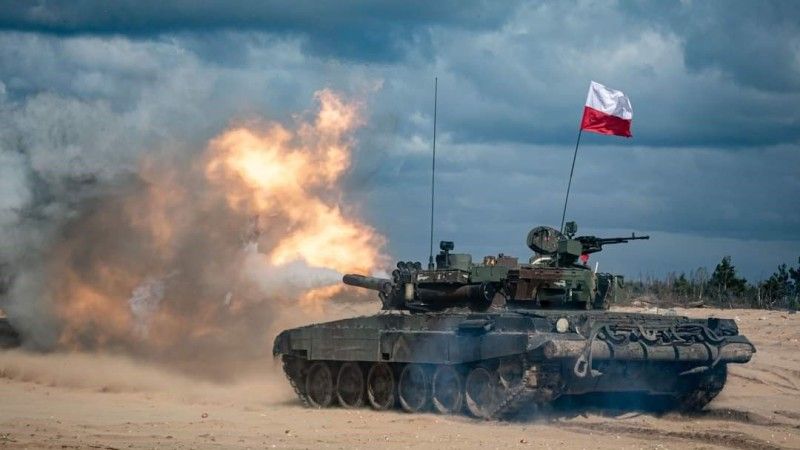
Moscow’s revisionist ambitions, coupled with its rapid military modernisation and large-scale exercises, are prompting a calibrated response from NATO allies, particularly along the Alliance’s eastern flank.
Russia continues to project military strength, especially near Central and Eastern Europe’s borders, signalling a growing threat to the region. At the core of this strategy lies the rising scale and frequency of military exercises conducted in key strategic areas such as Kaliningrad, Belarus, and the Black Sea region.
Beyond enhancing the Russian army’s operational readiness, these activities are designed to pressure neighbouring states psychologically and reinforce Moscow’s influence across the region. The intensified drills and expanding military presence underline Russia’s ambition to dominate this part of Europe while showcasing its capacity for rapid military response.
Kaliningrad and the Black Sea: Russia's key military strongholds
One of Russia’s key defence priorities is expanding its military presence in Kaliningrad, a strategic exclave bordering Poland and Lithuania, directly adjacent to NATO territory. The region plays a critical role in maintaining Russia’s influence along the eastern flank and enables rapid military response to potential threats from the West.
Kaliningrad hosts, among others, Iskander missile systems capable of carrying nuclear warheads, making them a central element of Russia’s offensive arsenal. Their long-range strike capability gives Moscow a significant strategic advantage over neighbouring states, while signalling to NATO and Central and Eastern European countries the growing scale of the threat. Their deployment in Kaliningrad also places increasing pressure on neighbouring states’ security policies, forcing them to adjust their defence strategies to the rising risk of military escalation.
The Black Sea region remains one of the most sensitive areas for Central and Eastern Europe’s military security. In recent years, Russia has significantly expanded its military presence in Crimea, which, following its 2014 annexation, has become one of the region’s most strategic strongholds. Maintaining a powerful military presence across the Black Sea, including around Donbas, as well as in other strategic areas such as Abkhazia and South Ossetia, reflects Moscow’s broader military strategy aimed at controlling this highly vulnerable zone.
Military exercises in the region, involving elite missile and airborne units, serve not only to reinforce Russia’s military dominance but also to pressure neighbouring states. In response, these countries have sought to strengthen their defence partnerships, particularly with NATO, as part of their broader security strategy.

Russia's military conventional and nuclear modernisation efforts
Understanding Central and Eastern Europe’s military security requires close attention to the rapid shifts in Russia’s defence policy over recent years, which have significantly altered the region’s balance of power. Faced with growing strategic challenges, Moscow has sharply increased investment in military modernisation, pursuing an ambitious effort to transform its armed forces into a modern military capable of conducting large-scale offensive operations.
These investments include the development of advanced weapons systems, particularly long-range missiles capable of striking strategic targets with high precision across vast distances, alongside expanded cyber warfare capabilities, now a critical component of modern conflict. The modernisation drive has also extended to Russia’s navy through the development of new combat vessels and missile defence systems designed to secure Moscow’s interests both at sea and in the air.
Russia’s modernisation of both its conventional and nuclear arsenal, including the expansion of new medium-range missile systems and advanced missile defence capabilities, has become one of the central pillars of the Defence Ministry’s strategy. The development of new weapons systems, particularly cruise and hypersonic missiles, reflects Moscow’s response to rising geopolitical tensions.
From Russia’s perspective, military modernisation is designed not only to strengthen its defensive capabilities, but also to reinforce deterrence against potential adversaries, particularly amid concerns over NATO’s expansion and its growing presence along the Alliance’s eastern flank. The expanding deployment of advanced missile defence systems such as the S400 and S500 further enhances Russia’s protection against missile attacks while helping Moscow maintain a strategic edge over its rivals in this domain.
See also 

Military recalibration of Central and Eastern European states amid the growing Russian threat
In turn, for Central and Eastern European states that have long faced a growing threat from Russia, the intensification of military activity, particularly in the context of conventional and nuclear modernisation, represents a major challenge. In a region marked by a history of recurring tensions and armed conflict, Russia’s military build-up compels countries such as Poland, Lithuania, Latvia, Estonia, Ukraine, and other Baltic states to adjust their defence strategies accordingly.
One of the first countries to respond to emerging military threats was Lithuania, which decided to reintroduce compulsory military service. Like other states in the region, Lithuania concluded that only by mobilising national military resources could it effectively respond to rising external threats. A key element of this policy is not only increasing the size of the armed forces, but also preparing conscripts to perform a range of defence roles both domestically and abroad. Above all, Lithuania places strong emphasis on developing military capabilities that enable rapid response to potential crises, including in close cooperation with NATO.
For its part, Poland is focusing on modernising its armed forces, expanding trained reserve forces, and strengthening command structures to enable rapid response when needed. In particular, Poland is developing advanced reserve training systems designed to prepare sufficient human resources for potential mobilisation. Like other countries in the region, it recognises that maintaining combat readiness alone is not sufficient unless it is embedded in strong international cooperation and deeper integration of defence policy with NATO allies.
See also

Broader NATO response: force deployments, expanded basing, and enhanced strike capabilities
In response to the growing military threat, NATO member states are intensifying efforts to adapt their defence capabilities, increasing their military presence along the Alliance’s eastern flank and implementing new mechanisms of military cooperation. Russia, in turn, is not remaining idle and continues to strengthen its forces along its western borders, further exacerbating tensions in the region.
In this context, NATO is not only deploying military units but also conducting intensive exercises to improve its ability to respond rapidly in the event of escalation. A key role in this strategy is also played by the expansion of military infrastructure. Increasing the number of military bases, along with the development of modern facilities, is essential to ensuring adequate conditions for the stationing of NATO forces and the execution of a wide range of defence missions. The establishment of new bases in Central and Eastern Europe, including Poland, the Baltic states, and other countries in the region, represents a strategic investment aimed at enhancing the Alliance’s capacity for rapid response to threats posed by Russia.
To achieve these objectives, NATO is also strengthening the development of advanced missile defence systems, which have emerged as a central pillar of the region’s security architecture. These systems are designed to neutralise potential threats stemming from Russia’s increasingly modernised missile arsenal. Moscow’s development of long-range and medium-range missiles capable of threatening NATO’s eastern flank has therefore pushed the Alliance to intensify its focus on cutting-edge missile defence technologies.
Among them are systems such as Aegis and THAAD (Terminal High Altitude Area Defence), which form part of modern missile defence architectures designed to provide adequate protection against missile attacks, including ballistic missiles that can be launched from Russian territory. These measures constitute a key element in ensuring security and stability in Central and Eastern Europe and aim to minimise the risk of potential missile strikes against NATO member states.


