












- WIADOMOŚCI
- WAŻNE
Parliamentary elections in Bulgaria. Risky candidate wins

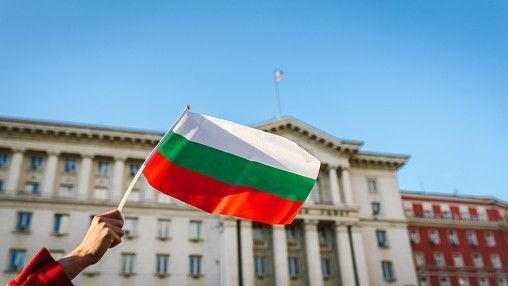
All votes have been counted in Bulgaria. The Central Election Commission announced the victory of former President Rumen Radev’s Progressive Bulgaria party. Should we expect Bulgaria to move closer to Russia?
In Sunday’s snap parliamentary elections, the former president’s party won 44.6 percent of the vote. Although four other political groups are expected to enter parliament, independent analysts estimate that Progressive Bulgaria will secure an outright majority—between 129 and 131 seats in the 240-member National Assembly.
The leader of the winning party assured that he would “do everything possible to avoid the need for yet another snap election in Bulgaria.” Sunday’s vote was the country’s eighth parliamentary election since 2021 and the seventh held ahead of schedule.

During Monday’s vote count, Rumen Radev expressed his intention to pursue dialogue with Russia, describing it as “a phenomenon increasingly becoming part of the European political mainstream.” According to the potential future prime minister, maintaining diplomatic ties with Moscow could play a key role in shaping Europe’s security architecture. He also mentioned the possibility of obtaining affordable energy resources, while opposing further support for Ukraine.
Radev’s remarks were met with approval by Russian authorities in the Kremlin. “We are, of course, impressed by Mr. Radev’s words (…) as well as those of some other European leaders expressing readiness to resolve issues through dialogue—a pragmatic dialogue with the Russian Federation,” Kremlin spokesman Dmitry Peskov said on Monday.
For now, a pro-Russian shift in Bulgaria is likely to appear. Rumen Radev’s willingness to confront the European Union remains uncertain. The Spanish dailyEl Mundo notes that while Radev can indeed be described as pro-Russian, his stance is somewhat nuanced: “He does not question Bulgaria’s belonging to the West, though he criticises the fact that Brussels and major European capitals pay too little attention to the interests of Black Sea countries and to Bulgaria’s energy dependence.”


