- WYWIADY
- KOMENTARZ
- WIADOMOŚCI
Gamifying the frontline: 59th brigade on eBonus and social media [INTERVIEW, Part 1]

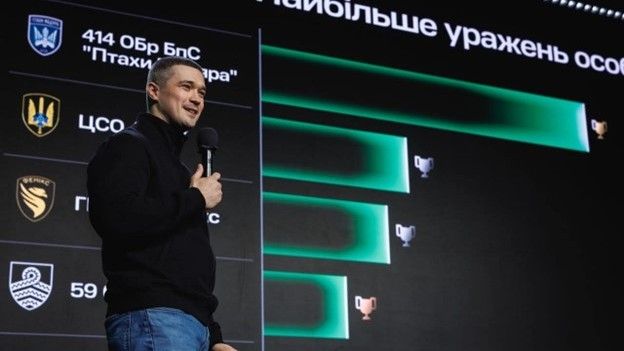
Photo. ArmyInform
In the modern theater of war, a drone’s lens is as vital as its payload, and branding has become a weapon of frontline effectiveness. The 59th Separate Assault Brigade of the Unmanned Systems Forces of Ukraine, known as the „Steppe Predators,” is redefining Ukrainian resistance by replacing Soviet-style recruitment with high-octane digital storytelling and a tech-first philosophy. This article, based on an exclusive interview with the unit’s media representatives, explores the „Digital Architecture of Resistance” – a unique fusion of military branding and lethal drone innovation that is shifting the paradigm of how a modern volunteer army is built and sustained under fire.”
The war in Ukraine is fundamentally transforming the media landscape: within the structure of the Armed Forces, genuine frontline „marketing agencies” are being born. In a world where public attention is synonymous with access to resources, survival belongs to those who master Digital Darwinism. As analyst Brian Solis noted, this is a state where technology evolves faster than an organization’s ability to adapt. For the military, this has become a fundamental truth: a unit that cannot build digital trust is destined to run short of people and firepower.
At the cutting edge of this evolution is the 59th Separate Assault Brigade of the Unmanned Systems Forces of Ukraine (ukr. 59-та окрема штурмова бригада безпілотних систем, 59-ta okrema shturmova bryhada bezpilotnykh system), known as the „Steppe Predators” (ukr. Степові Хижаки, Stepovi Khyzhaky). More than just a unit that has held the Pokrovsk axis for four years without rotation, they are a digital leader, consistently ranking in the Top 10 of nearly 400 units in the state-run eBonus performance system. Their efficiency is striking: 11 enemy tanks destroyed in a single month, and on March 20, 2026, a historic achievement - the first confirmed destruction of a Russian Ka-52 „Alligator” ($16M) by a fiber-optic FPV drone, a system immune to electronic warfare.

Photo. official Telegram channel @stepovi_hyzhaky_59
Social media has become a fully operational battlespace. Today, brigade channels are tools for recruitment, fundraising, and psychological warfare. Comment sections are no longer passive. They are active zones where potential recruits ask questions, donors see immediate results, and Russian information operations are countered with verified footage of confirmed losses. The 59th Brigade has built one of the most operationally active digital presences among Ukrainian combat units.

Photo. Source: own analysis based on official Instagram profiles.
In an interview with Weronika Barankiewicz, Junior Lieutenant Pavlo (callsign „California”), head of the 59th Brigade’s communications department, reveals the mechanics of this „military corporation of the future.” Here, a new paradigm of war prevails: drones have established a 25-kilometer „kill zone” where movement on foot is nearly impossible. In these conditions, professional media visibility serves as an „island of security” for potential recruits - proof they are joining an organized structure that values every soldier. From high-quality video content to their own quarterly magazine, marketing has evolved into a strategic asset that converts directly into lives saved.

Weronika Barankiewicz: Pavlo, could you define your role within the brigade - both your official designation according to documentation and the actual tasks you perform?
Pavlo (callsign „California”): I am a Junior Lieutenant of the Armed Forces. I serve as the Acting Head of the Communications Section for the 59th Separate Assault Brigade of Unmanned Systems.
Does your work require you to be physically present at the Zero Line, or are you primarily based in the support zone?
Currently, my responsibilities have shifted toward managerial and strategic planning; therefore, I am less frequently present on the Line of Contact. Today, reaching the Zero Line on foot, covering a depth of up to 25 kilometers, is critically difficult, if not impossible. This is the Kill-zone. Back in 2022–2023, we could move there at full height, and vehicles were utilized. It was a different war then. There were fewer drones, and the threat from artillery was more predictable to monitor.
In which direction is your brigade currently operating?
We have been stationed on the Pokrovsk axis for the fourth year now without rotation. We have „shifted”, that is the key phrase, but we have not retreated. These shifts occurred to prevent flanking maneuvers when the enemy broke through adjacent units, forcing us to collectively withdraw to more advantageous positions.
You say „collectively.” As a media specialist, can you be called upon to engage in combat in a critical situation?
Yes. We function like a small media agency, but I am first and foremost a serviceman with competencies in all areas. I always carry my weapon with me, and different situations do arise.
How did you join the „Steppe Predators”? Was this a conscious choice, or were you assigned via a formal deployment order?
It was a conscious choice. When the full-scale war began, my wife and I spent the first week trying to be useful where we were. We had a large vehicle (a pickup truck), which we used to transport essentials: sandbags for checkpoints, food for surgical wards. Later, we began traveling across the entire Line of Contact with a team of artists, focusing on filming, monitoring the psychological state of the troops, and handling logistics.
In November 2022, we officially joined the 59th Brigade, having first established contact with them on the Kherson axis. Nearly six months after joining, we began actively developing the media department, as systematic communications were almost non-existent at that time. Media outlets were queuing up to reach the units, but the process wasn’t scalable. We realized we needed to launch recruitment programs and fundraising campaigns - effectively building our own internal „advertising agency” within the unit.

What was your profession before the war? Was it also in the media sector?
Yes, I have worked in the media sphere, communications, and PR for about 10 years. I was constantly learning and keeping up with the relevant literature, so I was fully versed in these processes.
What exactly do your duties entail? Is it creating videos, graphics, or communicating with the media? After all, in the historical context of previous wars, such a role effectively did not exist.
Beyond managing social media, we have offline products - for instance, an internal magazine that we publish quarterly. In it, we compile professional photography and stories from soldiers regarding their specific areas of operation. Currently, we have an issue in print focused on UAS and the medical service.
We also have a mission to photograph every single one of our service members. In today’s digital reality, this is vital for those who are active on social media, but more importantly, it creates a living bridge to their families. We capture them as they truly are - exhausted after a shift, yet smiling, worn down, but still standing.
These images allow families to feel a direct connection to their loved ones« daily reality. However, there is also a somber duty we fulfill: if a soldier is killed in action, we refuse to let their families be left with nothing but blurry screenshots. Through professional visual legacy management, we ensure that the memory of their courage is preserved with the dignity and clarity it deserves.
Where do you draw the line between a viral marketing post and operational security (OPSEC)? How do you resolve the dilemma: releasing high-impact content versus maintaining security? Perhaps there were instances where you observed mistakes in other units?
I have a categorical rule: if our activities lead to someone being injured or killed, it is a total failure. Therefore, we verify everything meticulously. It is better to show nothing at all, apply more blurring, or alter the shots than to allow for tragic consequences.
Regarding other units - yes, there have been cases where I noticed errors and warned colleagues that they had „dropped the ball” on something. First and foremost, our work is about preserving life.
See also 

I noticed that your strategy is quite direct: you speak openly about the number of enemies neutralized, which sounds motivating. Meanwhile, other brigades sometimes opt for „softer” content, such as medical stories. Is this a deliberate „branding” for the brigade? Who is behind this?
There is an interplay between internal and external components here. Soldiers want to see their achievements recognized. We cannot be compared to units that only have a drone component, as we also have infantry. Our task is to highlight the activities of the people performing incredibly difficult work.
Take the situation in Novopavlivka, for example: our assault groups entered the settlement on foot with small arms and cleared a breakthrough. In four days of operations, they neutralized 15 personnel (36 in total) and took 6 prisoners. Today, in an environment dominated by drones, entering on foot is an incredible feat of heroism. That is why we call things by their names: destruction, liquidation. It is a reminder that people are performing arduous, technical labor.
Are these stories published with a specific delay due to confidentiality, or are there instances of immediate reaction?
It varies. The situation in Novopavlivka entered the public sphere immediately because of an enemy disinformation campaign regarding a „Russian breakthrough” at the seam between units. We had to react instantaneously to counter this narrative in the information space.
However, there are operations we do not disclose for security reasons, to prevent the enemy from analyzing our tactics and procedures. Generally, we only release information up to a certain level of sensitivity.
See also

Do the Russians monitor your pages? And do you utilize content as a tool for manipulation or to intimidate the enemy?
Naturally, information warfare - encompassing both countermeasures and proactive operations - is ever-present. These tasks are carried out by specialized units as well as directly by the line units of the Defense Forces. Preventing sensitive information from entering the public domain is, in itself, a tool for countering Russian propaganda.
Russia is actively engaged in what we call „flag-planting” (ukr. флаговтикування, flahovtykuvannya). As soon as they seize any fragment of land or a building, they immediately begin filming the installation of a flag and disseminating it through the media to claim the objective has been captured.
We respond to this both in the public sphere and on the battlefield. For example, if a settlement spans 20 square kilometers and the enemy has only reached the first house, we conduct a drone overflight and reveal the reality: the house is destroyed, the flag has burned, and the adversary is no longer on-site. This is an effective way to swiftly and visually dismantle their „sensations.”

Photo. Telegram / @stepovi_hyzhaky_59
To what extent does the brigade’s public profile affect the success of fundraising campaigns? Can it be argued that a media-savvy unit is inherently better equipped with resources?
A high-profile unit represents, first and foremost, public accountability and trust. When a person provides financial support, they contribute a part of themselves with peace of mind, knowing exactly where those resources will be directed. Furthermore, being in the public eye imposes an obligation: we cannot afford to act recklessly, disrespect others, or engage in deception.
Healthy marketing competition is also at play. Through radio, television, and targeted advertising, an „island of security” is formed within the subconscious of a potential recruit. The individual realizes: if they are to join the Defense Forces, this is the specific unit they should choose.
End of Part 1
Author: Weronika Barankiewicz