












- ANALIZA
- WIADOMOŚCI
Poland at the epicenter of the „Silent Front”

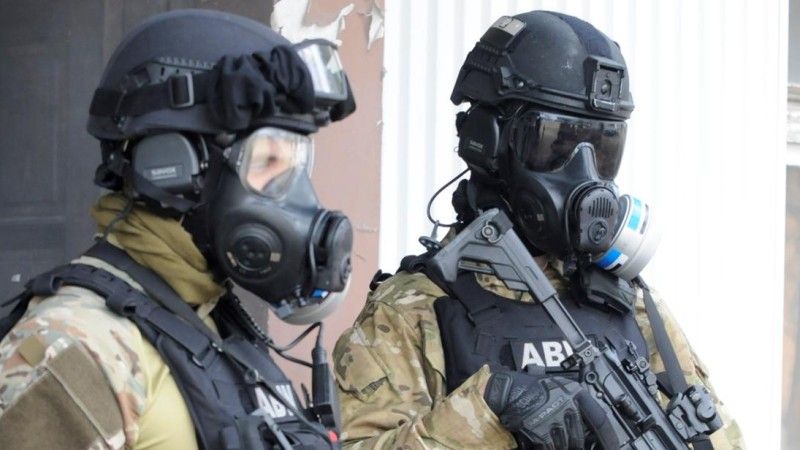
For years, Russian intelligence services have been conducting operations in Europe aimed not only at obtaining information but also at causing destabilisation and posing threats to the security of critical infrastructure. Poland is at the epicentre of this so-called „Silent Front,” and now, thanks to a unique documentary, we have learned more about one of the high-profile cases related to it.
TVP (Polish Television) premiered (June 10, 2026) the documentary „Silent Front,” an important attempt to highlight the challenges of subversion and sabotage facing Poland and the entire region. Thanks to substantive cooperation with the Internal Security Agency (ABW), the program primarily outlines a complex topic at the intersection of counterintelligence activities, but also, to some extent, addresses terrorist threats. After watching the documentary, we can expect that „Silent Front” will be more than just a signal for a change in the approach to such educational and awareness-building tools among citizens, not only in Poland.
On the front line of sabotage and diversion
It is especially true given that it complements the recent publication (after a gap of more than a decade) of a public summary of the ABW’s work. It’s worth noting that this also provided a crucial element of reflection on what is actually being faced not only by the officers themselves but also by the country’s society, directly on the front line of this „silent front.” At this point, we should also suggest that the state support similar materials in the future, including entities targeted by Russia. It would be beneficial if „Silent Front” were continued and expanded to cover additional themes, for example, threats to critical infrastructure, facilities related to the state’s communications system, and the threat of recruiting agents to gather data on the Polish Army or allied forces.
We should emphasise that the material discusses „the mechanisms for recruiting saboteurs, the activities carried out against Poland, and their consequences. (…) The creators used materials from the Polish secret services, which show what this type of activity looks like on the territory of the Republic of Poland and in neighbouring countries” (material description). This was achieved by revealing the details of a specific case involving the planting of four packages containing flammable material, which were intended to cause terrorist damage within air transport.

Russia has long since overstepped its bounds.
At the outset, it should be emphasised that Russia has long since raised its level of espionage to the levels known from the Cold War across Europe. However, the authorities in Moscow also gave the green light to simultaneously expand covert operations, including sabotage and diversion, assassinations, and cyberspace operations, accepting the increased risks inherent in such operations, as the case presented in the film clearly demonstrates. Simply put, flammable agents and civil aviation unfortunately remind us of dark times from previous years, when the world was battling threats from al-Qaeda and Daesh (the so-called Islamic State), not to mention the recurrence of even older cases.
Therefore, increased prevention is becoming a necessity, and this requires more than just cooperation between services and citizens. We should note that similar tools in the form of professional materials have been used by secret services and police forces in various parts of the world, especially when considering countering terrorist threats (terrorist prevention). For example, back in 2013, the FBI’s counterintelligence agency recorded a documentary titled „Game of Pawns,” depicting the fictionalised story of Glenn Duffie Shriver’s recruitment by Chinese intelligence. It is intended to emphasise that it serves as a warning and awareness-raising tool for others who might find themselves in a similar situation to the titular character, who was a pawn in a game of intelligence that ultimately overwhelmed him.
The Polish „Silent Front” documentary also conveys the message that engaging in a game with foreign intelligence services to reap material benefits (quick money) is a sure path to ultimate disaster. Importantly, the filmmakers did not focus on a macro scale, depicting the conventional actions of operational officers and the struggles of state intelligence agencies, but rather on individuals—executors at the very bottom of the enemy intelligence agencies« operational processes.
The Psychological Side of Recruitment
These proverbial pawns in the game (referring once again to the FBI material) are both a warning and a lesson on what to pay attention to. The film explores the psychological aspects of recruitment and running this type of agency, and also highlights indicators that a given individual has been entangled in highly dangerous processes, for which the only sensible solution is to report it to counterintelligence. For foreign intelligence agencies, pawns are exploited to their full potential and replaced.
It’s no secret that the key factor (for example, within the MICE scheme—money, ideology, Kompromat/coercion, and ego) is finance. Note that the film clearly highlights the various stages of dependence on new payments for ever new forms of activity, until the recruit is fully controlled. It seems classic, but here we see a reminder of the importance of such methods for new generations. Moreover, it’s important to note that the agent is being drained to their limits, ultimately failing to care for their future at any stage of their operations, accepting their loss.
Most importantly, the creators, fortunately, don’t overcomplicate the message; on the contrary, they convey it to the widest possible audience. It is a 21st-century standard, currently observed in the information and cognitive domain. It features a dynamic narrative, the use of expert voices (directly from the ABW and the prosecutor’s office), and the emphasis on the practical aspects of the case, clearly and without unnecessary sensationalism. It’s worth noting here that television has gained the support of the ABW. Thanks to this synergy, the film can use visual and narrative tools, but within the broader context of prevention and professionalism.
It’s important to emphasise that it’s not just about sensationalism or strong emotions, but about understanding the threats. Note that the film ends with an important message for those who may encounter similar forms of foreign intelligence activity in their lives, demonstrating that this is not fiction or a distant world of intelligence games, but a world with many contacts with ordinary people. It is particularly true when it comes to risk groups (like the Ukrainian minority), which the Russians are currently heavily targeting, awaiting both recruitment opportunities and the exploitation of various types of individuals offering their services.
Addressing Risk Groups
Such targeted outreach to potential hostile agents or to one’s own sources is nothing new today, and it’s even standard. Note that it was used, for example, in CIA materials directed at Russians and Chinese. We must therefore recognise that counterintelligence agencies, when identifying risk groups, should also utilise this type of transparent communication, while simultaneously attempting to reach individuals who speak a different language, for example, by using publicly available, widely broadcast content. It may undermine, or attempt to undermine, a certain operational comfort for the Russian side and its allied services, both in the case of new communication means and in the still-dominant television and radio broadcasts. One can only hope that „Silent Front” will not go unnoticed in the social and media discourse in Poland and beyond.
We must also acknowledge that the creators of the material communicate with individuals who may be bystanders witnessing anomalies in their surroundings. It isn’t just a warning to those who encounter Russian or Belarusian services, but also to those whose information may be valuable to Polish counterintelligence. The „Silent Front” material is valuable in this context as well. Figuratively speaking, by presenting certain signals, or even a catalogue of them, it’s possible to spot them in our surroundings. And there’s nothing more effective than even a small signal that can lead counterintelligence officers to successful operations in the future.
Again, it’s important to recognise that this is part of long-term prevention, which should rely on modern forms of communication and dialogue with society. For example, the British services developed such tools for terrorism prevention and achieved significant results in their activities, often collaborating with channels, podcasts, and programmes produced by the BBC. In Poland, similar approaches can also be observed in combating terrorist threats, particularly in the interesting and important 4U! project by the ABW. Hence, counterintelligence prevention, including combating sabotage and subversion, can draw lessons from these experiences.
See also 

New Technologies and Old Rules
Note that the perpetrators of the entire conspiracy are embedded in new communication formats – encrypted messaging and applications (supported by old-fashioned methods of HUMINT). This is valuable because it highlights the importance of this type of technology for rapid recruitment, conducting even mass (and at the same time, somewhat one-off) remote espionage. It’s also clear that the consequences for foreign intelligence officers are mitigated, while the risk falls on the agents in the field. This is perfectly captured by the end of the video, which shows the ongoing court case.
A certain digression is necessary, given the importance of smartphones and phones in the entire case. We must understand that our country’s SIGINT capabilities are crucial, and investments in this aspect for counterintelligence are downright critical. Simply put, working with modern solutions that give officers access to elements of hostile intelligence communications can save not only property but also literally life and limb.
The information that two of the six charges used were intended for testing purposes should also be taken with caution. It suggests a simple pattern: the Russians will be modifying their tactics even more than the terrorists of the early 20th century. It is possible thanks to the Russian state’s institutional resources and intelligence services, as well as the extensive use of agents depicted in the material. The scale of threats observed, for example, solely in Ukraine, also encompasses our own countries, particularly Poland and the Baltic states.
The „Silent Front” thus becomes an illustration of the challenges facing the Polish counterintelligence service, led by the Internal Security Agency (ABW), and reinforces the need to strengthen the services (in terms of personnel, finances, equipment, and legal resources), demonstrating that we likely face years of similar struggles against an adversary determined to break down all barriers.
The announcement of a preventive counteroffensive?
Moreover, it’s important to emphasise another key message from the material: the enemy can be defeated. This refers to the ability to cooperate with allies (from EU/NATO), a significant strength for any country. It’s worth noting that the case depicted in the „Silent Front” material had regional connections, extending even to the Iberian Peninsula. The logistics are both simple in terms of tools and the means used to reach the target, and complex in terms of territory. Furthermore, the other side makes mistakes; it’s not a master of the multidimensional game of chess, as is often portrayed in Western propaganda (as during the Cold War).
Simply put, our counterintelligence is not defenceless. Another element is the human errors the Russian-acquired agents themselves make and will continue to make. Even the best encrypted communications and well-developed tactics don’t guarantee that the perpetrator won’t collapse under psychological pressure. In summary, „Silent Front” is, above all, a valuable addition to the process of building state resilience given the current scale of threats. It aligns with new models of public information but also serves as a link in prevention and counterintelligence.
Its effectiveness could be strengthened by further materials of this type, combined with a broader social and media debate. However, we can be pleased that the Internal Security Agency (ABW) in particular has decided to take such a significant step in expanding its strategic communications portfolio. A broader voice is needed from Poland’s largest service, responsible for counterintelligence and counterterrorism operations in the public sphere, following the example of many Western services.
However, a certain counteroffensive is visible, as we mentioned at the beginning – the latest report, social media activity, and even a new website. And once again, we would like to see further episodes from Polish television, this time focusing on different themes. It is especially true given the two major challenges we face today: sabotage and subversion, as well as youth radicalisation. In both cases, preventive measures require a diverse range of channels (new media, old media) and carefully crafted, valuable content.


