












- WIADOMOŚCI
Polar power play: China, Russia and the race for the Arctic (Part I)

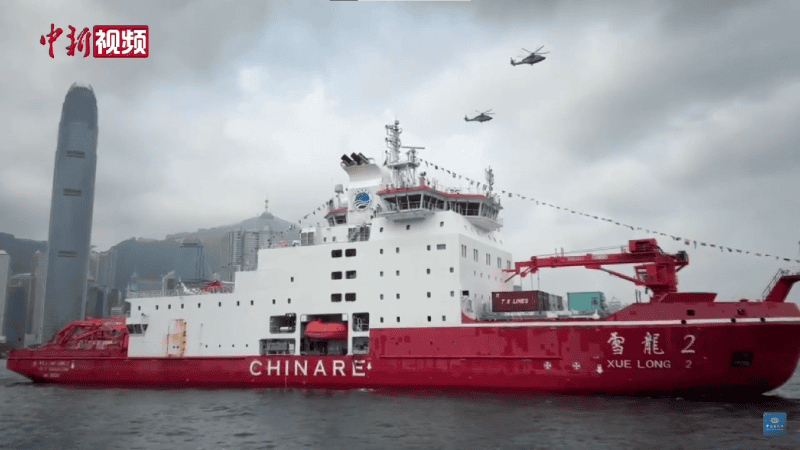
Photo. Wikimedia Commons
Russia and China are often perceived more as allies than rivals, which is especially visible in the context of the war in Ukraine. This cooperation is based on chosen partnership and a strong politico-economic calculation aimed at creating an alliance against the influence of the United States. In the long term, it may more broadly concern the military sphere. Both the Russian and Chinese sides see attempts by Western countries, above all the USA, to weaken Beijing–Moscow cooperation — both view Washington as a threat.
This was stressed by Vladimir Putin in an interview with NBC, where he accused the reporter of asking leading questions, as well as by Chinese Foreign Minister Wang Yi during a meeting with Sergey Lavrov. Wang Yi emphasized that the strategic partnership between the states must be continued, though both sides are aware of the benefits and risks this entails. Both countries, even for reputational reasons, will try to maintain these relations, because this creates an alliance against the United States but also against the countries of the European Union and NATO. In June 2021 a declaration was also made to extend the 2001 Treaty of Friendship; their cooperation over the past 20 years was assessed positively. On 4 February 2022 the leaders of Russia and China, shortly before the aggression against Ukraine, announced in a joint statement a „no-limits friendship” which, from a historical perspective, „is by no means self-evident.”
The most important shortcoming in these relations is that the Russia–China alliance is not fully symmetrical in terms of the benefits obtained. Evidently, China has a greater potential for possible development and has already dominated Russia. As a result, Moscow has become a convenient energy hinterland for Beijing. It is also worth stressing that in 2020 Russian non-energy exports (metal products, foodstuffs and machinery) to China amounted to $16.4 billion. Moscow is primarily interested in the military dimension and in maintaining strong influence in former Soviet republics, e.g., in Central Asia. That latter region is also an area where Chinese politico-economic influence is being built. The People’s Republic of China is interested in the economic dimension and in building its position through economic dependencies and by securing the safety of projects such as the Belt and Road Initiative.
The purpose of this article is to present the political and economic situation in the context of practical actions undertaken by Russia and China in the Arctic, as well as the individual efforts of these states to attain a dominant role in the region. The essential content refers to political and economic aspects. The publication omits a detailed discussion of the military aspect; it is only mentioned in the context of the potential of the countries indicated and that of the United States. The findings of the study are based on an analysis and synthesis of official documents, academic and specialist publications, and the practical effects of political decisions. Using qualitative methods, the authors assessed the situation of the states striving to achieve national goals in the Arctic as a case study. The article consists of an introduction, substantive subchapters and final conclusions.
International Cooperation, Opportunities and Challenges
For the People’s Republic of China an important issue is the search for new sources of raw materials that support the country’s rising international position and its economic development, which matters for domestic policy. The strength of Chinese power depends on sustained economic growth affecting the state’s capacity. Given that diagnosis and the huge involvement of the Chinese economy in projects around the world, all economic activities related to the Middle Kingdom must be carefully analyzed. In 2018 China already stressed that it has important interests in the Arctic, whose maritime routes are part of the Polar Silk Road — an element of the Belt and Road Initiative. This relates not only to trade routes but also to the need to accelerate the shipment of raw materials and reduce costs, which are an essential component of the Chinese economic system. China’s access to Arctic routes, cooperation with states that possess rights to operate in the Arctic, conducting scientific research, and influencing the making of rules in the region can substantially contribute to the realization of China’s economic goals.
The use of Arctic sea lines of communication (Sea Lines of Communication, or SLOCs) could reduce the role of the flow of goods through the Strait of Malacca and the Indian Ocean — routes that are controlled and could be blockable by the US Navy. Because of the need for constant monitoring of the situation in the Arctic, the Middle Kingdom is a member of organizations such as the International Arctic Science Committee (IASC), the International Maritime Organization (IMO) and the Intergovernmental Panel on Climate Change (IPCC).
China also has observer status in the Arctic Council, which at present is chaired by the Russian Federation through 2023, although Russia’s aggression against Ukraine affected a suspension of the Council’s activities. The planned resumption of the Council’s activities without Russia is practically unworkable. This is influenced by the fact that the Russian Arctic coast is the longest when compared to the coastlines of other Arctic states. China’s institutional membership allows it to monitor the situation in the region and to partly legitimize the People’s Republic’s activities within various projects. Very interesting are those areas of the Arctic where Chinese firms invest in Russian attempts to extract oil and gas as a result of global warming. This has made natural resources more accessible and activated navigation in the Arctic Ocean. Four groups of countries interested in the Arctic can be distinguished. The first group comprises states with direct access to the Arctic Ocean and priority in resource extraction: Russia, the United States, Canada, Denmark and Norway. The second group consists of states within the Arctic Circle, such as Iceland, Sweden and Finland. The third group is defined by actively pursued Arctic policies and includes NATO and EU member states. The fourth group comprises East Asian countries such as China, Japan and South Korea.
Especially the United States became interested in the Arctic in reaction to Russia’s active measures, including the militarization of the region. The „Summary of the 2018 National Defense Strategy of the United States of America” lists long-term strategic competition with Russia and China as a priority; however, it does not specifically relate this competition to the Arctic. In contrast, the Report for Congress from June 2019 paid more attention to Russian militarization and infrastructure development in the region connected with the Department of Defense’s „New Arctic Strategy.”
The theses of the report were confirmed by statements from the former U.S. Secretary of State, Mike Pompeo, who identified Russia and China as strategic competitors. This approach differs from earlier „peaceful” strategic documents and indicates that further investments will be made to support Arctic policy in closer partnership with other NATO allies. This can be linked to Robert Kagan’s theses connecting them to national power, since „when the United States was weak, it practised indirect strategies, strategies of weakness; now, when the United States is powerful, it behaves like powerful nations.”
The change of position and the necessity of decisive action in the Arctic were stressed by Pompeo in 2019 during the Arctic Council summit in Rovaniemi. That marked a shift in the region’s perception by the Trump administration. Pompeo stated: that this is a moment when America must assert itself as an Arctic nation with regard to its future, in light of opportunities and possibilities there. He referred in particular to the actions of Russia and China and to their rapidly growing multidimensional engagement. The statement marked a revision of the U.S. stance on political, economic and military grounds, while taking into account national military and infrastructural constraints that require quick decisions and allocation of resources. It seems Washington will not remain passive in the Arctic and will seek to catch up in the new »Arctic race,« although this will take at least a decade. Especially as Russia, despite problems in modernizing its armed forces, still possesses the greatest potential in the Arctic Polar Circle.
The climate for closer Beijing–Moscow cooperation has real significance, especially in light of the war in Ukraine and Russia’s multifaceted isolation by the international community, which constitutes an opportunity for China, including in the Arctic.
In relation to the groups of states indicated above, China is interested in cooperation with the member states of the Arctic Council, which represent national interests. It is characteristic of China to undertake bilateral relations using economic factors and foreign investments, which is possible because of available financial resources. Already in 2012, at the Arctic Council meeting in Stockholm, a Chinese representative emphasized the need to respect the rights and interests of non-Arctic states, arguing that China is a „near-Arctic” state. This is a forum where China repeatedly stresses the need to respect the rights and interests of non-Arctic states. It is important that Russia, as a permanent member of the Council, can support the Middle Kingdom in terms of engagement in the Arctic.
Contacts with Council states are diverse in character, but indirectly they are related to a broader spectrum of interests in the Arctic. Regionally, the Chinese Arctic and Antarctic Administration — thanks to Norway’s consent in 2004 — established the Yellow River research station in Ny-Ålesund to „intensify scientific research and expeditions in order to better understand the Arctic Ocean and global climate change.” Meanwhile, in April 2017 China signed a „Joint Declaration on Partnership” with Finland covering selected areas of Arctic cooperation. In Sweden, in Kiruna, the Chinese Aerospace Information Research Institute obtained permission to locate a Remote Sensing Satellite Ground Station (RSSGS). Founded in 2016, it has many tasks, including access to global remote sensing data and, importantly, the elimination of „dependence on American GPS navigation,” which is very important from a military point of view. Technology verified and refined in the Arctic may in the future positively affect military capabilities, primarily by eliminating the threat of losing access to the GPS system and by relying on the domestic BeiDou system. This is especially important in the context of a deepening crisis in U.S.–PRC relations and in creating an advantage relative to Russia, which is still working on its GLONASS satellite navigation system. This has very pragmatic significance related to Arctic shipping routes and natural wealth because it will improve both terrestrial and satellite communications for future economic contacts based on sea routes navigation. Indirectly, the RSSGS could adversely affect security cooperation between Sweden (a future NATO member) and the United States, because the station is used not only for civilian purposes but potentially also for military ones — contrary to U.S. interests. At the same time it may affect Russia’s perception of China as a rival in the longer term. This relates to possible engagement by Chinese firms in the Arctic, especially given delays of Russian enterprises in Arctic exploration and technological problems, which will influence future competition.
It is worth noting a clear Russian advantage in the competition for Arctic exploration: Russia possesses a large fleet of icebreakers, including nuclear-powered ones, while China has few such units; essentially only two research vessels (’Xuelong« and »Xuelong 2«) and a couple of navy icebreakers (’Haibing 722« and »Haibing 723«), which can be used in the Arctic. This factor will play a significant role for the coming decades, as building such a fleet requires time and technology. The latter factor, especially, is of great importance, which may favor experienced Russian firms offering stakes or support to Chinese partners.
Authors: Zdzisław Śliwa, PhD Hab., Aleksander Olech PhD, Piotr Dutkiewicz MA
To be continued…


