- WIADOMOŚCI
- ANALIZA
Putin proposes summit with Trump and Xi on Ukraine. Zelenskyy excluded

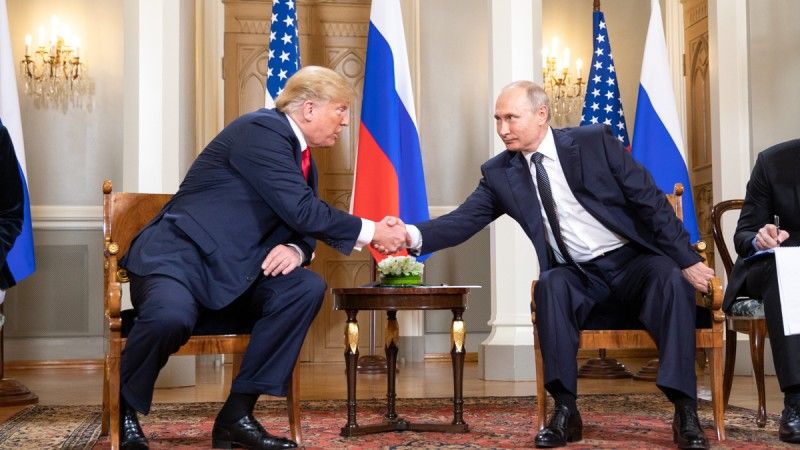
Photo. The White House from Washington, DC / Wikimedia Commons
Vladimir Putin has reportedly proposed a trilateral meeting with Donald Trump and Chinese President Xi Jinping to discuss ending the war in Ukraine. Ukrainian President Volodymyr Zelenskyy would not participate in the talks. The summit could take place in China in November, although no agreement has yet been reached on its organisation.
According to The Wall Street Journal, Putin made the proposal during a telephone conversation with Donald Trump on 9 October. The information was reportedly provided by a former Russian intelligence officer familiar with the discussions. During the same conversation, the two leaders also agreed on supplies of Russian diesel fuel to the American and global markets.
The trilateral talks could take place during the Asia-Pacific Economic Cooperation (APEC) summit, scheduled for 18–19 November in Shenzhen. Moscow reportedly also presented the proposal to Beijing through diplomatic channels. Chinese authorities are said to have indicated that they would not oppose the meeting if the US president agreed to participate.
A senior American official stated that Donald Trump had not yet agreed to the meeting. Kremlin spokesman Dmitry Peskov confirmed that discussions about its organisation were ongoing. However, he stressed that although all three sides were considering the possibility, neither the details of the summit nor its agenda had been agreed.
The proposed format would involve discussions about ending the war without the participation of the country that has been the target of Russian aggression. It would also give Beijing an opportunity to participate directly in negotiations at the highest political level. However, any agreement reached by the three leaders would not automatically mean that Ukraine would accept its terms. Kyiv’s position would remain essential to the implementation of any negotiated settlement.
“There was discussion of a meeting. I don’t know if it was ultimately agreed,” US Secretary of State Marco Rubio said when asked about the possibility of talks between the three leaders. He added that Donald Trump was seeking to end Russia’s war against Ukraine.

Putin wants to decide Ukraine's future without Kyiv
Vladimir Putin’s proposal goes far beyond another attempt to organise peace talks. Above all, it is an effort to move discussions about Ukraine’s future to the level of three major powers, excluding both Kyiv and European states. For Moscow, simply securing agreement to such a format would already represent a political success. Despite its ongoing war against Ukraine and years of sanctions, Russia would once again sit alongside the United States and China as an equal partner in discussions about European security.
Putin has consistently sought a situation in which the future of Eastern Europe is determined through agreements between major powers, rather than decisions taken by countries directly threatened by Russian policy. This is precisely why Volodymyr Zelenskyy’s absence matters so much. The issue is not simply who sits at the negotiating table, but who gets to decide Ukraine’s future.
Equally important is the attempt to bring Xi Jinping into the negotiations. China remains one of Russia’s most important economic partners, and cooperation between the two countries helps Moscow mitigate the impact of Western sanctions. Beijing’s participation would, however, go beyond diplomatic support for the Kremlin. China could gain direct influence over future European security arrangements, despite having no responsibility for providing security guarantees to European countries.
For Beijing, this would also be an opportunity to strengthen its position in relations with Washington. Nevertheless, Xi Jinping would not necessarily support every Russian demand. China has its own interests and may have little desire for an agreement that would make its European policy entirely dependent on the Kremlin’s objectives.
The greatest concern, however, remains the position of the United States. Washington has already moved to ease some sanctions against Russia and agreed to cooperate on Russian diesel supplies, while Russian forces continue striking Ukrainian cities and energy infrastructure. Under these circumstances, Putin may conclude that he can secure further political and economic benefits without making significant military concessions. For Ukraine, this creates the risk of growing pressure to accept terms for ending the war that would not guarantee its long-term security.

For Poland and the other countries on NATO’s eastern flank, the stakes also involve preserving the principle that regional security cannot be decided over the heads of the countries concerned. A meeting between Trump, Putin and Xi would not, by itself, end the war. It could, however, initiate a political process through which Russia seeks to secure at the negotiating table what it has failed to achieve on the battlefield in more than four years.