- WIADOMOŚCI
Putin’s gift diplomacy

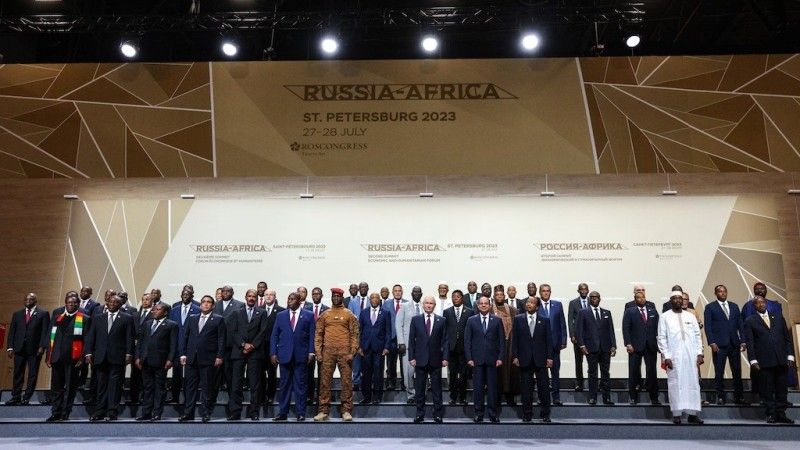
Photo. Russia–Africa Economic Forum / https://summitafrica.ru/en/archive/2023/summit-outcomes/
Russia uses gifts as political instruments. Limousines, helicopters, grain deliveries and debt relief are not gestures of courtesy, but tools for building influence among selected partners in Africa and the Global South. The Kremlin does not only sell weapons or organise summits. It also buys visibility, loyalty and access.
The latest example is Malaysia. After attending the Victory Day events in Moscow, King Sultan Ibrahim left Russia with an Aurus Senat limousine. Officially, it was presented as a symbol of strong relations between Malaysia and Russia. In practice, it fits a wider Kremlin pattern: using luxury Russian state symbols as instruments of personal diplomacy. The Aurus is not just a car. It is a political object connected directly with Putin’s image and Russia’s state power.
This mechanism was already visible with North Korea. Kim Jong Un received an Aurus from Putin, and the message was clear: Russia rewards partners who remain close despite sanctions, criticism and political isolation. The legal or sanctions-related questions around such gifts matter, but they are not the main point. The main point is that Moscow uses status symbols to build personal relations with leaders and show that it still has diplomatic room to act.

The strongest African example remains Zimbabwe. During the Russia–Africa summit in 2023, Putin gave President Emmerson Mnangagwa a presidential helicopter. This was not a vague declaration of cooperation, but a concrete gift to a head of state. It showed exactly how the Kremlin operates: through symbolic loyalty, direct benefits and public gestures aimed at strengthening political ties.
Russia also used grain as an instrument after withdrawing from the Black Sea grain deal. Putin promised free deliveries of 25,000 to 50,000 tonnes of grain to Burkina Faso, Mali, Zimbabwe, Somalia, Eritrea and the Central African Republic. The scale was limited compared to Ukrainian exports, but the political message was useful for Moscow. Russia could present itself as helping African states, even though the wider food crisis was worsened by its own actions against Ukraine.
This is the key contrast. Some leaders receive luxury limousines or helicopters. Others receive grain promises, security support or debt relief. Putin has also repeatedly used Russia–Africa summits and other large political meetings to turn these gestures into public diplomacy. These are not random presents. They are carefully selected tools aimed at building dependence, gratitude and political visibility.

The Kremlin has been using this approach for years. It combines gifts, arms, food, debt cancellation and regime protection. In the Central African Republic, the real „gift” was not a car or a helicopter, but security support, protection of the authorities and the presence of Russian-linked structures. In Mali, Russia used military cooperation, fuel and political messaging as part of the same logic. The format changes, but the method remains the same.
The conclusion is simple. Russia conducts „gift diplomacy” towards selected partners in Africa and the Global South. It gives cars, helicopters, grain, security support and political recognition. In return, it expects access, loyalty, influence and public legitimacy. This is not generosity; this is simply foreign policy.