












- PILNE
- WIADOMOŚCI
- WAŻNE
Slovenia leaving NATO?


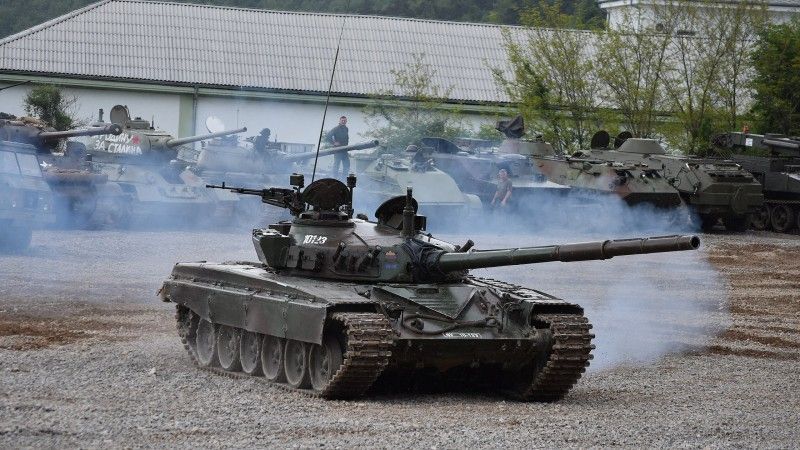
Photo. AndrejS.K/Wikipedia
Slovenia’s new Speaker has announced a referendum on leaving NATO. Do Zoran Stevanović’s statements pose a real threat to the Alliance’s unity, or are they merely part of a tactical arrangement within the centre-right?
Zoran Stevanović, leader of the anti-establishment party Resni.ca (Truth), was elected Speaker of the Slovenian National Assembly on 10 April in a secret ballot, with support from his own party, the Slovenian Democratic Party (SDS), and New Slovenia (NSi). The election winner, Robert Golob’s Freedom Movement, described the outcome as an example of „political corruption”, suggesting that SDS offered Stevanović the position in exchange for the votes needed to form a government.
This move should be understood primarily as a tactical political manoeuvre. Following the parliamentary elections of 22 March, neither the centre-left nor the centre-right secured a majority. Golob’s Freedom Movement remained the largest party, ahead of SDS by a single seat. For the centre-right to form a government, it requires additional parliamentary backing, potentially including support from Truth MPs. Elevating Stevanović to Speaker allows SDS and NSi to secure informal support from Truth without formally incorporating it into the governing coalition.
Referendum rhetoric versus political reality
It is important to distinguish political declarations from their actual feasibility. Stevanović’s calls for a referendum largely serve a communicative function and fit within a broader strategy of mobilising anti-establishment voters. He himself emphasises that his actions are driven by Slovenia’s national interest and rejects automatic labelling as pro-Russian. Reports of a potential visit to Moscow should therefore be seen more as an attempt to strengthen his political profile rather than an indication of any substantive shift in Slovenia’s foreign policy direction.
Since his election, Stevanović has attracted significant media attention by announcing plans for a referendum on Slovenia’s withdrawal from NATO, arguing that his party had made such a commitment to its electorate. At the same time, Russian state media have widely amplified these statements, while the Chairman of the Russian State Duma, Vyacheslav Volodin, publicly congratulated Stevanović on his appointment.
However, parliamentary arithmetic makes such a referendum highly unlikely. Truth holds just 5 out of 90 seats. Together with The Left – the only other Slovenian party with an anti-NATO stance – they control around 10 seats in total. Initiating a referendum on NATO membership requires the support of at least 30 MPs, a threshold that neither party, even combined, can realistically achieve. Meanwhile, both major political blocs – centre-right and centre-left – remain fundamentally pro-NATO.
Ethnic and demographic considerations
Beyond parliamentary dynamics, there is also an ethnic dimension worth noting. Stevanović is not an ethnic Slovene but a Serb born in Slovenia, which may, to some extent, shape his stance on NATO, Russia, and the EU, particularly in the context of Russian influence in the region.
Communities originating from former Yugoslav states account for approximately 13% of Slovenia’s population, including a significant number of Serbs. However, since 2002 Slovenia has not included nationality in its census, making precise estimates more difficult. Nevertheless, this figure suggests a potential space for influence that could be exploited by disinformation campaigns.
Between rhetoric and reality
In practical terms, any government emerging from the current negotiations will, by necessity, remain pro-NATO. While Stevanović’s rhetoric generates headlines and provides ready material for Russian information operations, the structural constraints of the Slovenian parliament make a referendum on NATO membership virtually impossible under current conditions.
At the same time, demographic factors should not be overlooked, as they may increase the susceptibility of certain segments of society to anti-NATO narratives.
It should also be noted that any withdrawal from NATO would be a long-term and politically costly process. In practice, no member state has pursued leaving the Alliance, which underlines its continued importance for the security architecture of the West. In Slovenia’s case, such a move would likely deepen internal political divisions. Moreover, Stevanović’s party holds only a marginal share of parliamentary seats, while the main political forces remain firmly pro-NATO, reinforcing the country’s current strategic orientation.
In this context, the situation should be seen primarily as political and media-driven rather than a genuine challenge to Slovenia’s NATO membership.


