












- WIADOMOŚCI
- KOMENTARZ
Ukraine to strike in depth with American weapons: A breakthrough?

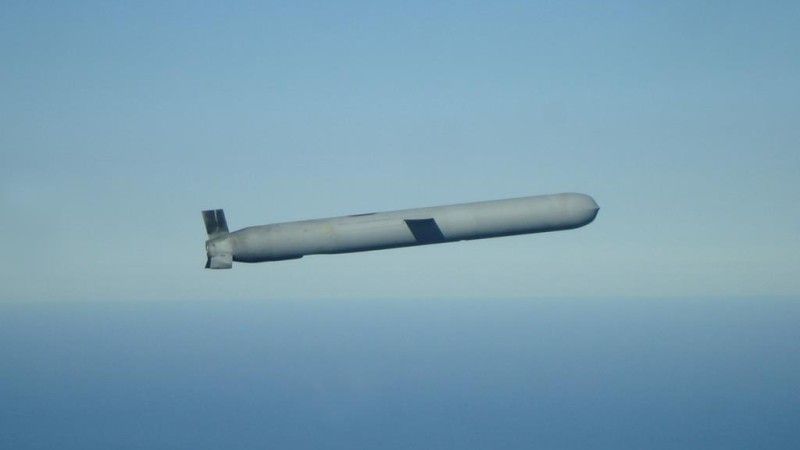
According to general Keith Kellog, special representative of President Donald Trump to Ukraine, Kyiv has been authorized by US to conduct deep strikes using US-provided weapons. Also, provision of Tomahawk cruise missiles is said to be under consideration. What can be effects of the US decision?
To start with, Ukraine had been requesting approval for „long-range” weapons from US since the full scale war began in 2022. At the beginning, Kyiv has received only 85 km-ranged GMLRS guided rockets for HIMARS launchers and HARM anti-radiation missiles launched by aircraft. Those initially proved very effective in disrupting Russian logistics and air defences respectively, but over time Russia began to adapt, changing tactics and improving equipment (including, but not limited to, maneuver, dispersal, electronic warfare and also kinetic short range air defence).
Kyiv had also been pleading for ATACMS missiles, that are still considered to be a „tactical” weapon, but allow to strike deeper (150 km to over 300 km), and with a larger warhead. Those had been provided in late 2023, albeit with multiple caveats. First of all, an initial batch of ATACMS M39 (cluster warhead, 150 km range), has been provided only in late 2023 and in small number. Those missiles, though low in numbers, proved very effective in destroying Russian air defences and helicopters on the ground. The problem is those were provided after Ukraine started the offensive in Zaporozhia region, which ultimately had failed, to a significant extent due to actions of Russian helicopters countering Ukrainian armor.

Photo. Mirosław Mróz/Defence24.pl
In 2024, Biden administration had started providing Ukraine with ATACMS missiles of newer modifications, with about 300 km of range, but initially those were limited only to targets inside occupied Ukraine. So, while they did hit a number of Russian targets, including air defence sites and some aircraft on the ground in the occupied Crimea, it was not possible to use them to engage Russian aircraft launching glide bombs on the territory of Ukraine. And once an approval for strikes inside Russia with ATACMS was granted, Russian aircraft were dispersed deeper so they could not have been engaged at most, and Kyiv has received an insufficient number of weapons.
In addition, according to multiple reports, since early 2025 Trump administration further restricted strikes inside Russia, as per „The Wall Street Journal” Pentagon had to approve targeting before the missiles were actually launched. This could further degrade the effectiveness of Ukrainian strikes, affecting both choice of targets and timing. The latter would be particularly important in strikes against relocatable targets (e.g. surface to air missile launchers such as S-300/S-400), as over time they could simply swap the deployment place and avoid the attack.
Today, in late 2025, Ukraine has developed many of its own deep strike weapons (based mainly on one way attack drones, to an extent also on advanced loitering munitions and cruise missiles), yet the potential provision of American systems is still essential. Kyiv is able to manufacture thousands of long range strike drones, but Russian attacks (also conducted by drones, as well as ballistic and cruise missiles), do hinder the production and deployment. Also, American weapons, such as the Tomahawk missile which may be named as operational-strategic level weapon, with above 1,5 thousand kilometer range (being discussed), but also shorter range tactical ATACMS or air-launched JASSM with 300-400 km range have design features to support penetration of the adversarial air defences.
This may be achieved either by combining speed and maneuverability (in case of tactical ballistic missiles) or by stealth and low flight speed (in case of cruise missiles, like JASSM and to an extent Tomahawk or new ERAM, created specially for Ukraine and considered +450 km class). Of course, Russian air defences adapt over time, but this renders all weapon types (i.e. US-made, as well as Ukrainian-made and European-made) less effective, not totally ineffective.
Thus, US provided weapons could be used in combined strikes, overhelming, suppressing or even destroying Russian air defences. Attacks against Russian air defences, as well as missile launchers and storage places („counterforce”) could be as important as „countervalue” – engaging Russian energy industry and disrupting Russian war economy.

Photo. USAF
US-provided weapons, coupled with existing Ukrainian systems such as Neptune and drones could make it much more difficult for Russian air defence to operate effectively. Especially as modern ground based air defence in principle operates against low flying targets based on „point/local area protection principle” rather than „wide area protection principle”, as it is difficult to detect low flying targets by ground based radar systems. This phenomenon is
More importantly, once the Russian air defences (which frankly speaking up to date are more effective than usually reported – despite numerous Ukrainian strikes Russian production has not been defeated as a whole) were overhelmed, Ukraine could be able to attack high value targets such as weapon manufacturing facilities. Including the infamous Yelabuga plant producing Shahed UAVs, located just below 1300 km from Kharkiv, so in range of Tomahawk missiles. And that could really affect Russian ability to continue large scale strikes against Ukraine.

Or, at the very least, the pure threat of Tomahawk missiles flying over Russian territory could force Moscow to divert its tactical aviation (e.g. Su-30SM, Su-35 and also Su-34 aircraft) from offensive operations against Ukraine to standing (and burdening) air defence/air policing duty of the large Russian territory, thus lessening the pressure on the Ukrainian frontline forces. ”Threat in being” could force Russians to change their posture and tactics, at least for a limited period of time.
For now, the degree of decision of US to enable Ukraine deep strikes against Russian aggressors is unknown. It appears though that President Trump administration is a little bit more willing to provide capabilities to Ukraine once those are paid by European and not American taxpayer, particularly as US gets some freedom for investments in its own industrial base without the need of appropriating additional funding by Congress. For Ukrainians fighting at frontlines and suffering in cities under Russian attacks it seems very unjust, but on the other hand wealthy European countries like Denmark, Sweden, Norway or Germany did benefit from decades of US presence and US taking a large burden of their defence through NATO. So in that context, perhaps is it time for some payback?
To have an appropriate effects, the provision of long range weapons by US to Ukraine through NATO should take place quickly, to maximise effectiveness. This though would require political decisions both on US side (enabling supply of Tomahawks and variety of other systems) and also on the European countries side (providing funding in amount enabling to procure a large, decisive scale number of long range strike systems in short time, not giving time to adapt). One also should note that despite all the large losses, Russia is still advancing on the frontline and is constituting an ever-increasing threat also in the once-safe near-rear zone, particularly in Donbas, but also in Kherson oblast and Kharkiv district. So perhaps the possibility of using US-provided weapons might be one of the last opportunities to turn the tide of the war, coupled with diplomatic and economic efforts?


