












- ANALIZA
- WIADOMOŚCI
Will India soon become the world’s third power?

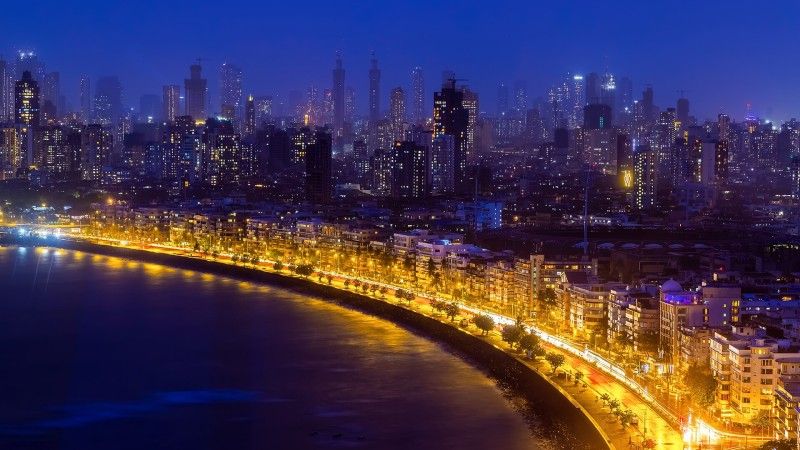
Photo. Dr Vikramjit Kakati - own work / Wikipedia
In terms of overall GDP, India will shortly overtake Germany and will become, in nominal terms, the world’s third-largest economy. Does that mean it will also become the third power in other domains?
In recent years, a large share of global attention has been focused on India: New Delhi’s trade negotiations with Washington, the Free Trade Agreement with the European Union, and growing activity across the Global South. In September 2026, India will host the next BRICS summit. All of this raises the question: will India soon become the world’s third power?
The first two places are already taken: the United States and China. The contest is for the third position. India does not aspire to the Washington–Beijing league. Even in the most optimistic scenario set out in the Indian government’s “Viksit Bharat 2047” programme, it would radically increase its GDP – but America and China will also grow over the next two decades. India is competing with Germany, the United Kingdom, Japan, France and, possibly, Russia. And everything suggests that it will win.
Arguments in favour
Population. With more than 1.4 billion inhabitants, India is already the world’s most populous country and will remain so for a long time. A median age of 29.2 years yields a demographic dividend that ageing Europe and Japan do not possess.
Economy. For three decades, growth has averaged 6–7 per cent a year. In absolute terms, India already generates more than USD 4.15 trillion in annual GDP; it will soon take third place and widen the gap. Several sectors – pharmaceuticals, IT, space – already occupy a global position. Not first or second, but a significant one.
Military strength. The armed forces rank behind only those of the United States, China and Russia. Nuclear weapons, a navy heading towards 200 ships, and a space programme that returns 2.54 rupees for every rupee invested.
Diaspora. The world’s largest. In the United States and the United Kingdom, its members occupy the highest offices, run major corporations and shape public debate. The Indian government treats the diaspora as a strategic asset: meetings with it are a fixture of every official visit. It is not merely remittances (an increasing share now coming from advanced economies, not only the Gulf) but political and reputational influence. Modi has recast “brain drain” as “brain deposit” – a reserve that serves India.
Foreign policy. Under Prime Minister Modi and External Affairs Minister Jaishankar, India has become more assertive. Non-alignment has given way to “The India Way”: multi-alignment, national interest, leadership of the Global South. The G20 presidency, the Raisina Dialogue and the DAKSHIN institute devoted to the Global South are institutions designed to show that New Delhi is not a supplicant but an actor in its own right. Everyone wants India on their side: Europe seeks a trade partner, the United States is shifting production to India, Russia sells oil and arms.
India’s ambition is the status of “Vishwa Guru” – a “global teacher” that offers the world not the imposition of its own agenda, but civilizational wisdom: dharma, ancient philosophy, a model of development that is neither a copy of the West nor of China. India wants to be not only an economic power but a moral and civilizational point of reference. The concept is not yet fully realized, yet the world is listening ever more attentively to New Delhi’s voice.

Arguments against
GDP per capita. Still very low. Without raising living standards, the rest of the ambitious agenda cannot be achieved. “Viksit Bharat 2047” recognizes this, but the target of USD 15–18 thousand per capita by 2047 requires a growth rate that is not guaranteed.
Infrastructure and pollution. In winter, Delhi drowns in smog that shortens lives by years. India’s cities do not look like the seat of a third power. The government is building motorways and airports, yet the gap with China – or even with far less developed countries – remains vast.
State capacity. Bureaucracy, corruption, regulations that change from state to state. German and Japanese officials do it better. The momentum of procedural simplification, visible in previous years, has slowed a little right now.
Absence of global champions. Tata and Reliance are giants, but mainly on a domestic scale. There is no Indian Samsung, Toyota or Siemens. Universities do not approach the world elite; the system pushes millions abroad to study. India has almost no higher-education institutions that come close to the leading global universities. The system massively exports young people because, apart from the space programme and a few biotechnology niches, domestic research centres still rely on others’ technical thought and no rapid change is in sight. Education spending is lower than in other BRICS countries.
Difficult prospects for the young. Recent months have seen large youth protests by a generation that is aware that it may miss its chance. The demographic dividend is turning into unemployment and a lack of opportunity unless India finds a way to harness it for everyone’s benefit.
Soft power. Yoga is a success, and Indian cinema is winning audiences worldwide, especially in the Global South, yet Italian cuisine and American films still prevail. Global media remain trapped in stereotypes of “exoticism”, and India does not run image-building campaigns on the scale of Germany or China.
A seat at the table. No permanent seat on the UN Security Council, no G7 membership. Judged solely by representation in global organizations, India would still look only a little larger than a middle-sized country.

Conclusion
India will soon be – and in many dimensions already is – the third power. Its demographic and economic potential is the greatest among the contenders; its rivals have lost momentum; the diaspora and a new diplomacy provide leverage that did not exist before. The ambition of “Vishwa Guru” adds an ideational dimension: not merely a GDP ledger, but a claim to be a civilization that has something to say to the world.
Will it succeed? In India, nothing happens quickly. But it does happen. The emerging shape of a multipolar world depends on it as well.


