












- ANALIZA
- WIADOMOŚCI
Will the NATO pipeline finally reach Eastern Flank? There is still a long way to go


NATO’s decision, announced during the summit in Ankara, to approve the expansion of the military fuel supply chain to the Alliance’s eastern-flank countries is good news for Poland. Why is this investment so essential, and how long might we have to wait for it to be completed?
During the NATO summit in Ankara, the Allies approved a historic €27 billion investment to modernise and expand the military fuel supply chain. For Poland, this is a breakthrough development: the planned expansion of the pipeline network will provide the country with a key logistical capability that has so far been lacking on the eastern flank. The existing network, built during the Cold War, understandably terminates deep inside Germany, approximately 250 kilometres from the Polish border. The new project is finally intended to close this strategic gap.
Heightened levels of security
There are several reasons why extending NATO’s pipeline network into Poland is important from the perspective of Warsaw’s strategic interests. Mariusz Marszałkowski, Deputy Editor-in-Chief of Defence24, believes that the investment would strengthen Poland’s security in the event of war.
„As the war in Ukraine has demonstrated, refinery facilities are among the highest-priority targets for attack. Temporarily disabling a refinery does not require particularly sophisticated technology or weaponry, as Ukrainian strikes against Russian refineries have shown. Polish refineries are located relatively close to a potential theatre of operations, which makes the situation even more difficult” – he explained. He also noted that, in the event of a potential armed conflict, maritime fuel deliveries would likewise be highly vulnerable to enemy strikes. Linking Poland to NATO-owned systems would also bring extra benefits, for instance for peacetime trade exchange.
„This would be a natural development. Poland currently imports approximately 40 per cent of the diesel fuel it consumes. An additional supply route would help relieve pressure on the already heavily utilised terminal in Gdańsk” – Marszałkowski said.

Obstacles ahead
Given the potential benefits of the investment, it is also worth considering the factors that could obstruct its completion. One of the principal problems identified by the expert is the lengthy and complicated permitting process. It should be recalled that the possible extension of NATO’s fuel infrastructure into Poland — specifically the CEPS, or Central Europe Pipeline System — has been discussed publicly for some time. This illustrates the complex and multifaceted nature of the project.
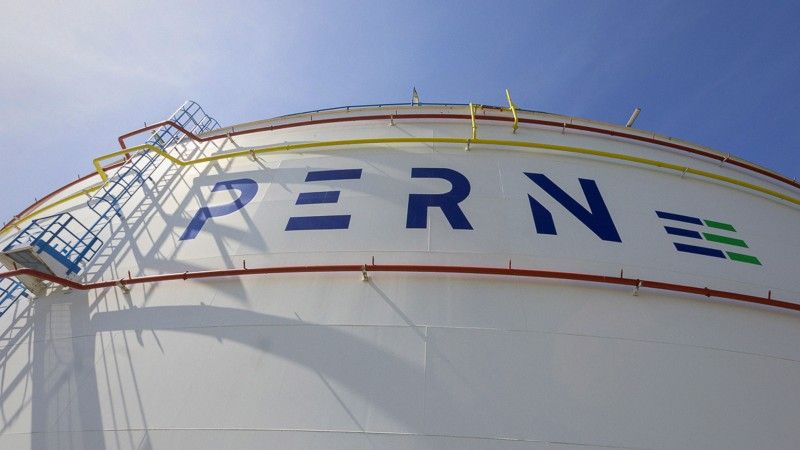
„Approximately 300 kilometres of trunk pipeline would have to be built on Polish territory, terminating at a PERN storage facility near Bydgoszcz. This would be an enormous undertaking, comparable to building an entirely new motorway or railway line. The costs and challenges would be similar, but public understanding of the project would be lower, particularly in Western Europe. Financing is another important issue. The cost of an investment of this kind would be approximately €30 billion. That money has to be found, which is not easy in the case of cross-border infrastructure projects” – Mariusz Marszałkowski observed.
The political dimension must also be taken into account, particularly the crucial role Poland’s western neighbour will have to play in ensuring the project’s success. „The fuel pipelines would have to run for hundreds of kilometres across German territory towards Poland” – Marszałkowski noted. At least in theory, Berlin has given the project the green light. This was confirmed by Deputy Prime Minister and Minister of National Defence Władysław Kosiniak-Kamysz during a press conference summarising the meeting of NATO defence ministers held in mid-June this year.
Questionmarks
The decision taken in Ankara answers some of the questions that have arisen in recent months. Nevertheless, despite the announcement of €27 billion for the overall project – which covers more than pipelines – it remains unclear how much Poland will be required to contribute from its own national budget. There are also several important technical questions. Will the planned connection consist of a single pipeline? What will its target throughput capacity be? Will the new pipelines be used exclusively to transport aviation fuel? Most importantly, when will construction begin, and when might the project finally be completed?


