












- ANALIZA
- KOMENTARZ
- WIADOMOŚCI
Denmark breaks with America. SAMP/T NG instead of Patriot

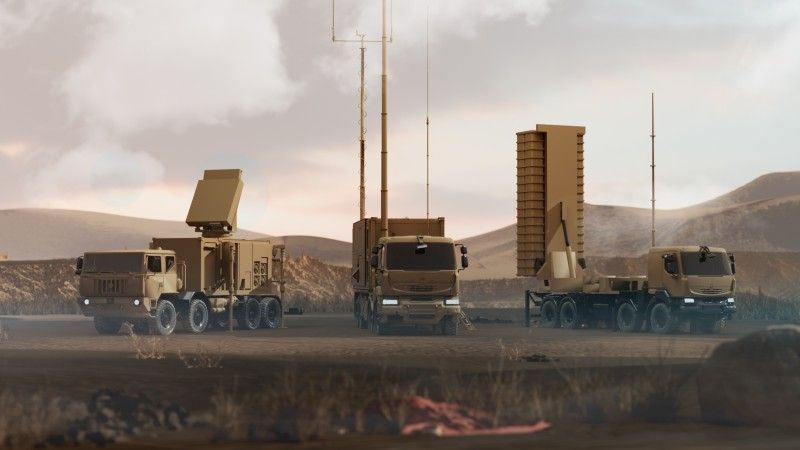
Denmark’s choice sends a loud signal of change in European defence procurement and strikes at the American monopoly. On April 21, 2026, Copenhagen officially signed a contract for the European SAMP/T NG air and missile defence system, definitively rejecting the American Patriot.
For decades, European NATO members bought American air defence systems as a matter of course. At first, during the earlier Cold War years, MIM-14 Nike Hercules and MIM-23 Hawk systems were massively purchased, creating a unified Cold War medium- and long-air defence systems from Norway in the north to Turkey in the south. Since late 1980s well into the XXI Century, structural cuts started to be implemented. Nevertheless, in smaller numbers, the newer Patriot had become the gold standard, deployed from Germany to Poland, from the Netherlands to Romania.
Denmark itself had been operating Nike Hercules during the Cold War and US-made MIM-23 HAWK systems until early 2000s. Later on, until the full scale aggression against Ukraine, Denmark did not procure ground based air defence, but since 2025 several urgent purchases and leases of shorter-range systems (Norwegian-American NASAMS, German IRIS-T SL, French Mica and Mistral) had been decided. In the medium to long air defence area, on the other hand, European countries increased their Patriot purchases after 2022, to include Germany, Romania, Sweden, Poland and Spain.
But on April 21, 2026, Copenhagen broke that pattern. The government signed a contract for the European SAMP/T NG (Surface-to-Air Missile Platform / Terrain – New Generation), developed by the Franco-Italian consortium Eurosam, rejecting the Patriot outright. The decision was driven by delivery delays, support for European industry, the Greenland dispute, and technical capabilities of the European system.
The main reason for Denmark’s decision was the unacceptable delivery timeline for the Patriot. Since Russia’s full-scale invasion of Ukraine in February 2022, and then the US-Israeli war with Iran that began on February 28, 2026, global demand for Patriot systems (and the interceptor missiles in particular) has exploded. Ukraine desperately needs them to counter Russian ballistic missiles and drones. Saudi Arabia, the United Arab Emirates, Qatar, and other Gulf states either have placed multi-billion-dollar orders or are expected to do so shortly. The United States has also prioritised replenishing its own depleted stockpiles after intense use in the Gulf conflict.
As a result, waiting times for new Patriot batteries have stretched to four or even five years. For Denmark, which faces an increasingly aggressive Russia in the Baltic region and is modernising its armed forces, that delay was unacceptable. The Danish Ministry of Defence issued a statement: “Security threats are evolving now, not in five years. We need a system that can be delivered within a reasonable timeframe, and SAMP/T NG meets that requirement.”
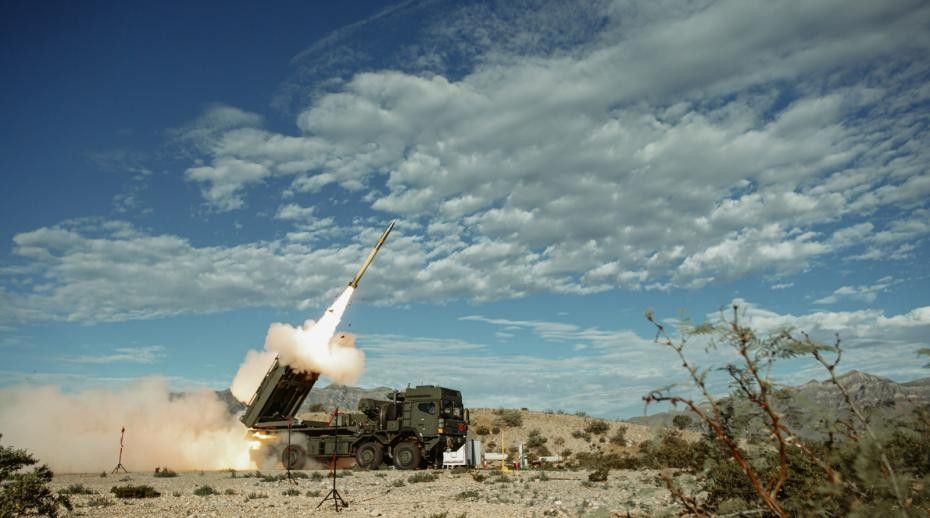
Support for European defence industry
Copenhagen’s choice is also a political statement. European leaders have been calling for “strategic autonomy” for years, but actual procurement often went to American suppliers. The war in Ukraine and the US-Iran war have shown European capitals that they cannot rely entirely on Washington’s defence industrial base. When a major conflict erupts, the United States will first supply its own forces and its closest allies, while European orders may be pushed back.
The Greenland factor
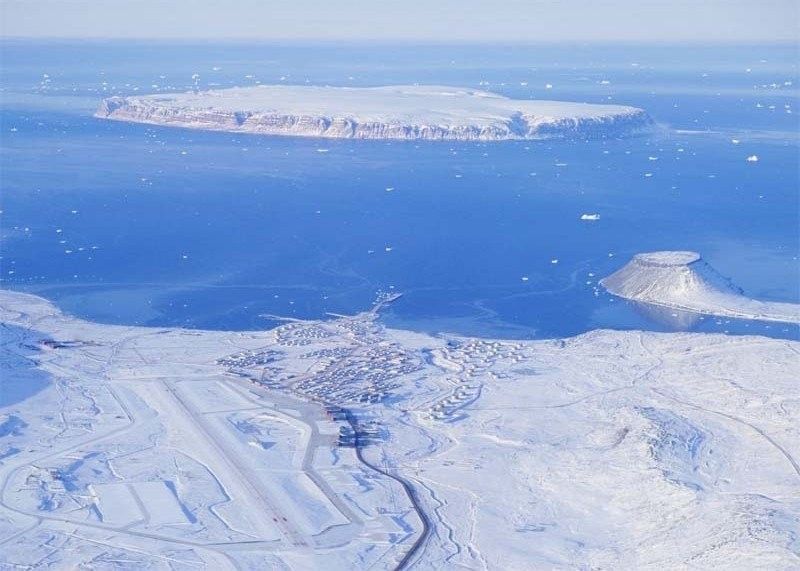
The dispute over Greenland also played a role. In early 2026, following the return of Donald Trump to the US presidency, Washington renewed its interest in acquiring Greenland. While the official US position remained diplomatic, the Danish government saw it as unacceptable pressure. The Greenland issue highlighted tensions between Copenhagen and Washington and underscored the need for independent, non-US defence solutions.
Although the SAMP/T NG decision was not directly a reaction to the Greenland spat, it was part of a broader Danish effort to diversify its defence partnerships. Yet, Denmark remains an important
Technical capabilities – 360-degree coverage and Aster 30 missiles
Beyond politics and delivery times, the SAMP/T NG is a highly capable system in its own right. It uses the newly developed Aster 30 Block 1NG missile, which has a range of over 120 kilometres and an altitude reach of 20 kilometres (or more), sufficient to intercept ballistic missiles, cruise missiles, drones, and combat aircraft. The system’s radar provides 360-degree coverage and can detect targets up to 400 kilometres away. Both the radar and the missiles are much more capable patricularly against ballistic missiles than baseline SAMP/T systems with Aster 30 Block 0 and 1 with smaller Arabel radar.
It is difficult to compare SAMP/T NG to Patriot as it relies on different operating concept - e.g. new LTAMDS Patriot radar purchased by US, Poland and recently Kuwait has 360 degree coverage based on fixed arrays, but legacy systems have a sector 120 degree radar which brings several limitations. It is safe to say both systems are undergoing upgrades that substantially enhance their capabilities both in comparison to legacy SAMP/T and existing Patriot version (NG version for SAMP/T and LTAMDS as well as IBCS net-centric system for Patriot, the latter being operational in US and Poland).
An advantage of the European system is that it is considered to be mobile. SAMP/T NG components are mounted on trucks, allowing rapid deployment and relocation. For Denmark, which needs to defend its territory as well as potential expeditionary forces, mobility matters.
Cost and industrial cooperation
The contract value has not been fully disclosed, but Danish media estimate it at around 2.5-3 billion Danish kroner (approximately 335-400 million euros) for several batteries, including missiles and training. The industrial benefits for Europe are larger. Denmark will have the opportunity to co-produce components for the system, involving its own defence companies such as Terma.
Reaction from the US
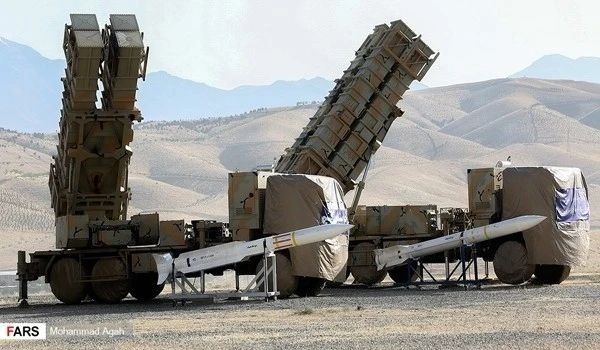
The United States expressed disappointment but tried to downplay the decision. A Pentagon spokesperson said: “We respect Denmark’s sovereign choice. Patriot remains the world’s leading air and missile defence system, with a proven track record. We are confident that allies will continue to see its value.”
However, behind the scenes, US officials are concerned. If a NATO ally as reliable as Denmark turns to European suppliers, others may follow. Norway already chose the South Korean K239 Chunmoo artillery rocket system (range up to 500 km) instead of American options. Poland, which operates both Patriot and other systems, is watching the Danish experiment with interest. If SAMP/T NG performs well in Danish service, Warsaw might consider buying more European systems in the future (particularly as some sort of gap filler if Patriot shipments are delayed due to the war in Middle East rather than a replacement of the Patriot).
What does SAMP/T NG mean for European defence?
Denmark’s decision is a milestone for European air defence. SAMP/T has existed for two decades, but it always lived in the shadow of Patriot. Only France, Italy, and a few smaller countries (Singapore, Morocco) bought it. Now, with the war in Ukraine demonstrating the importance of air defence, and with the US distracted by the Gulf conflict, European customers are taking a fresh look at what Europe can offer.
The SAMP/T NG is not perfect. Its production capacity is still limited compared to Patriot’s vast industrial base. Europe needs to ramp up production of Aster missiles, which are also used in naval air defence (on Horizon-class frigates and FREMMs). However, Denmark’s order sends a signal to investors and policymakers: there is demand for European-made systems. This should accelerate investments in new production lines and research.


