












- WIADOMOŚCI
- KOMENTARZ
Germany and France kill Europe’s €100bn fighter jet dream

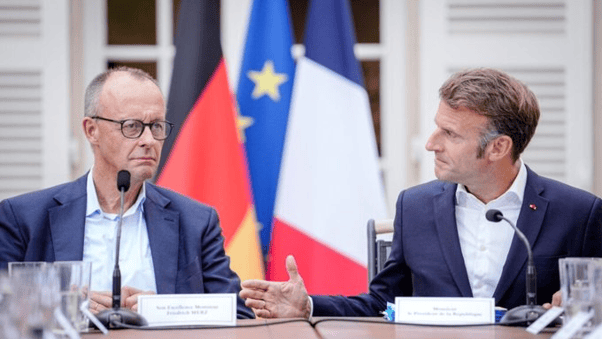
Photo. x.com
France and Germany have abandoned their joint €100bn FCAS fighter jet. Deep industrial and strategic disputes proved insurmountable, ending Europe’s flagship air combat programme.
Berlin and Paris have abandoned the joint fighter jet at the heart of the FCAS/SCAF programme. The decision comes after Airbus and Dassault failed to agree on project leadership, work distribution, and the fundamental design of the aircraft. While the programme’s label might survive, Europe’s flagship sixth-generation fighter has run out of political runway.
According to German government sources, later confirmed by the Élysée, Chancellor Friedrich Merz and President Emmanuel Macron concluded during talks in Montenegro that the industrial deadlock had become insurmountable. Merz advised Macron against proceeding with the joint aircraft, while officials in Paris noted that German authorities felt they could no longer exert effective pressure on the companies involved.
This collapse is highly significant because FCAS was never just another procurement project. Launched in 2017 by Emmanuel Macron and Angela Merkel, and later joined by Spain, the initiative was designed to replace France’s Rafale jets and the Eurofighter fleets of Germany and Spain by around 2040. The core New Generation Fighter was intended to operate alongside unmanned „remote carriers” and be connected through a secure combat cloud.

Although the official explanation points to industrial friction, the dispute was fundamentally political from the outset. Dassault demanded clear authority over the fighter, arguing that responsibility for such a complex aircraft could not be fragmented. Meanwhile, Airbus, representing German and Spanish interests, refused to accept a junior role in a programme funded by three nations. The ongoing struggle over governance, workshare, and intellectual property gradually evolved into a proxy battle for control over Europe’s future combat aviation expertise.
The deeper division, however, was strategic. France required a future aircraft compatible with aircraft carrier operations and its airborne nuclear deterrent. Germany did not share these specific requirements and increasingly questioned whether the Bundeswehr should anchor its 2040s air combat strategy to a platform dictated by French military needs. By May, Airbus had already begun signalling a potential two-aircraft solution while attempting to salvage the shared networking layer.
This is exactly where the compromise now rests. The shared manned fighter is dead, yet the FCAS/SCAF name may survive. Berlin and Paris still hope to salvage the broader „system of systems”, focusing particularly on the combat cloud designed to connect aircraft, drones, sensors, and other platforms. Proceeding with this digital infrastructure keeps valuable technology alive and prevents a complete diplomatic rupture. However, it also strips the programme of its primary political centrepiece.
See also 

The European industrial landscape is now shifting rapidly. France faces the difficult question of whether the evolution of the Rafale and a national sixth-generation successor can be financed independently or if new partners are required. Meanwhile, Germany and Spain must evaluate Airbus-led alternatives. The Financial Times reports that Airbus is already preparing a German-led „Team Gen 6” alliance.


