












- WIADOMOŚCI
Germany eyes garages, tunnels and subways as shelters

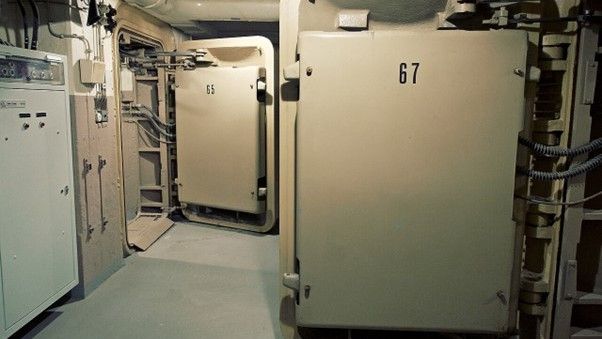
Photo. Wikipedia
Germany lacks enough bunkers for a modern crisis. Rather than rebuilding Cold War sites, Berlin will turn everyday urban spaces into a fast, decentralised shelter network.
Germany’s new civil defence package marks a significant shift in how Berlin approaches civilian protection. On 20 May 2026, the federal cabinet approved the „Pakt für den Bevölkerungsschutz” (Civil Protection Pact), a programme outlining €10 billion in federal investment by 2029. These funds will be directed towards new equipment for rescue forces, modern warning and communication systems, and stronger infrastructure for the federal technical relief agency (THW). The investment will also support emergency power supplies, resilient drinking water networks and improved coordination between civilian and military planners. The government explicitly links this initiative to Russia’s war against Ukraine, the threat of hybrid attacks and the increasing frequency of natural disasters.
The issue of public shelters remains the most politically visible element of this strategy. Germany’s legacy bunker network is now almost entirely symbolic in scale. According to the Federal Office for Civil Protection and Disaster Assistance, the country retains 579 public shelters with capacity for roughly 478,000 people. However, these facilities are neither functional nor ready for immediate use. The root of this problem is structural. In 2007, guided by the logic of the „peace dividend”, the federal government and the states (Länder) abandoned the traditional approach to shelter construction and ceased maintaining public bunkers.

This historical context explains why Berlin is moving away from the idea of classic Cold War bunkers as a primary solution. As Reuters reports, the new strategy focuses on repurposing everyday spaces like underground car parks, tunnels and metro stations. Simultaneously, the government is upgrading warning systems and purchasing over 1,000 specialist vehicles alongside protective equipment. Interior Minister Alexander Dobrindt has argued that the old approach of the 1980s is no longer suited to the modern threat environment. Defence Minister Boris Pistorius highlighted lessons from Ukraine, where civilians frequently rely on rapid alerts and immediate local shelters. Pistorius also acknowledged that Germany cannot realistically provide dedicated bunker space for its entire population.
The underlying logic is highly practical rather than nostalgic. Short warning times, the threat of drones and missiles, sabotage risks and potential attacks on critical infrastructure all favour a dispersed system. The strategy is clear: identify usable spaces, prepare them where possible, link them to public alerts and guide people quickly to the closest refuge. The federal government has announced that the NINA warning app will be upgraded to include recommendations for public shelter locations, while the national siren control system will be modernised by 2027.
See also 

The broader context of these reforms is crucial. The broadcaster DW notes that Germany faces a massive backlog in civil defence preparation. The devastating Ahr Valley floods in 2021 exposed severe weaknesses in the country’s warning and preparedness systems well before the war in Ukraine forced civil defence back onto the national security agenda.


