












- WIADOMOŚCI
- ANALIZA
Russia wants to produce Gerans without foreign dependence

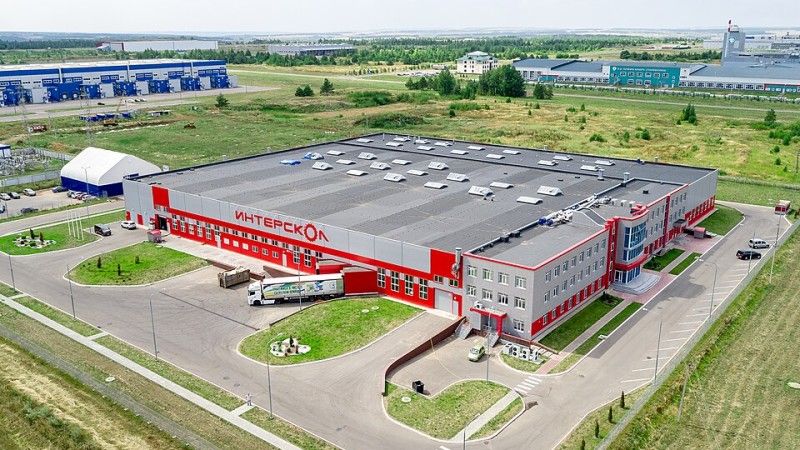
Photo. Особая экономическая зона «Алабуга», Завод «Интерскол-Алабуга» / Wikimedia Commons
Russia is not only increasing the number of Geran attack drones. It is trying to bring an increasing share of their production chain inside the country – from composite materials and airframes to more advanced, faster variants. The expansion of the Alabuga industrial complex therefore matters not only for Ukraine. It shows how Moscow is preparing a drone industry designed for a much longer confrontation with Europe.
Documents obtained by POLITICO show that Rosatom plans to expand the Alabuga-Volokno plant in Tatarstan so that it can produce an additional 500 tonnes of military-grade carbon fibre annually by 2029. According to one expert estimate cited by POLITICO, this quantity of material could theoretically be sufficient for around 28,000 Shahed-136/Geran-type airframes. This distinction is important: 500 tonnes does not mean that Russia will automatically produce another 28,000 complete drones every year. It means that one important material bottleneck could become much smaller.
The more important point is localisation of the supply chain. Rosatom documents explicitly identify „import substitution of dual-use products” and demand from aviation and the defence industry as reasons for the investment. A new PAN production facility is also planned, allowing Russia to manufacture domestically the precursor needed for high-grade carbon fibre. Earlier this year, Alabuga-Volokno received around 46 tonnes of carbon-fibre chemicals from a Chinese state company, showing that Chinese supplies have remained an important element of the programme. Russia is now trying to reduce precisely this vulnerability.
At the same time, Alabuga is being physically expanded. Satellite imagery cited by POLITICO shows land being cleared next to the existing factory and foundations being prepared for the new facilities. This is therefore not simply a long-term industrial concept written into a planning document – construction has already begun. Russia is investing simultaneously in production capacity, supply-chain independence and the resilience of one of the most important centres of its drone programme.
The evolution of Alabuga is also important. The programme began with the transfer and localisation of the Iranian Shahed design, while Chinese materials and components helped Russia expand production. The direction is now clear: Iran provided the original technological base, China helped supply critical inputs, and Russia is increasingly trying to internalise both production and development. Alabuga is gradually becoming less an assembly site for an Iranian design and more a Russian industrial ecosystem capable of developing subsequent generations of Gerans.
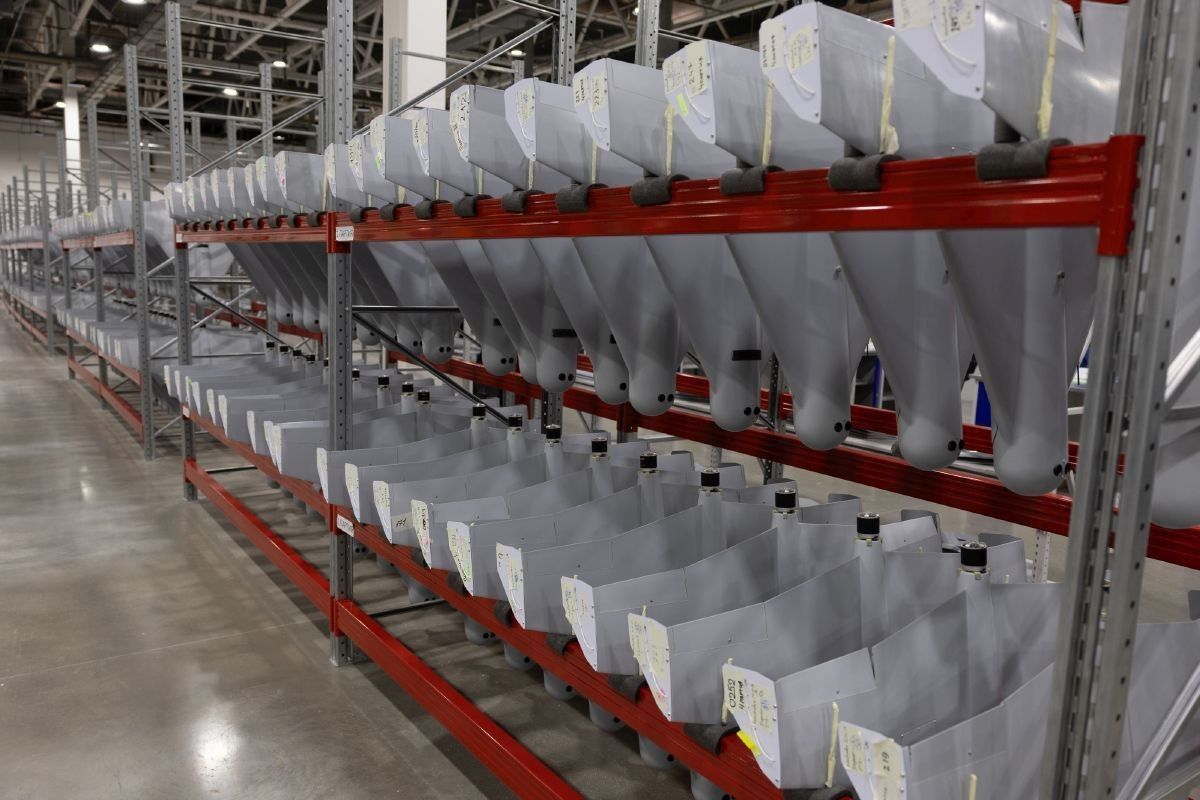
This matters because the drones themselves are changing. POLITICO notes that Russia has already introduced jet engines into some Geran designs, increasing their speed and range and making interception more difficult. Greater access to advanced composites therefore does not have to translate only into more Geran-2s. It can also support the transition towards faster and more technologically demanding variants designed to reduce the reaction time available to Ukrainian – and potentially European – air defence.
For Poland and NATO, the key question is consequently not whether Russia can manufacture another few thousand drones, but the economics of defence. If Moscow can produce thousands of relatively inexpensive long-range systems every month, NATO cannot rely indefinitely on destroying them with missiles costing several times more than the incoming target. Poland therefore needs layered air defence, cheaper interceptors, counter-drone systems, electronic warfare and sufficient ammunition stocks to deal with mass attacks rather than individual targets. We do see how the current drones are challenging.
The broader trend is more important than any single production figure. Russia is trying to eliminate foreign bottlenecks, protect and expand Alabuga, develop faster Geran variants and build an industrial system capable of sustaining mass drone warfare for years. Even a ceasefire in Ukraine would not automatically dismantle this capacity. Once the factories, supply chains and engineering base exist, they will remain available – and that is why the expansion of Alabuga should be viewed as a long-term security problem for Europe, not only another development on the Ukrainian front. We can expect that Moscow will look for additional facilities to increase production.


