












- WIADOMOŚCI
Russians seek to modernise the remainder of Indian Sukhois

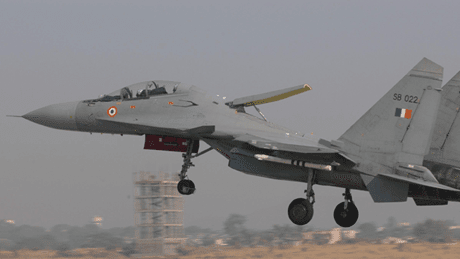
Photo. hal-india.co.in
Russia has offered India an upgrade package for its Su-30MKI aircraft. The proposal concerns those airframes that will not be covered by the Super Sukhoi programme, according to an article published by The New Indian Express.
India is currently preparing a modernisation programme for its Su-30 fleet under the so-called Super Sukhoi initiative. The project includes avionics upgrades, notably the replacement of the radar with the indigenous GaN-based Virupaksha radar, as well as integration with new types of Indian weaponry. These include the extended-range BrahMos-ER cruise missile, the long-range Astra air-to-air missile, and the Rudram anti-radiation missile. These modifications are intended to ensure that the Sukhoi Su-30MKI, an aircraft into which India has invested substantial resources, remains a relevant and capable 4+ generation platform in any potential conflict for many years to come.
It appears that India’s aerospace manufacturer Hindustan Aeronautics Limited (HAL) has the capacity to carry out the programme. The challenge, however, lies in its scale. The current plan envisages upgrading 84 aircraft. The remaining airframes could undergo similar modifications, but only at a later stage, meaning many years from now. By that time, the Super Sukhoi package itself may already be obsolete, potentially undermining the rationale for further investment.
According to The New Indian Express, a possible solution would be to entrust parallel upgrade work on the remaining fleet to Russian companies. Such a parallel modernisation would rely on systems produced in Russia, including a Russian radar and other subsystems. Moscow is reportedly even offering the Saturn AL-41F1S engine used in the Sukhoi Su-35, effectively re-engining the aircraft along the lines of Russia’s own Sukhoi Su-30SM2 standard. Integration with Indian weapons would likely remain part of the package. The partnership model would reportedly resemble that adopted for the upgrade of MiG-21 Bison aircraft.
It remains unclear, however, to what extent cooperation with Russia is feasible under current conditions. Firstly, such a move would run counter to India’s Make in India policy. Secondly, it would entail the risk of sanctions and potential friction with Western partners. The article itself appears somewhat biased: for instance, its author treats the acquisition of the Sukhoi Su-57 as India’s future fifth-generation fighter as almost a foregone conclusion, despite the fact that reporting on the matter remains highly contradictory.
This is particularly relevant as India is beginning to position itself on export markets as a country capable of delivering new Su-30 aircraft or modernising Russian-produced airframes for third countries. There are currently reports suggesting the possible sale of Su-30MKI aircraft to Armenia, as well as upgrade work for similar aircraft operated by Malaysia.


