












- ANALIZA
- WIADOMOŚCI
Alberta's Brexit moment? How a fringe separatist campaign might become Canada's biggest unity test in decades

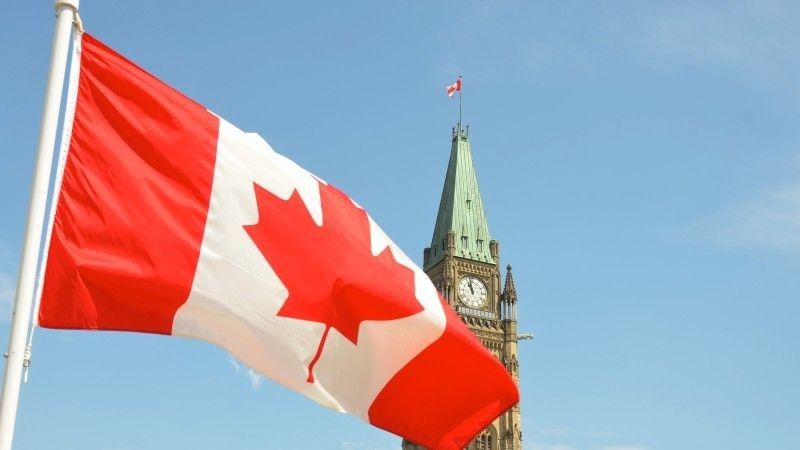
For years, Alberta separatism occupied the political fringes of Canadian public life, a recurring expression of frustration rather than a credible threat to national unity. But after Canada’s Liberal Party secured a fourth consecutive federal election victory in 2025, a movement once dismissed as political theatre found itself at the centre of a national debate.
What began as a series of citizen-led petition campaigns has evolved into the most serious challenge to Canadian federalism since Quebec’s sovereignty referendums of the 90s. While Alberta is not on the brink of independence, the province’s separatist movement has already succeeded in forcing Ottawa to respond and has reshaped the country’s political conversation by hearing the needs of not-so-liberal citizens.
At the heart of the campaign were two organisations: the Alberta Prosperity Project and Stay Free Alberta. Both sought to trigger a referendum on Alberta’s future, with their efforts gaining momentum until the courts intervened in December 2025, when a judge ruled that the referendum question was unconstitutional and that the treaty rights of First Nations would be affected – yet the court rulings did not end the debate.
Instead, Alberta’s government incorporated the issue into a broader referendum already scheduled for October 2026. The referendum, planned by provincial decision-makers, covers immigration, electoral, and constitutional matters. It will now also include a question about separatism. However, this initiative is also affected by a court ruling issued in May 2026, which found that the provincial government had failed to consult First Nations, who have openly opposed separatist ideas.
Critics, meanwhile, contend that the wording of the referendum question is so complex that many voters may struggle to grasp its practical consequences. Voters will not be asked directly whether Alberta should leave Canada. Rather, they will be asked whether the province should begin a process that could eventually lead to a binding vote on independence.

Secession or sabre-rattling?
Officially, Premier Danielle Smith frames the referendum as a democratic exercise, a chance for citizens to be heard. Privately, many political observers see something else – a calculated effort to mobilise conservative voters and channel growing frustration with federal policies.
Support for holding a referendum is not the same as support for leaving Canada. Polling suggests many Albertans view the initiative less as a pathway to independence and more as a mechanism for sending a political message. They are frustrated by what they perceive as federal interference in resource development and believe Alberta’s economic importance is not adequately recognised by the rest of the country. Yet many of those same voters continue to support remaining within the Canadian federation.
That frustration is rooted in economics as much as politics.
Alberta is Canada’s resource powerhouse, producing roughly 90 per cent of the country’s oil and 60 per cent of its natural gas. Despite its significant reserves, provincial leaders have long argued that regulatory barriers and infrastructure constraints prevent Alberta from fully benefiting from its resource wealth. For many Albertans, Ottawa’s environmental policies have come at the expense of the province’s prosperity. Worldview and social tensions have further widened the divide. Historically conservative, and often more aligned politically with the American West than with Canada’s larger urban centres, many Albertans view federal social and environmental policies with scepticism.
According to polling conducted by the Angus Reid Institute, support for Alberta independence reached approximately 30 per cent in early 2026 – still a minority position, but large enough to command political attention.
See also 

The foreign factor
The controversy intensified when members of the Alberta Prosperity Project reportedly held discussions in the United States with figures connected to Donald Trump’s political sphere. News of the meetings sparked outrage across Canada. For critics, the optics were difficult to ignore and came at a time when Donald Trump continually referred to Canada as the “51st State”. Conversations between separatist activists and American political figures raised uncomfortable questions about the movement’s long-term ambitions. Some commentators even speculated that certain separatists envisioned closer political or economic integration with the United States should Alberta ever leave Canada.
The comparison that increasingly surfaces in Canadian political circles is Brexit.
Ironically, the mere prospect of a separatist referendum appears to have delivered tangible results for Alberta. Shortly after the issue gained national attention, Ottawa signed a memorandum of understanding with the province focused on energy, infrastructure, and the potential construction of a new pipeline to Canada’s Pacific coast. The agreement was welcomed in Alberta but met with strong opposition in neighbouring British Columbia, through whose territory the pipeline would pass. British Columbia’s Premier David Eby accused the federal government of “rewarding bad behaviour” by making concessions in response to separatist pressure.
Like Britain’s vote to leave the European Union, Alberta’s separatist movement was initially dismissed as an improbable political sideshow. Yet Brexit demonstrated how quickly fringe ideas can enter the mainstream once they become vehicles for expressing broader frustrations.
See also

There are, however, significant differences. Alberta faces constitutional barriers and uncertain economic prospects. Economist Trevor Tombe of the University of Calgary estimates that independence could reduce Alberta’s GDP by between four and seven per cent while reducing private investment by approximately CAD 6.8 billion.
The referendum question about separatism, which will be asked in October, remains non-binding. Albertans can only vote in favour of initiating a process that could eventually lead to a legally binding plebiscite. Yet its significance extends far beyond the wording of a ballot inquiry. At its core, the debate reflects a deeper struggle over identity, resources, and political power within Canada’s federation. Whether the referendum ultimately proves to be a carefully calculated bargaining tactic or the beginning of a more profound political realignment remains uncertain.


