












- WIADOMOŚCI
- WAŻNE
- KOMENTARZ
Would the Heweliusz ferry disaster have happened today?

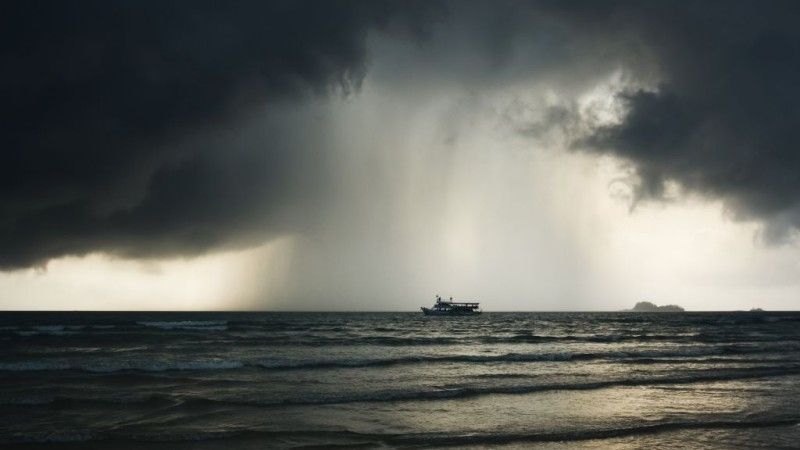
The sinking of theMS Jan Heweliusz in January 1993 remains the worst peacetime maritime disaster in Poland’s modern history. Most recently, Jan Holoubek’s 2025 feature filmHeweliusz revived national attention to the tragedy, highlighting both the human dimension of the disaster and the broader questions it raises about accountability, maritime safety, and institutional responsibility. As such, it invites a sober counter-factual analysis: Would such a disaster happen today? And, more specifically, would Poland’s membership of the European Union and the North Atlantic Treaty Organisation, closer international cooperation and higher safety standards help to prevent it?
Author: Dr Michał Zgórzak
Summary of the Heweliusz disaster
The Jan Heweliusz was a roll-on/roll-off (ro-ro) ferry built in 1977, owned by a Polish state-owned line, operating between Świnoujście (Poland) and Ystad (Sweden). On the night of 13-14 January 1993, the vessel sailed in stormy conditions—winds reaching hurricane-force (Beaufort scale ~12), waves up to 5-6 m. It capsized and sank off the coast of Rügen, with only nine survivors and some 56 lives lost.
Key contributing factors (from investigation and retrospective commentary):
- The vessel had a troubled operational history: nearly 30 serious incidents over 15 years, including a fire in 1986 after which repairs involved adding large amounts of concrete to the deck, adversely affecting stability.- Shortly before departure the ferry's stern gate (ramp) was damaged; only provisional repairs were made and the departure was delayed.- Operational decisions under pressure: the ship sailed despite the weather warning and delay, attempting to make the scheduled voyage.- Stability and ballast issues: the anti-rolling (stabilising) system was used inappropriately, ballast filling was contrary to operational recommendations, and cargo securing failed when the ship listed.- Rescue-/emergency-response shortcomings: the rapid capsize meant lifeboats could not be launched; the extremely cold water (~2 °C) led to very low survival chances; mis-communication delayed rescue.- The investigation was flawed and protracted, with partial liability found for the shipowner, classification society and the Polish maritime authority, but no full clear resolution.
In essence: a combination of technical deficiency (ship design and condition), operational/management errors, extreme weather, sub-standard maintenance/repair, and weak oversight.

Changes since 1993: Poland, EU & NATO, and maritime safety
Poland’s operational/regulatory posture
Since 1993, Poland has become a member of the EU (2004) and NATO (1999 for NATO, somewhat earlier) and has deepened its integration in Western institutions. From a maritime perspective, Poland is now fully committed to administering and enforcing international conventions via the International Maritime Organization (IMO) and EU directives. For example, Poland notes that it „has ratified and implemented most International Conventions and other instruments established under the auspices of the IMO” as a flag-state, port-state and coastal-state.
EU legislative/regulatory advances in maritime safety
Perhaps most pertinent are the EU’s developments in ferry/ro-ro-passenger-ship safety:
- The EU has dedicated legislation for passenger-ships: for example, Directive 2009/45/EC covers passenger ships made of steel or equivalent, setting out technical requirements on vessel construction, stability, fire protection, and life-saving equipment.- For ro-ro passenger ships, the EU has issued inspection rules (Directive 2017/2110) replacing earlier rules (Directive 1999/35/EC) on mandatory surveys for regular ro-ro services.- In April 2023 the Council adopted a further law to improve stability requirements for ro-ro passenger ships (in alignment with IMO's 2020 convention amendments).- In November 2024, the EU adopted a "maritime safety" legislative package strengthening accident-investigation, port-state control, flag-state compliance, etc.
Thus, much stricter and more harmonised standards apply across EU member states for ferry and ro-ro operations, including: improved stability criteria, more rigorous inspections, greater port-state oversight, and better accident-investigation regimes.
International cooperation & NATO implications
Membership of NATO does not directly regulate civilian ferry safety, but being a member implies a higher standard of institutional capabilities (search & rescue, maritime traffic monitoring, inter-state cooperation). Being in the EU also means access to cross-border rescue coordination, shared best-practice regimes, and peer review. The EU’s common maritime safety policies facilitate cooperation between coastal states (Poland, Germany, Scandinavia) that share the Baltic Sea.
Would the disaster "happen today"? — A risk-assessment
In evaluating whether a Jan Heweliusz-type disaster could occur in today’s environment, one must adopt a nuanced view: risk is never zero, but the likelihood and severity of such an event are materially reduced.
Factors reducing the risk
- Stricter technical/regulatory standards
- A ro-ro ferry operating in the Baltic today would be subject to EU inspection rules (e.g., Directive 2017/2110) requiring mandatory surveys, certification of stability, and regular inspection of ro-ro passenger services.- The improved 2023 directive on stability for ro-ro passenger ships means that modern vessels must meet higher criteria for survivability after damage.- The IMO conventions (ratified by Poland) and EU implementation ensure that flag-state oversight is stronger than in the early 1990s.
- Better operational oversight & management standards
- Company operations (ship-owners and managers) are subject to greater scrutiny, certification (ISM Code – International Safety Management), port-state control inspections, and transparency than was the case in Poland circa 1993.- Greater awareness of severe weather risk and improved meteorological forecasting facilitates go/no-go decisions and safer routing.
- Enhanced rescue & coordination capabilities
- With Poland in the EU and cooperating with neighbouring states (Germany, Denmark, Sweden), search & rescue coordination is stronger, as are systems for locating vessels, more modern lifeboats and survival suits, and faster rescue response.- The EU's maritime safety package (accident-investigation, port-state control) strengthens post-accident learning, which reduces systemic risk over time.
- Flag-state and port-state control harmonisation
- EU membership implies that foreign‐flag vessels operating to/from Polish ports are subject to port-state control inspections aligned with EU/IMO standards.- The four-piece legislative package adopted in 2024 strengthens port-state control and flag-state compliance across the EU.
Factors that still pose risk or reduce guarantee of prevention
However, despite the advances, several vulnerabilities remain:
- Extreme weather events & inherent risk
- The Heweliusz disaster occurred under hurricane-force winds and severe waves (Beaufort ~12) which are inherently hazardous. Even today, if a vessel is structurally or operationally compromised, extreme weather remains a major hazard. The environment cannot be fully controlled.- The Baltic Sea, while comparatively short-range, still poses risks of sudden extreme storms; the human/operational margin for error remains small.
- Older vessels & maintenance issues
- Although regulatory standards exist, the actual condition of vessel structures, repairs, and maintenance may lag, particularly for older vessels or poorly managed operators. The Heweliusz case involved previous damage (fire, 70-ton concrete repair) undermining stability. If a vessel entered service before modern rules and was grandfathered or poorly retrofitted, residual risk exists.- Human factors (crew decisions, company commercial pressure) remain relevant: an operator under commercial pressure may still sail under sub-optimal conditions.
- Implementation/enforcement gaps
- Having rules is one thing; enforcing them is another. Even within the EU, disparities in enforcement capacity and national oversight may allow risk to persist.- The gap between theoretical compliance and operational reality (cargo securing, ballast operations, emergency protocols) can render a well-certified vessel unsafe in practice. The Heweliusz case revealed not just regulatory gap but operational / corporate failure.
- Inter-state coordination in high-stress conditions
- While rescue coordination is better, the timing and effectiveness of evacuation in a rapid capsize scenario still depend on human/organisational readiness, equipment, survival-gear standards (thermal suits, lifeboats) and location of the incident. The earlier case found lifeboat launch impossible and survival suits absent.- In addition, the business model of ro-ro ferries (heavy vehicles, large open decks, potential for rapid listing) remains intrinsically riskier than conventional passenger ships.
Overall assessment
Putting the two sets of factors together: Yes, it ismuch less likely that a disaster exactly like Jan Heweliusz would occur today in Polish waters or on a ferry operated under EU/Polish oversight — because the regulatory, operational and cooperative ecosystem is far stronger than in 1993. Poland’s EU and NATO membership, the shared EU maritime safety regime, and cross-border rescue cooperation all contribute significantly to risk reduction.
However, no guarantee exists. If one imagines a highly unlucky combination of: an older ferry with compromised structural stability, sailing in extreme weather, in a remote location, with an operator under commercial pressure, and a rapid capsize scenario — a serious maritime disaster could still occur. The regulatory improvements reduce but do not eliminate systemic, operational and environmental risk.
Lessons & remaining vulnerabilities for Poland and the Baltic region
Even though the risk has been reduced, the Jan Heweliusz case remains a vivid reminder of:
- The importance of maintenance, repair integrity and design stability: A vessel's history of damage and repair (especially by ad-hoc means) can undermine safety in extreme conditions.- The necessity of strong enforcement and inspection culture: Regulatory standards are only as good as their implementation, inspection regimes and compliance culture.- The criticality of operational decision-making under weather stress: Even technically sound vessels can fail if decisions (to sail, ballast configuration, loading) are flawed.- The value of cross-border cooperation in search & rescue, especially in the Baltic Sea which involves multiple states in a shared maritime region.- The need for continuous updating of standards: The fact that the EU in recent years has updated stability requirements for ro-ro passenger ships (2023 directive) shows that safety is a moving target.- Awareness that risk is never zero: Maritime transport still faces hazards from weather, human error, and structural failure.
For Poland and the Baltic region specifically, this means continuous attention to the condition of ro-ro vessels, ensuring that ship-owners and operators are held to modern standards, and that rescue / evacuation protocols remain state-of-the-art.
Conclusion
Would theJan Heweliusz disaster happen today? Probably not in the same way, and the probability of such a disaster is significantly lower than in 1993 because of stronger regulatory frameworks, Poland’s integration into the EU and NATO, improved inspection and rescue regimes, and heightened cross-border cooperation. Poland’s membership of the EU and the resultant harmonised safety standards and oversight would likely have prevented many of the underlying causes (vessel structural issues, inadequate inspection, weaker rescue coordination) from accumulating.
However, the answer is not a categorical „no” — the risk of a major ro-ro ferry accident cannot be erased entirely. Extreme weather, human or operational error, or a vulnerable vessel could still combine to produce a serious incident, albeit the odds are reduced and the potential for mitigation is far greater now.
From a policy perspective, the key takeaway is that institutional frameworks matter, but culture, implementation, vigilance and maintenance matter equally. The legacy ofJan Heweliusz should continue to inform maritime safety policy, operator culture and cross-national cooperation in the Baltic region.
Finally, Jan Holoubek’s filmHeweliusz (2025) has recently reignited public discussion of the disaster, bringing renewed attention to the victims, the investigative shortcomings of the time, and the lessons still relevant to contemporary maritime safety. The film serves as both a cultural commemoration and a reminder of the enduring importance of transparency, responsibility and learning in the face of tragedy.
References
- European Council (2023). 'Maritime safety: Council adopts legislation for safer journeys with ferries in Europe.' Retrieved from https://www.consilium.europa.eu/en/press/press-releases/2023/04/25/maritime-safety-council-adopts-legislation-for-safer-journeys-with-ferries-in-europe/
- European Council (2024). 'Maritime safety: Council adopts new laws to support safe, clean and modern shipping in the EU.' Retrieved from https://www.consilium.europa.eu/en/press/press-releases/2024/11/18/maritime-safety-council-adopts-new-laws-to-support-safe-clean-and-modern-shipping-in-the-eu/
- European Commission (n.d.). 'Safety of passenger ships in EU waters.' Retrieved from https://transport.ec.europa.eu/transport-modes/maritime/safety-and-environment/safety-passenger-ships\_en
- EU Monitor (2017). 'Directive (EU) 2017/2110 on a system of inspections for the safe operation of ro-ro passenger ships.' Retrieved from https://www.eumonitor.eu/9353000/1/j9vvik7m1c3gyxp/vkk0b9thb8yq
- Government of Poland (n.d.). 'Poland fully committed to IMO.' Retrieved from https://www.gov.pl/web/maritime-poland/poland-fully-committed-to-imo2
- Poland at Sea (2022). '29 years ago, ferry Jan Heweliusz sank.' Retrieved from https://www.polandatsea.com/29-years-ago-ferry-jan-heweliusz-sank/
- Polskie Radio (2023). 'Secrets of the Jan Heweliusz disaster: why conspiracy theories still surround Poland's worst post-war maritime tragedy.' Retrieved from https://www.polskieradio.pl/395/7789/Artykul/3604847


