












- WIADOMOŚCI
Polish Army satellites being prepared for launch


Photo. ICEYE
In the coming days, the first satellite of the Polish Armed Forces, developed by ICEYE, will be launched into orbit. As part of the same mission, satellites from the PIAST (Polish ImAging SaTellites) project will also be sent into space.
“The first Polish military satellite is expected to be launched into orbit by SpaceX on Monday,” Deputy Prime Minister Władysław Kosiniak-Kamysz announced on Thursday (November 6). At this point, however, we know that the mission is scheduled for November 11. The announced launch includes, among others, a unit developed by ICEYE, whose co-founder is Rafał Modrzewski.

SAR for the Polish Armed Forces
It is worth noting that the exact launch date of the Transporter-15 mission depends on the rocket operator (in this case, SpaceX’s Falcon 9), which will make the final decision based on weather conditions and the technical status of the launch system.
It should be recalled that this satellite will be equipped with a Synthetic Aperture Radar (SAR). The acquisition of this unit by the Polish Armed Forces is the result of a contract signed in 2025 with a consortium composed of ICEYE Polska and Military Communications Works No. 1 (Wojskowe Zakłady Łączności Nr 1).
As the consortium leader, ICEYE is responsible for delivering the space segment (a total of three satellites). WZŁ-1, as a consortium member, will provide the ground segment along with a trailer-mounted satellite antenna. The contract also includes an option to purchase an additional three satellites and a Mobile Ground Segment. The total value of the contract amounts to PLN 860 million (gross).

The PIAST Project
The Falcon 9 rocket launch, scheduled for November 10, will also be significant for Poland for another reason. Onboard the SpaceX launch system will be three nanosatellites developed under the PIAST (Polish ImAging SaTellites) project.
“A total of four satellites are set to launch that day. It just so happened—somewhat by coincidence—that both the ICEYE satellite and the PIAST program satellites were placed on the same flight. Originally, these launches were to be separated by several weeks. This is a ‘Copernican revolution’ for Poland,” said Cezary Tomczyk in an interview with WNP.
It should be recalled that the PIAST project is co-financed by the National Centre for Research and Development (NCBR) under the SZAFIR program, initiated by the Ministry of National Defence. As part of this program, three optical-electronic imaging reconnaissance nanosatellites were developed based on the proprietary Hypersat platform by Creotech Instruments.

The project leverages the potential of cooperation between scientific institutions and private enterprises in developing solutions critical to national security and defense. The leader of the PIAST project is the Jarosław Dąbrowski Military University of Technology (Wojskowa Akademia Techniczna im. Jarosława Dąbrowskiego), with consortium members including Creotech Instruments S.A., Łukasiewicz Research Network – Institute of Aviation, PCO S.A., the Space Research Centre of the Polish Academy of Sciences, and Scanway S.A.
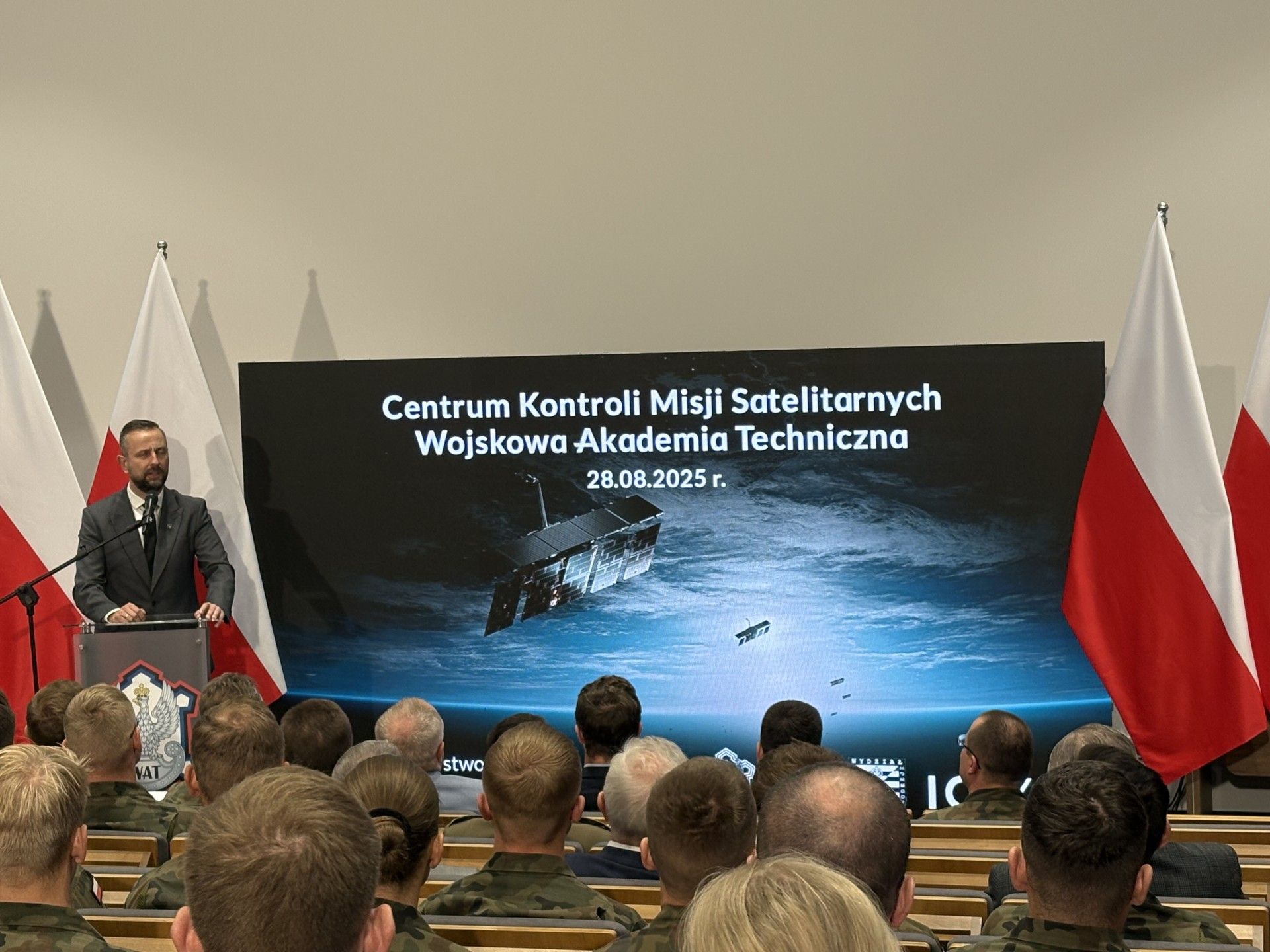
In this context, it should also be noted that under the PIAST project, the WAT Satellite Mission Control Center was established. This infrastructure enables full autonomy in satellite operations—from monitoring and management to data analysis—without relying on foreign solutions or external entities.
Building Sovereign Capabilities
The above information once again demonstrates that Poland has recently made significant progress in developing its own space capabilities. The greatest advances can be seen in the field of military satellite reconnaissance. The main objective is to ensure intelligence independence and enhance the effectiveness of operational activities both in peacetime and during crises.
In the face of growing geopolitical challenges and technological progress, this is a necessity that must be continued to further strengthen national security. Until recently, Poland relied primarily on cooperation with its allies. Now, the situation is changing.


