












- ANALIZA
- WIADOMOŚCI
China’s J-16 faces Rafale in Egypt

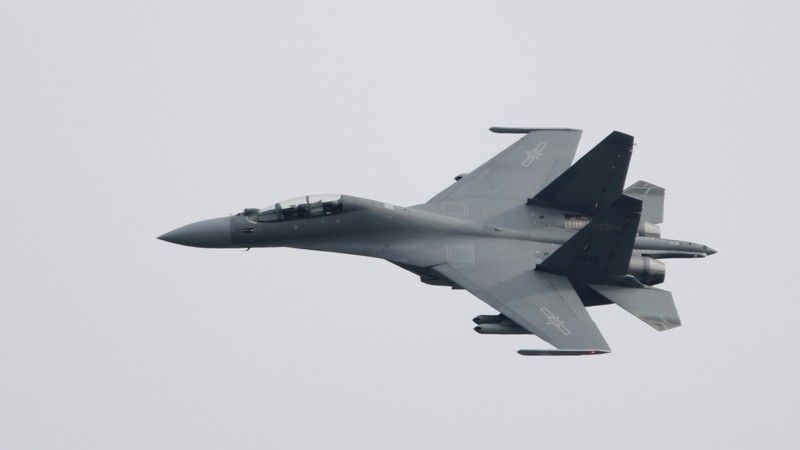
Photo. Russian MOD via Wikimedia Commons
Chinese J-16 fighters have trained against Egyptian Rafales in what appears to be the first publicly confirmed exercise involving the two types. The encounter is important, but not because it can tell us whether the Chinese fighter is “better” than the French aircraft. China deployed to Egypt an entire package including airborne early warning, electronic warfare, tankers and transport aircraft. This was therefore also a test of how the People’s Liberation Army Air Force (PLAAF) can operate thousands of kilometres from China and against Western-built systems.
The J-16 and Rafale conducted one-on-one air combat training on 23 August as part of the second edition of the Chinese-Egyptian Eagles of Civilization exercise. The programme is expected to expand from basic 1-vs-1 and 2-vs-2 engagements to more complex operations involving larger formations. This is important because at that stage the exercise is no longer about comparing two aircraft. The J-16 can operate with the KJ-500 airborne early warning aircraft, YY-20A tanker and other Chinese assets, turning the training into a test of an entire reconnaissance, command and combat system.
Particularly interesting is the deployment of the Y-9LG electronic warfare aircraft. Its presence means that the Chinese side can observe the electromagnetic environment created during operations involving Egyptian Rafales. This does not mean that Cairo is providing China with technical parameters of the French SPECTRA self-defence system, nor is there evidence of a dedicated intelligence operation against the Rafale. Nevertheless, every exercise involving a Western combat aircraft gives China an opportunity to collect information about how its sensors, communications and electronic systems behave in realistic conditions.
The scale of the deployment is equally significant. Chinese aircraft covered more than 6,000 kilometres on their way to Egypt, with J-16s supported by YY-20A aerial refuelling aircraft. It is the first deployment of J-16 fighters to Africa. A year earlier China had already sent J-10Cs, KJ-500s and YY-20s to Egypt, but the 2026 exercise represents another increase in both the scale and quality of the forces deployed. Beijing is therefore demonstrating not only individual aircraft, but also its growing ability to rapidly move and sustain a sizeable air package far from Chinese territory.
At the same time, there is currently no reliable information about who “won” the engagements. Neither side has published the number of simulated kills, detailed rules of engagement, starting conditions or the extent to which sensors and supporting aircraft were used. Videos showing a Rafale or J-16 in a particular position during manoeuvring combat cannot be treated as evidence that one aircraft dominated the other. Claims appearing in Chinese social media that the J-16 defeated the Rafale should therefore be considered part of the information narrative surrounding the exercise rather than a confirmed result.

The Indian dimension is also difficult to ignore. China is receiving a rare opportunity to train against the same basic aircraft type that forms an important part of the Indian Air Force. Egyptian and Indian Rafales are not identical, however, and India ordered a number of country-specific modifications. The PLAAF can learn about the Rafale’s flight characteristics and observe how the platform is used, but Eagles of Civilization is not a rehearsal for combat against Indian Rafales.
There is also a broader political context. The exercise takes place as military relations between Beijing and Cairo continue to develop and shortly before Xi Jinping’s planned visit to Egypt. This should not automatically be interpreted as evidence that Egypt intends to purchase Chinese fighters. Beijing itself previously rejected reports about a sale of J-10CE aircraft to Cairo. What is visible, however, is something broader: China is increasingly willing and able to deploy advanced combat aircraft, tankers, early-warning and electronic-warfare platforms far beyond Asia. Egypt gives Beijing both a valuable training environment and an opportunity to demonstrate that the PLAAF is becoming an increasingly expeditionary force.


