












- WIADOMOŚCI
- ANALIZA
The OSCE still talks to Russia. Does it matter?

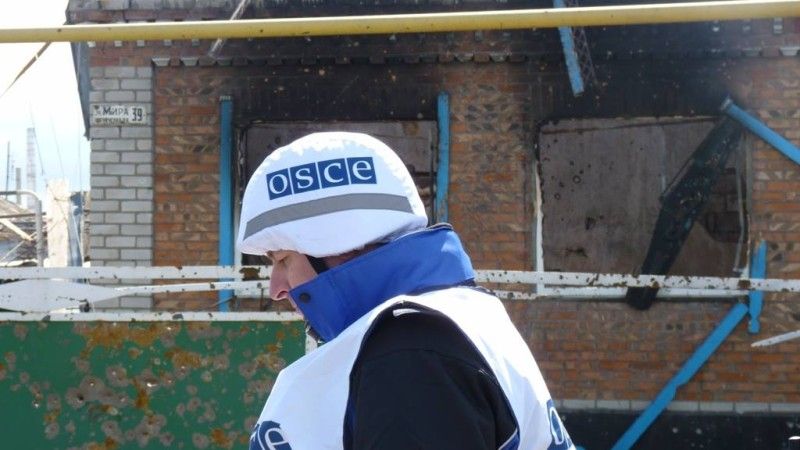
Russia has repeatedly violated the principles on which the OSCE was built, from the war in Georgia and the annexation of Crimea to the full-scale invasion of Ukraine, yet Moscow remains part of the organisation and continues to influence its functioning. This situation appears deeply contradictory, but excluding Russia could also remove one of the few remaining institutional channels of communication between Moscow and Western states, making the OSCE both one of the weakest and potentially one of the most necessary elements of the European security architecture.
The Organization for Security and Co-operation in Europe entered the war in Ukraine from a particularly difficult institutional position because it is neither a military alliance nor an organisation capable of imposing economic sanctions. Its principal instruments are political dialogue, monitoring, confidence-building measures, human-rights mechanisms and support for conflict prevention, which means that its effectiveness depends largely on the willingness of participating states to cooperate. Russia’s actions have therefore challenged the organisation in a way that goes directly to the foundations of its model.
Before the full-scale invasion, the OSCE had played an important role in efforts to manage the conflict in eastern Ukraine. Following the annexation of Crimea in 2014, its representatives participated in diplomatic and monitoring mechanisms designed to reduce violence and support negotiations, including the Trilateral Contact Group. Although these initiatives were unable to produce a lasting political settlement, they created one of the few institutional frameworks in which Russia, Ukraine and other actors could maintain structured communication.
This system largely collapsed after Russia recognised the self-proclaimed Donetsk and Luhansk entities and launched the full-scale invasion in February 2022. The war demonstrated that the mechanisms based on dialogue and confidence-building had failed to prevent escalation, while Moscow’s actions openly contradicted principles contained in the Helsinki Final Act and the Charter of Paris. The invasion was therefore not only a challenge to Ukraine’s sovereignty, but also a rejection of the political commitments on which the OSCE had been built.
Relations between Russia and the organisation had already been deteriorating for years. Moscow increasingly accused Western states of using the OSCE as an instrument for promoting their political interests and criticised the organisation’s emphasis on democratic institutions, elections, human rights and civil liberties. Western states, in turn, pointed to Russia’s military intervention in Georgia in 2008, the annexation of Crimea in 2014 and repeated violations of the commitments it had accepted within the OSCE framework.
Belarus created an additional source of tension, particularly after the disputed presidential election of 2020 and the subsequent repression of political opponents and civil society. Participating states used OSCE mechanisms to investigate alleged human-rights violations, but the recommendations were largely rejected by the authorities in Minsk. This demonstrated another weakness of the organisation: it can document abuses, formulate recommendations and increase political pressure, but it has limited capacity to compel states to change their behaviour.

The war in Ukraine nevertheless gave the OSCE renewed importance as a forum for political confrontation and documentation. During Poland’s chairmanship in 2022, extraordinary meetings were convened following Russia’s recognition of the separatist entities and later after the invasion, while Polish Foreign Minister Zbigniew Rau and OSCE Secretary General Helga Maria Schmid repeatedly called on Moscow to cease hostilities. The conflict quickly dominated the organisation’s agenda and became the principal reference point for discussions on European security.
Other OSCE institutions also continued to operate, despite the increasingly difficult political environment. The Representative on Freedom of the Media condemned attacks on journalists and restrictions on access to information, while the Office for Democratic Institutions and Human Rights addressed repression of anti-war protesters in Russia and Belarus and supported initiatives concerning refugees and vulnerable groups. These activities did not change the course of the war, but they preserved the organisation’s role in documenting violations and supporting standards related to human rights and democratic governance.
The Moscow Mechanism became particularly important because it allowed participating states to establish expert missions investigating violations of international humanitarian law and human rights. Reports published under this mechanism documented evidence concerning war crimes, attacks on civilians and other abuses committed during the conflict. Although the OSCE itself cannot prosecute perpetrators, such material can contribute to future accountability mechanisms and provide an independent record of violations.
The organisation’s most serious weakness remains its reliance on consensus, which gives individual states significant ability to obstruct decisions. Russia can therefore limit initiatives directed against it, while attempts to use extraordinary procedures such as “consensus minus one” are politically difficult and could still face opposition from Belarus or other participating states. This institutional design was intended to encourage cooperation, but in the current environment it often allows precisely those states accused of violating OSCE principles to weaken the organisation’s response.
At the same time, excluding Russia would create a different set of problems. The OSCE remains one of the few formal institutions in which Russia, Belarus, Western states and countries of Central Asia continue to participate together, which means that its value does not derive only from its ability to adopt decisions. Maintaining a forum in which communication remains possible may become increasingly important if negotiations, ceasefire arrangements or confidence-building measures are required at a later stage.
Removing Russia could therefore strengthen the organisation politically in the short term while simultaneously reducing its usefulness as a pan-European security forum. It could also weaken mechanisms for monitoring human-rights developments inside Russia and eliminate channels that may still be relevant for other unresolved conflicts in the post-Soviet space. This creates a difficult balance between preserving institutional credibility and maintaining access to an adversary that increasingly rejects the principles of the organisation itself.
See also 

The OSCE should therefore not be judged according to the same criteria as NATO or the European Union. It cannot provide military guarantees, impose significant economic costs or force Russia to withdraw from Ukraine, but it can preserve channels of communication, document violations, support civil society and maintain mechanisms that may become useful when political conditions change. Its weakness in enforcement is obvious, but that does not automatically make its existence irrelevant.
The war in Ukraine has consequently demonstrated both the limitations and the continuing utility of the OSCE. Its consensus-based system allows Russia to obstruct decisions and undermines the organisation’s ability to respond decisively, yet the same inclusive structure means that it remains one of the few forums capable of maintaining institutional contact across the political divide in Europe. The most important question is therefore not whether the OSCE can stop Russia today, because it clearly cannot, but whether Europe will still need an organisation capable of speaking to Russia when the conditions for negotiations eventually emerge.


