












- ANALIZA
- KOMENTARZ
- OPINIA
- WIADOMOŚCI
The role of the UN and the OSCE in maintaining peace and security

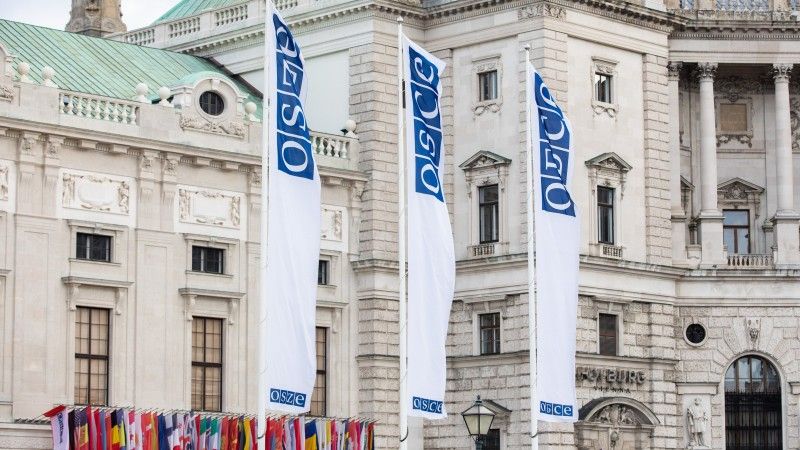
Another aspect that requires particular attention is the role of the UN organisation in ensuring peace and stability in the Central and Eastern European region. The UN, as the main entity responsible for maintaining international order and ensuring security, has in recent years shown numerous difficulties in coping with political, military and humanitarian crises.
The organisation has become the object of criticism because it has failed to effectively prevent the escalation of conflicts in various parts of the world, including in Ukraine, Syria and Libya. Although the UN still possesses an important role in the codification of international law and in dispute resolution, its effectiveness in practice is often limited by the lack of political will and difficulties in ensuring close cooperation between member states. In this context, international law plays an extremely important role, providing a framework for the peaceful settlement of disputes and for establishing rules concerning relations between states. The development of international conventions regulating issues of war, humanitarian law, the law of the sea, or the principles of diplomacy constitutes an important element of the international order.
Conventions such as the Universal Declaration of Human Rights, the International Covenant on Civil and Political Rights, or the International Covenant on Economic, Social and Cultural Rights are intended to protect individuals from abuses of power and to ensure the observance of their fundamental rights. It should be stated that the lack of effective UN action in many cases results from the absence of political will on the part of member states. The Security Council, whose task is to maintain international peace and security, is indeed the main body responsible for making decisions in crisis situations; however, its effectiveness depends on the consent and cooperation of all member states.
There are cases in which Security Council decisions are blocked by members possessing the right of veto, which may lead to paralysis of the organisation in the face of crises. The lack of unanimity in the Security Council, particularly in the case of states holding the veto, often leads to situations in which UN actions are delayed or insufficiently effective. Consequently, although the UN is an important instrument, responsibility for peace and security in the world is divided between international institutions such as the Security Council and the member states themselves, which must take active steps to maintain international order. For the UN to perform its role effectively, member states must demonstrate greater solidarity and readiness to act jointly for global security. New or relatively new UN instruments are intended to contribute to ensuring security also in its non-military dimensions. Among them, one may indicate the concept of the „responsibility to protect” and the new body, the Peacebuilding Commission. The war in Ukraine, the annexation of Crimea by Russia, and threats from separatist groups clearly indicate the need to strengthen the presence and effectiveness of UN actions in this region.

Traditional UN security mechanisms, including peacekeeping operations, sanctions or mediation, often prove insufficient in the face of contemporary threats. Therefore, in order to meet contemporary challenges, it is necessary to introduce new solutions and to reform existing structures. The first key proposal is to improve the system of early warning and crisis response. In the Central and Eastern European region, sudden escalations of conflicts often occur, which requires effective mechanisms of forecasting and immediate action. The UN could introduce more advanced data analysis tools, using artificial intelligence and big data technologies to monitor potential threats. Cooperation with regional organisations such as the OSCE or NATO could intensify the exchange of intelligence information and increase the effectiveness of undertaken actions. An important aspect would also be strengthening the role of UN regional offices, which could engage more actively in local peace initiatives.
Another important element of reform should be the adaptation of UN peacekeeping operations to the specific nature of threats in Central and Eastern Europe. Traditional peace missions, consisting in monitoring ceasefires or separating fighting parties, are often ineffective in the context of hybrid conflicts where the boundary between the state and non-state actors is blurred. In response to these challenges, the UN could consider creating special rapid response teams composed of experts in cybersecurity, mediation and state reconstruction. Such teams could conduct their work on the basis of flexible operations, adapting their tasks to a specific situation.
The issue of cybersecurity constitutes another area in which the UN should intensify its actions. In the Central and Eastern European region, cyberattacks have become a significant tool of destabilisation, used by third states and criminal groups. The UN could establish an international centre for cybersecurity, which would cooperate with the states of the region in the exchange of information, training and the development of common defence strategies. The introduction of international standards concerning the protection of critical infrastructure and counteracting disinformation could significantly improve the situation in the region.

It is equally important to strengthen UN mediation mechanisms. Conflicts in Central and Eastern Europe often have a complex character resulting from a mixture of historical animosities, geopolitical rivalry and economic problems. The UN should develop a network of specialised mediators possessing deep knowledge of local realities and negotiation skills. Reform of the UN Security Council is another proposal that could influence the improvement of security mechanisms in Central and Eastern Europe. The current system, based on the veto right of the five permanent members, often leads to decision-making paralysis, particularly in matters concerning conflicts involving one of those states. Considering the introduction of limitations on the use of the veto in situations concerning serious violations of international law could increase the effectiveness of UN actions. The proposed changes in UN security mechanisms with regard to Central and Eastern Europe require a comprehensive approach combining technological modernisation, institutional reform and strengthening of cooperation with other international and local entities. Only through flexible and innovative actions will the UN be able to meet the challenges of the contemporary world and contribute to ensuring stability in this key region.
The Organization for Security and Co-operation in Europe is one of the key international institutions working to maintain peace, stability and security in Europe as well as in post-Soviet areas. From the perspective of contemporary challenges, the OSCE remains one of the foundations of the international system that seeks to counteract destabilisation, particularly in Central and Eastern Europe, a region affected by many problems connected with the observance of democratic principles, armed conflicts and external interference, including above all from Russia. Among the more important activities undertaken by the OSCE is the organisation of observation missions during elections taking place within its area of activity. These missions aim to assess the compliance of elections with international democratic standards, monitor the electoral process, transparency, as well as the observance of civil and political rights.
The OSCE emphasises the full independence of these missions, which are carried out by a team of qualified experts, and their aim is an objective assessment that may influence the shaping of international opinion concerning the conducted elections. An important element of the mission is also the communication of conclusions and recommendations intended to improve electoral standards in the countries organising elections. However, although the OSCE may play an important role in monitoring democratic processes, a challenge remains cooperation with states that are resistant to democratic change and whose actions may undermine the effectiveness of observation missions. Here one should indicate the Russian Federation and Belarus, where the political situation is complicated and cooperation with the OSCE encounters numerous difficulties. In the case of these states, decision-making within the OSCE is hindered due to the unanimity mechanism, which allows each member of the organisation to block initiatives that may be contrary to their national interests.
See also 
The example of Belarus, where the OSCE was not invited to monitor elections, is only one of many such cases indicating difficulties in fulfilling the organisation’s full role in regions where democratic processes remain heavily influenced by authoritarian governments. The first area in which the OSCE must adapt its security mechanisms is the strengthening of early warning systems and conflict prevention. After the end of the Cold War, the OSCE developed tools intended to prevent conflict escalation through dialogue, mediation and preventive diplomacy. However, contemporary threats, including humanitarian crises, political destabilisation, as well as unstable borders and ethnic tensions, pose new challenges for the OSCE.
In the context of Central and Eastern Europe, where many states still struggle with problems connected with European integration and various ethnic and political tensions, the OSCE will have to invest in the development of more advanced monitoring systems enabling faster identification of potential crises and minimising the risk of their escalation. The traditional OSCE role in maintaining peace through peacekeeping and monitoring missions remains important, particularly in regions affected by armed conflicts. Nevertheless, contemporary challenges compel the organisation to develop new crisis response mechanisms.
Contemporary conflicts often have a hybrid character, encompassing both military actions and unconventional instruments such as information warfare, economic warfare, or conflicts in cyberspace. The OSCE should therefore develop the capacity to respond to such changes in the nature of contemporary conflicts and engage in mediation and the resolution of tensions that may lead to escalation. An important element of the future of the OSCE in the region is also integration with other international organisations such as NATO, the European Union or the UN. Cooperation with these organisations may contribute to increasing the effectiveness of OSCE activities in the field of regional security. Strengthening cooperation in the areas of defence, crisis management and the development of democratic institutions constitutes the foundation for building stability in Central and Eastern Europe.

The OSCE should also focus on supporting integration processes that will allow the development of stable democratic institutions in the region, which in the long term would improve security and increase cooperation among member states. In the long-term perspective, despite the problems and limitations connected with OSCE activity, drastic changes in the functioning of this organisation should not be expected. Owing to the complicated geopolitical situation, including the influence of Russia and other states that do not always share the same values and goals related to the peaceful settlement of disputes and the promotion of democracy, the OSCE does not have sufficient means to introduce radical reforms.
The organisation will rather continue its existing projects and activities, such as supporting peace processes in conflict regions. Actions aimed at dispute resolution in places such as Nagorno-Karabakh, where the Minsk Group responsible for negotiating a settlement has been pushed into the background, demonstrate the marginalisation of OSCE missions and the lack of progress in international efforts to end this conflict. In the next decade, the situation should not change.


