












- WIADOMOŚCI
The Carpathian Eight begins. Poland at the centre of logistics and defence projects

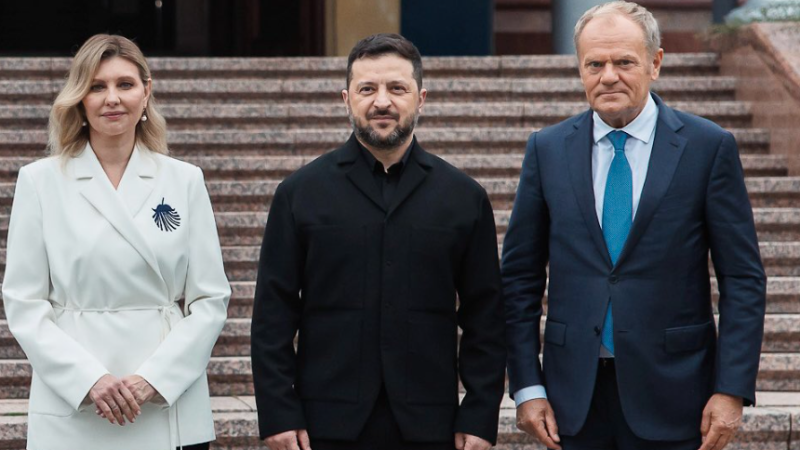
Volodymyr Zelenskyy has launched a new C8 format – the Carpathian Eight. The initiative is particularly interesting because it brings together countries with very different approaches to the war and military support for Ukraine. Poland and Romania remain among Kyiv’s more active partners, while Hungary, Serbia and Slovakia pursue much more cautious policies. The common denominator is therefore not only security, but also transport, energy, infrastructure and Ukraine’s reconstruction.
The format brings together Ukraine, Romania, Serbia, Poland, Slovakia, the Czech Republic, Austria and Hungary, with the European Union also involved. This heterogeneity may actually become one of its main advantages. Kyiv is creating a mechanism in which a country does not have to provide weapons to Ukraine in order to participate in common projects. For some participants, agreement on railways, energy, border infrastructure and investment will be much easier than agreement on further military assistance.
For Poland, the infrastructure dimension is particularly important. Projects presented around the C8 include a $216 million cross-border industrial park and terminal on the Polish-Ukrainian border, featuring a multimodal logistics hub capable of handling up to 150,000 TEU and more than 2 million tonnes of cargo annually. Another project, estimated at $441 million, concerns expanding Ukraine’s rail connections with the EU using the European gauge, including routes from Lviv, Uzhhorod and Kovel. C8 could therefore become much more than another regional consultation format.

Donald Tusk’s visit also has a defence dimension. Poland is discussing joining the Integrated Anti-Ballistic Missile Coalition, established in July by Ukraine, Denmark, France, Germany, Italy, the Netherlands, Norway, Spain, Sweden and the United Kingdom. Warsaw was not among the ten founding countries, so the current talks concern Poland joining an already existing initiative. Zelenskyy has also declared Ukraine’s readiness to share relevant technologies and experience with Poland.
The Carpathian Eight will matter only if political meetings are followed by concrete projects. In Poland’s case, three areas are already visible: border infrastructure, rail connections with Ukraine and possible participation in the European anti-ballistic missile coalition. If implemented, C8 could become one of the mechanisms permanently linking Ukraine with Central Europe’s transport infrastructure and security architecture. For Warsaw it is the pillar of security.


