












- WIADOMOŚCI
East Front News #59: Dutch forces join Poland to deter Russian threat

East Front News is a weekly newsletter summarizing the past week’s most important events concerning security and the situation in the Central and Eastern Europe region. It includes original opinions and comments, along with key news items significant from a Polish perspective. If you would like to receive this newsletter, please sign up by clicking .
Poland absent from European delegation to Washington amid Zelensky-Trump meeting
Neither PM Donald Tusk nor newly elected President Karol Nawrocki appeared alongside other European leaders during the high-stakes meeting between Donald Trump and Volodymyr Zelensky at the White House this Monday. Their absence has triggered anxiety and criticism in Poland about the country’s exclusion from what could be a decisive moment in the Russia–Ukraine war. Notably, neither Polish leader had received an invitation to the White House, nor did they appear to have taken initiative to secure Polish representation.
Even worse, both the presidential office and the government have sought to shift the blame onto each other. The Tusk government argues that foreign policy towards the U.S. should be handled by President Nawrocki, enjoying better relations with Trump. Meanwhile, the President’s camp claims it was the PM’s responsibility to engage, given that the visit was organized under the framework of the European „coalition of the willing.” Regardless of where the fault lies, the situation represents a diplomatic failure and an alarming sign for the future. It offers a troubling glimpse of how cohabitation conflicts and blame-shifting in foreign affairs may severely undermine Poland’s international standing and influence.
Author: Kacper Kremiec

The attack that nearly left one of Poland’s largest cities without water: On the front lines of Russia’s hybrid war
The Minister of Digital Affairs Krzysztof Gawkowski stated that on August 13, there was an attempt of the cyberattack that could have led to a situation in which one of Poland’s largest cities would have been left without water. He added that the services managed to detect the attack and thwart it at the last moment. This situation confirmed that water and sewage sector remains a constant target for cyberattacks. For last several months it was possible to see an increasing number of such incidents. Among the affected entities were Szczytno water treatment plant or the sewage treatment plant in Witkowo and many more. Currently the most vulnerable sectors of the Polish economy are energy, financial institutions, and public administration. In response, a BRAVO-2 alert level has been issued for Poland’s energy infrastructure, requiring public administration to intensify monitoring of ICT system security.
At this point it is worth highlighting that 99% of digital attacks on Poland are successfully neutralized which proves the high effectiveness of the services. According to Minister’s statement from April 2025, every month 60,000–70,000 cyberattacks are reported. Under these circumstances there should not be any doubt that we are in the middle of the hybrid warfare conducted by Russia and alligned regimes. As of now the only possibility is to strengthen national resilience and preparedness to prevent such attacks.
Author: Amelia Wojciechowska
Dutch forces join Poland to deter Russian threat
In December, 300 Dutch soldiers and two Patriot missile systems will be deployed to Poland. Two Patriot systems, a system NASAM, multi-layer air defence of short range and anti-drone systems have been put in place. This is how the Netherlands will support the Eastern Flank of NATO. The mission’s primary objective is to defend the NATO logistics hub and deter Russia. The mission will run until June 2026.
Full text is HERE
Author: Michał Górski
France shields defense budget amid deficit
France has safeguarded its defense spending despite a 5.8% budget deficit, boosting allocations to €64 billion by 2027 and accelerating modernization with new frigates, Rafale jets, SAMP/T air defense systems, and the revived Nostradamus radar for hypersonic detection. Alongside conventional upgrades, Paris is investing in quantum technologies, digital sovereignty, and satellite security, seeking to prepare for next-generation warfare and reduce reliance on external providers.
Still, Paris trails Germany (€75B) and the UK (€70B), while its own armed forces push for €100B to meet NATO’s 3.5% GDP target. France’s nuclear deterrent and command expertise remain valuable assets, but lasting credibility will depend on deeper European defense coordination—from procurement rationalization to joint EU borrowing in the 2028–2034 budget cycle.
Author: Dr Aleksander Olech
Sweden and Poland should seize the NATO moment
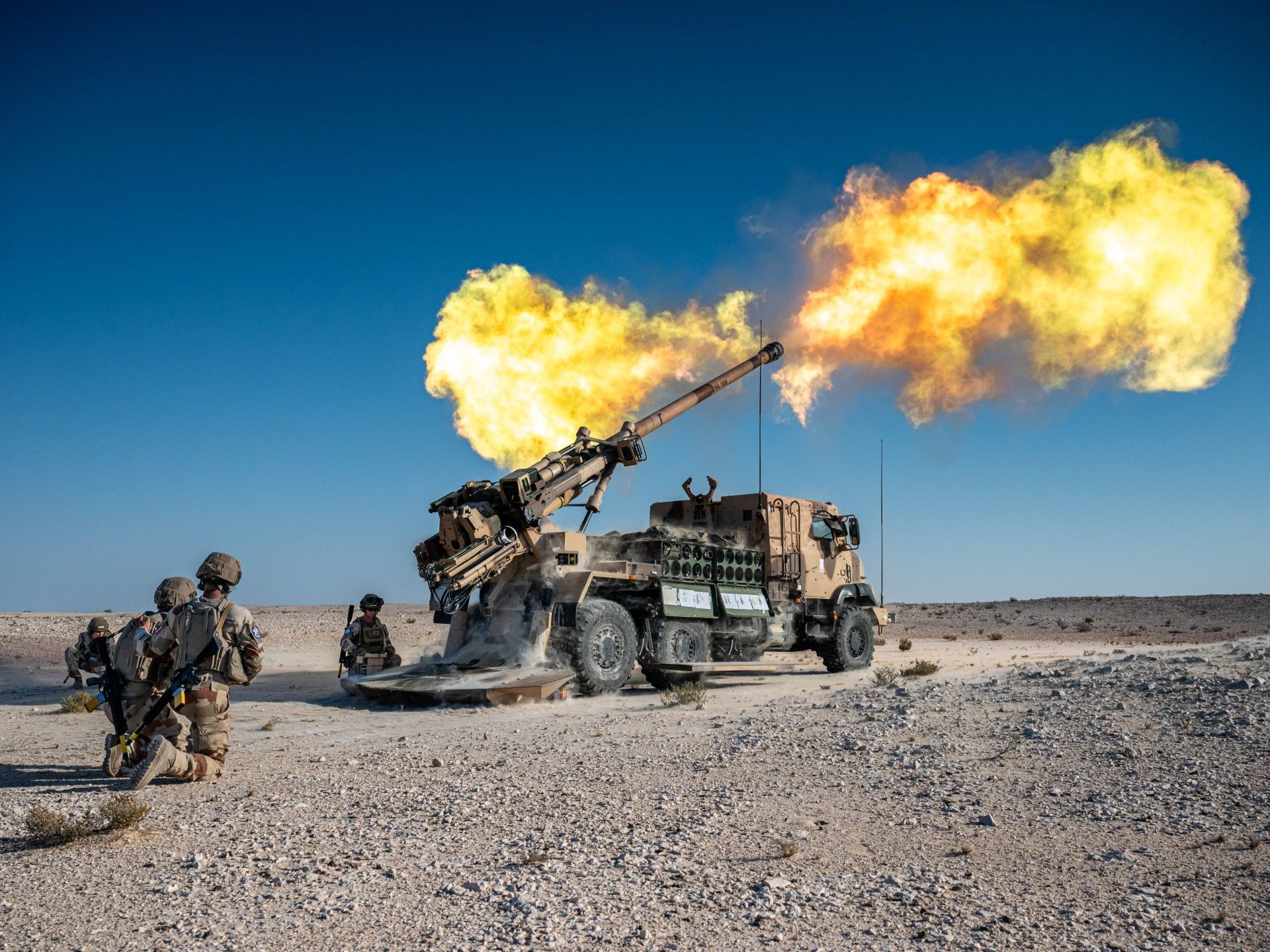
As NATO faces softened rhetoric but rising defence demands, Sweden and Poland stand poised to shape the Alliance’s future. United by robust defence investments, unwavering support for Ukraine, and a shared readiness to defend Europe, both nations have an unique opportunity to turn the „NATO moment” into lasting momentum for the entire Alliance.
A month ago, the NATO Summit concluded in the Hague. Many headlines derided the overt flattery of Trump, in particular newly appointed Secretary General Mark Rutte’s „daddy” remarks. A close look at the summit declaration revealed even further embarrassments.
Author: Anna Rennéus Guthrie
Deals, not words
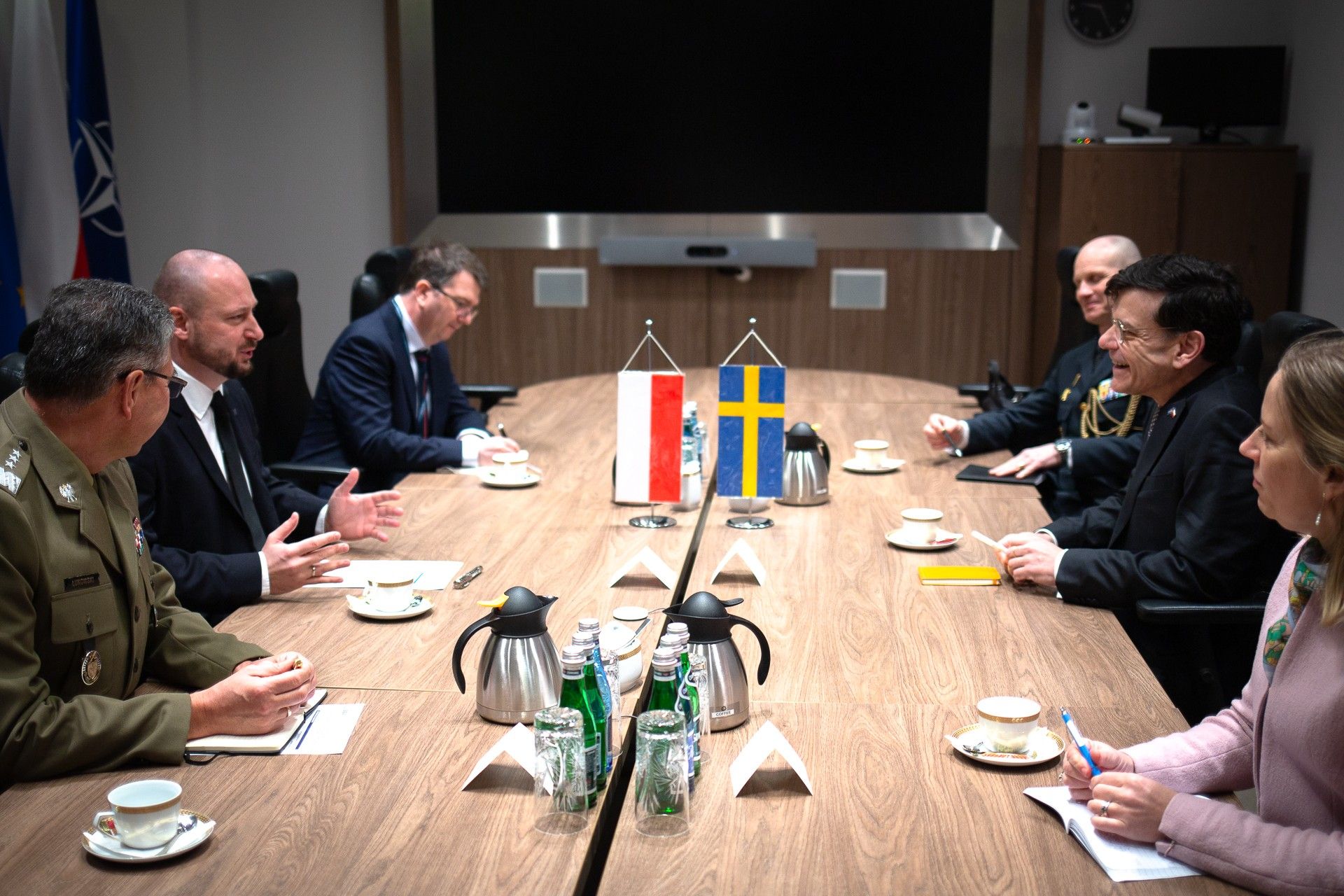
The White House meeting underscored a transactional reset: Trump positioning the U.S. as arms supplier, Europe as financier, and Ukraine as co-producer, with air defense, drones, and precision munitions at the core. While major Western states were present, the Eastern flank was sidelined—Baltics, Romania excluded, Poland absent—highlighting the gap between optics of unity and the mechanics of hard bargaining. For Europe, the challenge is to shift from symbolic attendance to measurable contributions in defense production and support.
Inside the room, leaders floated ceasefire ideas and formats to anchor Europe in negotiations, but Trump’s direct call to Putin made clear where leverage lies. Kyiv firmly rejected land-for-peace, instead preparing to buy $100B in U.S. arms (with European funding) plus $50B in drone co-production. The next phase will be narrower, number-driven, and defined by delivery schedules, costs, and rules for any peacekeeping mission. As Aleksander Olech warns, Europe’s relevance will not be secured by communiqués but by industrial output, air defense layers, and sustained training pipelines.
Author: Dr Aleksander Olech
Full text is HERE
Polish Armaments on the Arabian Peninsula
Poland is seeking a stronger foothold in the Gulf, where defense cooperation, cybersecurity, agriculture, IT, and healthcare offer clear opportunities. Ambassador Robert Rostek highlights ongoing efforts: Polish firms like PGZ, WB Electronics, and Comarch are active in the region, while Saudi forces already train in Poland. The Gulf’s appetite for defense technology and digital security aligns well with Polish expertise, and broader economic ties—worth about USD 8 billion annually—make Saudi Arabia Poland’s largest Arab partner. Yet, Warsaw remains cautious and underrepresented compared to competitors like France, India, or China, which leverage culture, investment, and aggressive diplomacy to secure influence.
With Saudi Arabia’s Vision 2030 and Oman’s Vision 2040 fueling demand for diversification, the window for foreign partners is now—but likely to close by the 2034 World Cup, when most megaprojects will be contracted. For Poland, the challenge is not capability but consistency and presence: unstaffed trade offices and limited promotion undercut an otherwise attractive offer. Rostek’s warning is clear—if Warsaw wants to matter in the Gulf’s transformation, it must act boldly and fast, or risk watching opportunities slip to more assertive rivals.
Author: Dr Aleksander Olech
Full interview with Ambassador Robert Rostek is HERE
If you would like to receive this newsletter, please sign up by clicking.
East Front News is a weekly newsletter and article on Defence24.com summarizing the past week’s most important events concerning security and the situation in the Central and Eastern Europe region. It includes original opinions and comments, along with key news items significant from a Polish perspective.


