












- WIADOMOŚCI
East Front News #76: What next for NATO's eastern flank?

East Front News is a weekly newsletter summarizing the past week’s most important events concerning security and the situation in the Central and Eastern Europe region. It includes original opinions and comments, along with key news items significant from a Polish perspective. If you would like to receive this newsletter, please sign up by clicking
Estonia's defence posture and its significance for NATO's Eastern Flank
As Russia’s war against Ukraine continues to reshape Europe’s security environment, Estonia has adopted a defence posture centred on deterrence by denial and immediate combat readiness. Rather than relying on delayed mobilisation or purely technological superiority, Tallinn emphasises the ability to fight effectively from the very first moment of a conflict. This approach is rooted in mass mobilisation, deep fires, resilient command-and-control structures, and a reserve-based force that is fully manned, equipped, and assigned clear wartime tasks in advance. Drawing lessons from Ukraine, Estonia prioritises speed, depth, and adaptability, recognising that high-intensity warfare demands sustained capacity rather than a single, decisive strike.
From a regional perspective, Estonia’s model has broader implications for the security of NATO’s eastern flank, particularly for Baltic–Polish defence integration. The emphasis on integrated fires, shared air and missile defence, interoperable logistics, and societal resilience reflects an understanding of the region as a single operational space. Estonia’s focus on total defence—combining military readiness with civil preparedness and public trust—strengthens collective deterrence by increasing the costs of aggression from the outset. For Poland and other allies, this approach underscores the need to move beyond platform-centric modernisation toward scalable mass, resilient societies, and deep operational integration capable of sustaining combat power in a prolonged conflict.
Author: Dr Aleksander Olech

Lithuania strengthens the Suwałki Gap
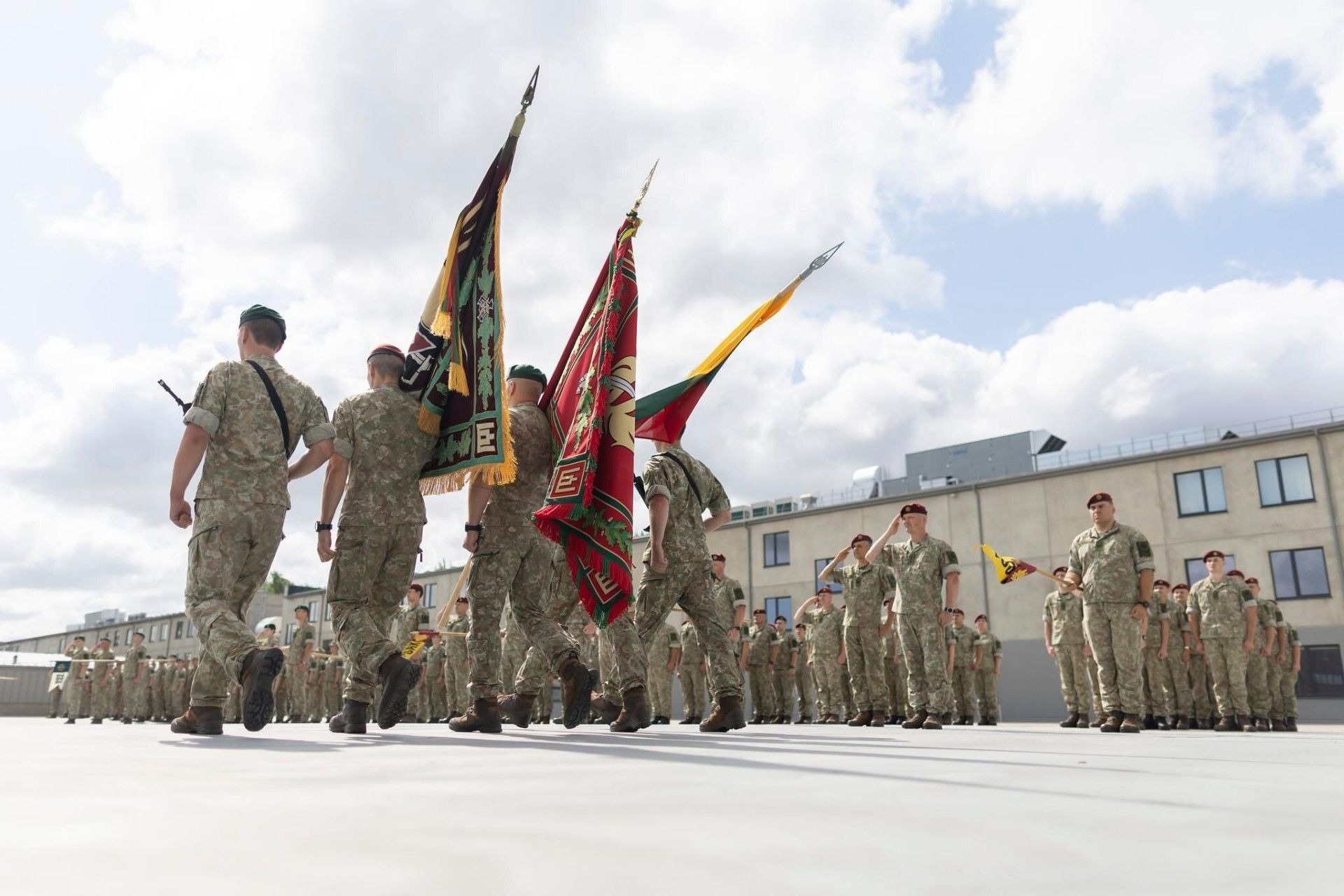
Security along the Suwałki Gap is set to be strengthened. Lithuania plans to establish a new military training area there, while the existing base in the region will undergo renovation.
The Lithuanian Ministry of National Defense announced its intention to build a new military training ground within the Suwałki Gap. As stated on the ministry’s profile on platform X, the project aims to „accelerate rapid response capabilities and secure a strategically important corridor.”
Author: Michał Górski
Ukraine's wartime defence industry
Ukraine’s defence industry has undergone a rapid wartime transformation, shifting from a state-centred model toward an ecosystem led by agile private manufacturers. Decisive changes included emergency deregulation that lowered entry barriers, faster licensing and permitting, and—crucially—streamlined codification so proven solutions (especially in drones and electronic warfare) can enter procurement in days rather than months. Procurement architecture has also been modernised through clearer contracting pathways and evolving quality assurance closer to NATO practice, while targeted financial tools and workforce reservation mechanisms helped stabilise production capacity under wartime pressure.
From a Central and Eastern European perspective, the key significance lies in Ukraine’s effort to combine battlefield-speed innovation with NATO/EU interoperability and industrial scalability. Kyiv is effectively building two tracks: a fast loop for urgent frontline
needs and a structured industrial track for systems requiring documentation, traceability, cybersecurity and lifecycle support—making standards a pathway to coalition scale rather than a brake on adaptation. At the same time, persistent constraints—undercontracted capacity versus budget limits, testing/certification bottlenecks, component dependence, and short-term contracting volatility—drive calls for more predictable multi-year demand signals and, potentially, controlled exports to keep lines loaded without undermining domestic „full saturation” of the Armed Forces.
Author: Dr Aleksander Olech
See also 

The new US defence budget and its significance for Central and Eastern Europe
US President Donald Trump has signed the National Defence Authorization Act (NDAA) for fiscal year 2026, which provides for record spending of over $900 billion. The document, previously approved by Congress, outlines the financing of the US armed forces and US strategic priorities amid intensifying global competition and the ongoing war in Ukraine.
From the perspective of Central and Eastern Europe, the provisions strengthening the stability of the US military presence in Europe and maintaining military support for Ukraine and the countries on NATO’s eastern flank are of key importance. Limiting the possibility of unilateral reduction of US forces increases the predictability of US engagement and strengthens regional deterrence against Russia. For Poland, this budget confirms its role as one of the US’s main military partners in the region. Maintaining the presence of US troops and infrastructure investments strengthens the country’s security and its strategic importance within NATO.
Author: Justyna Smoleń

Finland's appeal: The EU must help countries on NATO's eastern flank
Reaching a peace agreement in Ukraine would be equivalent to the redeployment of Russian armed forces to NATO’s eastern flank, Finnish Prime Minister Petteri Orpo stated.
According to the Finnish Prime Minister, the European Union must urgently increase defense spending among the countries on NATO’s eastern flank. In Orpo’s view, a peace deal concerning Ukraine would automatically redirect Russian troops closer to nations such as Latvia, Lithuania, Estonia, Finland, and Poland.
Author: Michał Górski

PGZ Group sets new financial records
In 2025, the PGZ Group expects its revenues to exceed PLN 20.0 billion (€4.76bn), while net profit is projected at around PLN 2.5 billion (€600m). Poland’s largest state-owned defence conglomerate is benefiting from record-high national defence spending that continues to rise, complemented by growing exports to European allies worth roughly PLN 1.9 billion (€450m). In this context, flagship products such as Piorun, Borsuk, and Baobab are attracting increasing interest among partners across Europe.
PGZ’s results show a strong upward trend: from 2023 to 2024, revenue rose by ~36% and profit roughly doubled. If the 2025 forecast holds, revenue would increase by at least ~44% year-on-year, while profit would more than double again — a momentum that could be further reinforced in 2026 by additional funding expected via the SAFE mechanism.
Author: Kacper Kremiec
If you would like to receive this newsletter, please sign up by clicking.
East Front News is a weekly newsletter and article on Defence24.com summarizing the past week’s most important events concerning security and the situation in the Central and Eastern Europe region. It includes original opinions and comments, along with key news items significant from a Polish perspective.


