












- WIADOMOŚCI
- WYWIADY
Polish Armed Forces Logistics Commander: We must be ready for a protracted war. The Armed Forces have a plan

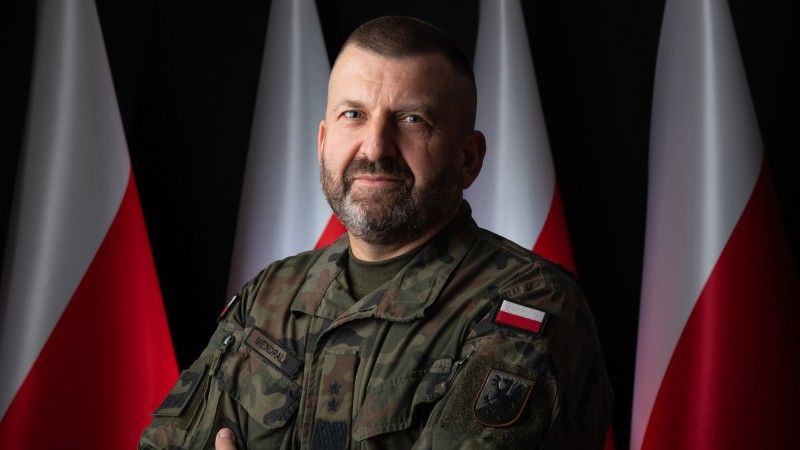
Photo. IWsp SZ
Established on 6 October 2006, the Armed Forces Support Inspectorate is marking its twentieth anniversary. To mark the occasion, Mariusz Marszałkowski speaks to its chief, Major General Dariusz Mendrala, about the scale of the challenges facing Poland’s military logistics services — from restructuring the military to unprecedented infrastructure investment and adapting to a new generation of conflict. The first part of the interview covers the transformation of the Armed Forces from a logistician’s perspective, US bases in Poland and East Shield.
Mariusz Marszałkowski, Defence24.pl: Logistics plays an important role in modernisation. What are the key priorities for the organisations subordinate to the Support Inspectorate? Which areas need modernising most urgently?
I understand that your question is not limited to modernisation in the purely technical sense of replacing weapons, equipment or machinery. I assume we are talking about the multifaceted transformation of the Armed Forces, a much broader concept than modernisation alone, which, even within the military, is too often equated solely with replacing old equipment with new-generation weapons. I see this transformation over many years as a process of adapting the Armed Forces to national security requirements and conditions, particularly those arising from the rapidly changing international environment. It is a multifaceted restructuring involving not only equipment but also the architecture of the entire security system, the size and structure of the Armed Forces, the geographical distribution of military units, the modernisation of military infrastructure, changes to training methods and the preparation of reserves. All of this presents enormous challenges for the logistics system.
Very often, we focus exclusively on the size of the Armed Forces. There is an ongoing public debate, involving many experts, about the justification for a force of 200,000, 300,000 or 500,000 personnel. From my perspective, this should be just one element of a broader discussion. The challenges do not lie solely in personnel numbers. Looking at the architecture of the Armed Forces, for example, the principal challenge for the logistics system is that three additional divisions have been formed in a short period in eastern Poland: the 1st Legions Infantry Division, the 18th Mechanised Division and the 8th Mechanised Division. Previously, this region did not receive logistics support on anything like the scale now required. Meanwhile, the logistics apparatus established roughly twenty years ago was organised around the structures that existed at the time. It was designed for a force of approximately 100,000 personnel, with most units stationed in western Poland. Today, this system, which has undergone no significant changes for almost two decades, has to supply three new divisions.

Photo. Armed Forces Support Inspectorate
At the same time, personnel numbers have changed significantly. In 1999, the Armed Forces numbered approximately 203,000, but successive development programmes envisaged substantial reductions: first to 180,000, then to 150,000, and subsequently to 120,000. There was even talk of the need to reduce numbers below 100,000, justified by the slogan “a smaller but more modern military”. Yet today, we are talking about 300,000 personnel in active service.
Plus 200,000 reservists.
Yes, plus 200,000 reservists, which is a challenge in itself. We should remember that new forms of service have also emerged in the meantime, particularly Territorial Military Service, which has changed expectations of the logistics system. Supporting the geographically dispersed Territorial Defence Forces is more difficult to manage within the existing logistics support system. At the same time, requirements for mobile logistics capabilities — meaning the components that provide logistics support to a defensive operation — have increased significantly.
The two logistics brigades originally established were intended primarily to support our expeditionary capabilities: a large contingent in Afghanistan, which numbered approximately 3,000 personnel at its peak, and the contingent in Iraq. The prospect of having to conduct operations on national territory seemed unlikely and was assessed as a relatively low risk. As recently as 2013, the National Security White Paper stated that the risk of conflict in the immediate vicinity of Polish territory was limited.

Photo. Armed Forces Support Inspectorate
In 2014, when the first chapter of Russia’s invasion of Ukraine began, it became clear that we had to reassess all our previous plans. Since 2022, we have been stripped of any illusions about the direction of the Russian Federation’s aggressive policy. This provided the basis for unprecedented decisions to strengthen our military potential. However, the expansion and qualitative transformation of the Polish Armed Forces must be accompanied by a corresponding adaptation of logistics, both in pace and direction. Logistics simply has to keep up with this process.
Beyond expansion itself, what challenges do you see in eastern Poland? In terms of infrastructure, some people make the pointed observation that “you can still see the partitions” on the map. The railway network there is much less extensive, and rail is crucial to military logistics.
We need to look at this from several perspectives. The first is a return to the concept of preparing national territory operationally for a defensive operation. This will have two fundamental dimensions. On the one hand, we must ensure maximum mobility for friendly forces. On the other, we must restrict enemy mobility as much as possible by exploiting favourable terrain and natural and environmental features: watercourses, forests and marshes, as well as infrastructure built under the East Shield programme. Properly identified, catalogued, adapted and employed, these measures should limit the enemy’s ability to manoeuvre rapidly and control the area of future operations, while also increasing the overall cost of aggression.
The principal challenge we would face in a defensive operation — should credible deterrence ever fail — would be sustaining that operation over a prolonged period. This creates specific requirements for dedicated operational capabilities and has enormous implications for logistics, as the experience of the conflict in Ukraine clearly demonstrates. We need to modify the “ready to fight tonight” paradigm, which, sometimes interpreted too narrowly, has emphasised the ability to respond rapidly rather than the ability to sustain operations. This is absolutely a very important element of preparing the defence system. But even if the answer is yes, I always ask a further question: are we ready to fight the day after tomorrow, a week after tomorrow, a month after tomorrow, maybe five years after tomorrow?
We can see that securing a favourable outcome to a conflict will certainly not be a matter of “one night”. Sustaining operations over a prolonged period will require an enormous logistics effort. This demands appropriately constituted and echeloned logistics forces, as well as the resources they will use to supply the forces engaged in the operation. In this respect, we must consider both the national and allied dimensions of a defensive operation. As a NATO member, we are covered by collective defence under Article 5 of the Washington Treaty. However, the practical fulfilment of that commitment depends on having the capacity to receive reinforcements. Those forces will require logistics support when entering or transiting Polish territory. That requires suitable infrastructure, a logistics architecture, materiel and personnel.
How does the Support Inspectorate cooperate with civilian organisations — local authorities, the General Directorate for National Roads and Motorways, and the railways? Are the lessons from Russia’s 2022 invasion being implemented in practice in Poland?
We participate in this process, for example by reviewing applications for investment funding to assess their suitability for military purposes. These can sometimes be difficult discussions because requirements arising from the characteristics of military equipment can be hard to meet. Moreover, the military co-finances road infrastructure development through the Government Road Development Fund, to which we contribute approximately PLN 500 million annually from the Ministry of National Defence budget. We identify roads of defence significance whose investment projects qualify for funding through this mechanism.
Today, national defence preparations cannot be divided into purely military and civilian dimensions. There is frequent discussion of applying dual-use criteria, and rightly so. We must make the fullest possible use of all available infrastructure to serve both purposes: improving transport accessibility and supporting economic development, while also enabling the movement of Polish and allied forces.

Photo. 2nd Oleśnica Traffic Control Company
Which specific investments will be crucial in the coming years?
One of the most important projects will be the construction of an Aerial Port of Debarkation at Wrocław-Strachowice Airport. This is an enormous investment with specifications unique to this part of Europe, providing the capacity to deploy reinforcements rapidly by air. It has been designed to receive four C-5 Galaxy aircraft a day, including aircraft carrying ordnance and ammunition. It is an example of very good cooperation between the military and civilian sectors, because the project will be carried out within the existing infrastructure of a civilian airport. We are expanding part of the airport with military infrastructure, with some airport facilities intended for shared use. This is one of the largest investments funded from the defence ministry’s budget.
From our perspective, every additional investment, including one that provides redundancy, is hugely important. In a contested environment, we will need options — and those will only be available if we carry out a range of investments in parallel and add new elements of usable dual-use infrastructure.
But dispersal is also a challenge for logistics — it is easier to deliver supplies to one location than to dispersed forces.
I would highlight two points here. The first is the need to protect resources effectively. There is no doubt that this will be hugely important to the success of a defensive operation. We are fully aware, for example, that large high-bay storage facilities work well in peacetime but carry enormous risks during a crisis or war. We must expect logistics operations to take place in an environment that is persistently contested throughout its depth, saturated with drones and exposed to enemy deep strikes, as well as the activities of enemy sabotage and reconnaissance groups. Successful attacks on logistics infrastructure have a multiplier effect, as we can clearly observe in the operations of both sides in Ukraine.
On the other hand, dispersing forces and resources in response creates challenges in physically managing those resources: providing suitable infrastructure, effective communications, resilient transport links and sufficient transport capacity. This certainly increases the level of difficulty, but it seems unavoidable. There will be no sanctuaries in a contested environment. The enemy’s satellite, aerial and human intelligence capabilities, together with the risks of sabotage and subversion, are challenges we will have to face even below the threshold of war. By dispersing logistics resources, we can create a targeting dilemma for the enemy, who will not be entirely certain whether an attack is worthwhile.
How does the CPK transport hub project look from the perspective of military logistics?
We recognise the potential of an additional airport near the Warsaw metropolitan area, because Okęcie Airport has its limitations. However, the original CPK concept was not strictly military in nature, or at least military considerations were not its primary justification. That certainly does not mean we are ignoring its potential. It is obvious that once a conflict begins, there will no longer be any completely safe airports, and every element of airport infrastructure will potentially be contested. That is why every additional element of transport infrastructure capacity, even one that might appear redundant, is welcome from the military’s perspective. It creates additional operational options.
Let us turn to the US presence in Poland and the associated infrastructure investments.
I will begin with a clarification concerning a shorthand expression frequently used in media discussions: “Poland pays for the presence of US troops and the construction of infrastructure for them.” With a little ill will, this can be used to emphasise the transactional nature of Polish–US relations. I would stress that the expenditure incurred by Poland is, above all, an investment in our country’s security, undertaken with due operational and economic justification.
There are three fundamental points worth addressing. First, all infrastructure financed from the state budget remains on Polish territory and becomes State Treasury property. Second, under the Enhanced Defense Cooperation Agreement, or EDCA, infrastructure projects are, as a rule, carried out by Polish companies. This provides a welcome stimulus to the Polish economy, both locally and nationally. Third, most of this infrastructure is intended for what is known as joint use. The 115 projects at 12 locations, agreed jointly with the US side, mainly involve facilities that can be used more widely by the Allies.
The airport in Wrocław that I mentioned will be able to accommodate US and Polish aircraft, as well as those from other countries. Similarly, bases being built under the Poland Provided Infrastructure programme, or PPI, to support Reception, Staging and Onward Movement, or RSOM, are designed for general use. They can receive reinforcements on a plug-and-play basis, regardless of the insignia on the soldiers’ sleeves. Exceptions concern special-purpose facilities, such as command facilities, where restrictions arise from US requirements to protect classified information. Contrary to what I sometimes read in the media, however, there are no installations on Polish territory that constitute extraterritorial enclaves.
So I would once again urge people to regard the construction of defence infrastructure as an investment in national security, rather than as the cost of hosting US troops. Of course, the expenditure is substantial: according to our calculations, the total value of all investments under the programme will exceed PLN 20 billion.

Photo. Armed Forces Support Inspectorate
What is the timeframe here?
Given the scale and cost of the investments, the planning horizon extends beyond fifteen years. This allows us to plan complex investments properly and spread the financial burden. It should be emphasised that the priority projects agreed jointly with the US side are already under way or, in some cases, have even been completed.
What about projects financed through NATO’s NSIP funding? How are we using those funds today?
This is a very important financial instrument. All 32 NATO countries contribute to the fund under an agreed cost-sharing arrangement. The difficulty lies in the decision-making process: identifying projects eligible for funding involves multiple levels and is very complicated, with unanimity required at every stage.
The programme has existed for 75 years, supporting the Alliance’s objectives primarily through the development of defence infrastructure in the broadest sense. After the end of the Cold War, it gradually declined in importance, but it regained momentum in 2014 following the first phase of Russia’s invasion of Ukraine. In response to the threats arising from the Russian Federation’s confrontational actions, the Reassurance Measures programme was launched and subsequently transformed into the Readiness Action Plan. Significant elements of allied infrastructure were then allocated to Poland as part of what is known as pre-positioning: the advance deployment of specific defence capabilities to territory where allied forces might operate. The main purpose was to shorten logistics chains and create the conditions for forces to be activated rapidly if necessary.
Over the coming years, a key NSIP project will be the expansion of fuel infrastructure under the Central Europe Pipeline System. These pipelines date back to the Cold War and, for many years, were not extended eastwards. Today, there is no doubt that it is absolutely essential to deliver fuel directly by pipeline to countries on the flank, including the Baltic states. This will increase the speed and security of deliveries. The alternative, multimodal transport, is less efficient and vulnerable to effective enemy disruption. We must also consider connecting these pipelines to our military bases. Establishing a network to deliver fuel automatically to air bases and selected fuel depots would represent a fundamental qualitative improvement.
Is the military already working with pipeline operator PERN on this?
The expansion of CEPS is a dual-use undertaking, and PERN is the principal player here. The military will not own this civilian infrastructure. It will have enormous economic significance. We want to benefit from the project, however, because it originates in military requirements.
The military does have its own fuel infrastructure network, built to specific requirements that differ from civilian ones. We recently completed an investment in Puszcza Mariańska, providing infrastructure with earth-covered tanks that offer a significantly higher level of protection against enemy action. This is extremely important because the anticipated high concentration of low-cost strike systems, namely drones, could cause very serious damage to critical infrastructure, including fuel facilities. We see these risks in the reports arriving every day on the situation in Ukraine and Russia.
What does the East Shield (or Shield East) project mean for the Support Inspectorate?
It is a very substantial task that we treat as a priority. Our role is often not visible, but it is extremely important. With full respect for the engineer troops responsible for constructing the linear defences along the border, I would point out that the logistics services procure and deliver most of the necessary structural and construction materials, machinery and equipment. In 2026, we will carry out work worth at least PLN 900 million. The sum itself is impressive, but we are also talking about tens of thousands of shipments of materials — from razor wire and concrete hedgehog obstacles to prefabricated trench sections — delivered to engineer units.

Photo. Damian Ratka/Defence24
The Shield East should not, however, be viewed solely in terms of physical infrastructure. It represents a comprehensive change in the approach to border protection, using electronic reconnaissance systems, early identification capabilities and threat-neutralisation systems. All of this is integrated with infrastructure that restricts enemy mobility and makes use of natural geographical and environmental features, bodies of water and watercourses. Ukrainian experience has confirmed that flooding terrain can still pose a substantial barrier to advancing columns.
At the same time, East Shield would not fulfil its role without the development of appropriate operational capabilities, including deep-strike capabilities. Today, the kill zone in Ukraine, in which heavy equipment does not operate, extends approximately 30 km. We therefore need the capability to deliver precision strikes from a distance that allows our assets to be employed safely. Physical infrastructure is one aspect; developing operational capabilities is equally important and constitutes the principal element of deterrence.
What about logistics in an environment where bridges will have been destroyed and infrastructure damaged? That is also an important consideration.
That is precisely why we need to build an extensive network of shelters, depots and warehouses at appropriate distances, shortening logistics chains and improving the security and continuity of deliveries.
New technologies are also worth mentioning. The Ultimate Building Machine — a technology for rapidly constructing infrastructure from arched sheet metal — is something we are currently working on. The first two sets have already been delivered to the Armed Forces. I had the opportunity to see this technology several years ago during a visit to the F-35 base at Nellis, Nevada, where the RED HORSE engineering regiment demonstrated what these machines could do.
We intend to procure more of this equipment. I recommended that some should also go to the logistics services, specifically to support the dispersal of resources. A team of six to eight people can erect structures in a matter of weeks that would take at least a year using conventional construction methods. The most time-consuming stage remains the wet works associated with preparing the ground; the remaining work can be completed very quickly.
With the caveat, of course, that this will not be permanent-standard infrastructure.
Of course, arched sheet metal is still sheet metal, with all its limitations. However, together with the Military University of Technology, we are developing designs for facilities offering enhanced protection — covered with earth and harder to identify and destroy.
The fundamental principle should be to create a targeting dilemma for the enemy. They should never be certain how important a target they have destroyed, even if they decide to use expensive weapons. The infrastructure itself will provide protection against small drones. Dispersing resources and building infrastructure so that the loss of individual elements does not affect the ability to sustain operations is now one of the foundations of modern military logistics. This is precisely the principle that should guide our efforts to adapt logistics procedures and structures.
Part II coming soon


