












- WIADOMOŚCI
Even Switzerland is preparing for a more dangerous Europe

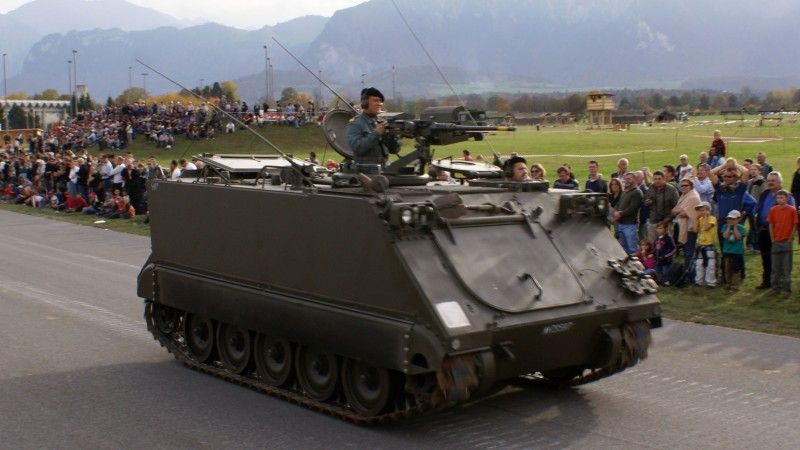
Switzerland has adopted a new Security Policy Strategy based on three priorities: strengthening resilience, improving protection and increasing defence capabilities. This is significant precisely because it is Switzerland. A neutral state that for decades benefited from stability, geography and distance from major conflicts is now openly acknowledging that the European security environment has fundamentally changed.
The strategy includes 10 objectives and 46 measures and treats security much more broadly than military defence alone. Bern wants to protect critical infrastructure, reduce strategic dependencies, strengthen cyber security and civil protection, and prepare state institutions, business and society for long-term disruption. Hybrid and long-range attacks are identified as the most likely threats in the coming years.
Russia is central to this assessment. The Swiss government states that Moscow has adapted its economy to war, is preparing its armed forces for possible confrontation with Western states and could intensify hybrid pressure against Europe. At the same time, Bern acknowledges that Switzerland benefits from the security efforts of NATO, the EU and neighbouring countries and that cooperation with partners must be prepared before a crisis occurs. “Russia knows where the West is vulnerable. Moscow uses hybrid warfare to influence democratic societies, create uncertainty and undermine citizens« trust in their own governments. At the same time, Russia is testing individual NATO countries and looking for the limits of what it can get away with,” Lt Gen Jarosław Gromadziński told NZZ am Sonntag.
The document also contains an important admission: Switzerland is currently not sufficiently prepared for hybrid attacks, stand-off strikes and a potential defence scenario. A direct large-scale attack remains unlikely in the short term, but the government stresses that defence capabilities cannot be created overnight. Air defence, drone defence, ammunition, logistics and interoperability therefore have to be developed well before the threat becomes immediate.
See also 

This is why the Swiss decision matters beyond Switzerland itself. Bern is not abandoning neutrality, but it is clearly moving away from the assumption that neutrality and geography alone are sufficient protection. The same conclusion is increasingly visible across Europe: resilience, critical infrastructure, civil defence and military capabilities have to be developed together.
If even Switzerland is preparing for a more serious confrontation in Europe, this should be treated as another warning. The question is no longer whether the security environment has changed, because from the Polish, Estonian, Latvian, Lithuanian and Romanian perspectives it has. The real question is how quickly Switzerland can adapt before Russia tests the gaps that still remain.


