












- WIADOMOŚCI
- ANALIZA
What exactly is a peace dividend?

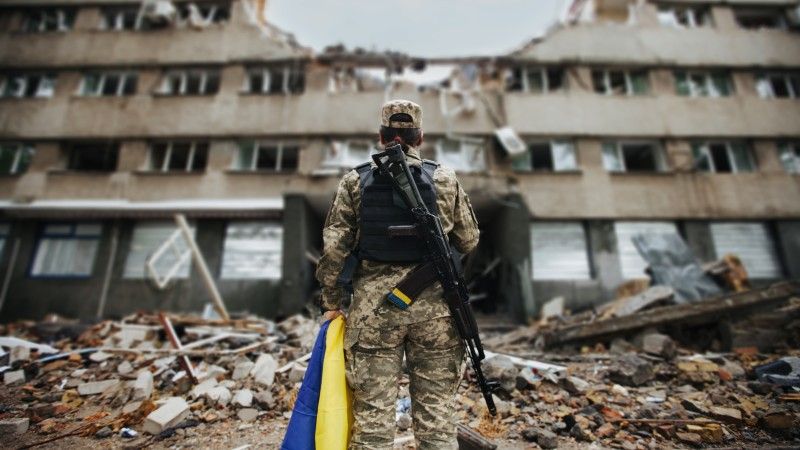
Everyone knows what a dividend is – or at least, most people think they do. It is the portion of a company’s profits that is paid out to its shareholders. Put simply: the company makes money, and then shares a piece of the pie with the people who own its stock. Simple, satisfying, and ideally, something that happens regularly. The company makes a profit, and part of that profit goes to its owners. No academic definition is really necessary: a dividend is money with the rather pleasant feature of being paid to you simply because you own something.
A peace dividend is a little more complicated. Here, we are no longer talking simply about money, but about what an economy can gain when resources no longer have to be devoted to war. The idea sounds appealing enough: fewer tanks, more homes; less ammunition, more schools; less spending on destruction, more on building things. The problem is that peace does not work like a publicly traded company that, after a good year, simply announces: “We are paying a dividend!”
First, there has to be something to gain. And before that, there has to be peace. As recent events have reminded us, neither can be taken for granted.
From the stock market to geopolitics
If a financial dividend is a share of a company’s profits paid to its shareholders, then a peace dividend is the broader benefit that society may gain when fewer resources have to be devoted to war, military build-up, or maintaining a high level of military readiness.
Once some of those resources are no longer needed for military purposes, a basic question arises: what else could they be used for? What could be done with the money that no longer has to be spent on war?
It could go toward healthcare, education, housing, infrastructure, research, lower taxes, or reducing public debt. In that sense, the idea of a peace dividend is closely related to the opportunity cost of war: the benefits that society forgoes when resources are devoted to war rather than to other uses.
And the resources in question are not limited to money. If a country no longer has to mobilize part of its economy for military purposes, it may also free up workers, capital, factories, raw materials, and research capacity that can be put to use elsewhere.
The period following the end of the Cold War offers a classic example. In the 1990s, there was widespread hope that the easing of tensions between the major powers would allow governments to reduce military spending and redirect some of the resources tied up in defence toward other priorities. This anticipated benefit became known as the “peace dividend”.
It is easy, however, to stretch the concept too far. A reduction in military spending does not automatically constitute a peace dividend. A peace dividend exists when lower defence spending creates an opportunity to use the resources that have been freed up in ways that generate additional economic or social benefits. Simply paying down debt or reducing other government expenditures does not necessarily amount to a peace dividend. What matters is whether lower military spending actually expands the economy’s ability to use those resources for purposes that were previously harder to finance.
See also 

Peace as an economic saving
Peace means more than simply an end to the shooting. From an economic perspective, it can also mean an opportunity to reduce costs generated by conflict – including costs that may be difficult to see at first.
War costs more than tanks, ammunition, and military equipment. It can also mean higher government spending, rising public debt, more expensive borrowing, disrupted trade, investor uncertainty, and the need to keep an economy in a constant state of readiness for something everyone would rather avoid.
Ending a conflict can therefore reduce extraordinary spending and pressure on the public budget. If the government no longer has to spend billions on military operations, emergency assistance, or rebuilding its military capabilities, it gains greater room to pursue other priorities.
That does not mean, of course, that money magically appears in the budget the next morning. Economics, unfortunately, does not work like an ATM. But some resources can be redirected toward areas where they may generate greater long-term value: infrastructure, energy, education, healthcare, housing, or private investment.
Peace can also reduce economic risk. For a company, deciding to build a factory, buy new machinery, or enter a new market is much easier when there is a reasonable chance of knowing what the next year – or the next five years – might look like. Households behave in much the same way. It is easier to buy a home, take out a mortgage, start a business, or simply plan household spending when there is less fear that the next geopolitical crisis will send energy prices or exchange rates soaring or derail the wider economic outlook.
Peace can therefore act as a reduction in uncertainty. And uncertainty has a price. Investors demand higher returns to compensate for risk, companies postpone investment decisions, households build up precautionary savings, and governments maintain costly reserves and safeguards. The more predictable the environment, the less an economy has to pay simply for the privilege of operating within it.
None of this means that peace automatically produces rapid economic growth. Ending a war can bring enormous reconstruction costs, while governments still need to maintain credible defence capabilities. We cannot simply say: “The war is over – here is an extra 5 percent of GDP to spend.” Economies do not hand out gifts quite that easily.
But peace can create a situation in which some of the resources previously used to put out fires can instead be used to build something new. That is the economic meaning of a peace dividend: not a sudden windfall, but an opportunity to change how resources are allocated in ways that can raise living standards over time.
With a little irony, we might say that peace is a rather unusual investment: it produces nothing tangible, yet it can save an enormous amount of money. There is no shiny product to put on a shelf or unveil at a press conference. Its greatest “product” is precisely what no longer needs to be paid for: less risk, fewer losses, fewer emergency expenditures, and less money spent dealing with problems that would not otherwise have existed.
See also
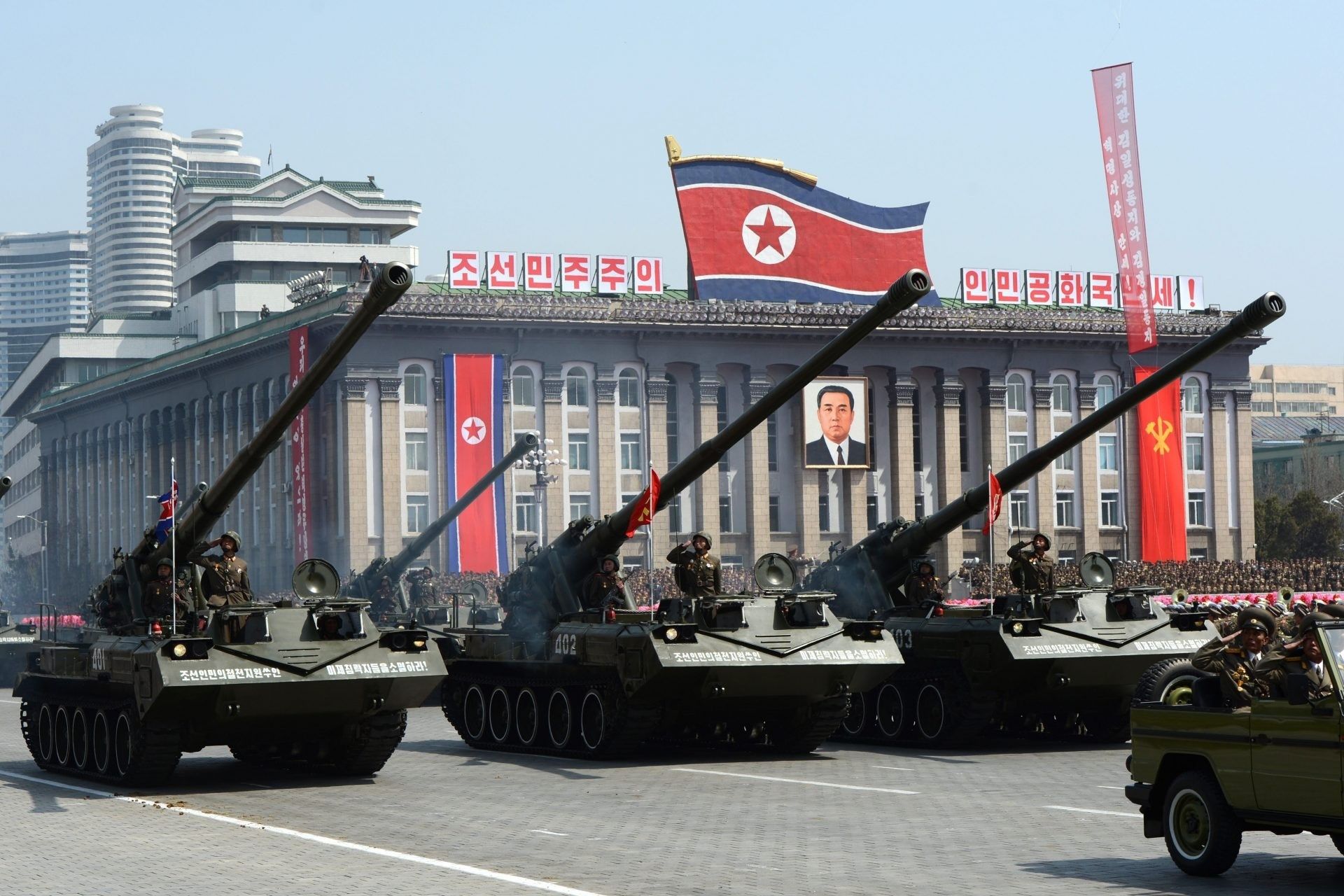
Who gets the peace dividend?
A peace dividend is not distributed equally – and sometimes it does not appear as money that can be spent at all.
The phrase can make it sound as though, once a war ends, someone simply opens a vault and hands the savings back to society. Unfortunately, economics is less romantic than that.
A government may cut some war-related spending while continuing to devote substantial resources to defence. Businesses may benefit from a more stable investment environment, while households may gain greater financial security and predictability.
The first level is the government budget. If spending on war, mobilization, emergency assistance, or replenishing military stocks falls, the government gains greater fiscal space. It can use that space for public investment, education, healthcare, infrastructure, or debt reduction. It can also simply choose not to spend the money. That is an economic decision too, even if it is less politically impressive than cutting a ribbon at a new building.
We should nevertheless be careful with the simple equation: less war = much lower defence spending.
A country still needs to defend itself, maintain its armed forces, and purchase military equipment. Peace does not make geopolitics disappear, and tanks do not suddenly start producing GDP. Defence spending can therefore remain high even after some of the costs associated with active conflict disappear. The actual peace dividend may consequently be much smaller than the slogan suggests.
The second level is business. For companies, peace primarily means a more predictable environment in which to operate. If the risk of war, supply-chain disruption, energy-price shocks, or sudden regulatory changes declines, investment becomes easier to plan. A company can buy machinery, expand a factory, hire workers, or enter a new market. Instead of keeping capital on the sidelines “just in case”, it can put that capital to work. Money that was previously sitting on the bench can get back onto the field.
Peace can also reduce the risk premium – the additional cost of operating in an uncertain environment. If risk falls, financing may become cheaper, and projects that previously looked too risky may become economically viable. Not because peace magically makes companies more productive, but because companies no longer have to pay as much simply for operating in a dangerous and unpredictable environment.
The third level is households. The effect may be less visible here, but it is no less important. Greater stability can mean less pressure on energy and food prices, a lower risk of economic shocks, and more predictable incomes. People may find it easier to plan a home purchase, take out a mortgage, pay for their children’s education, or make other major expenditures. Instead of postponing every decision until „better times,” they can begin making longer-term plans.
In this sense, the peace dividend works through a chain of interconnected effects. More room in the government budget can create opportunities for public investment. Lower risk can encourage companies to invest. Greater stability can give households the confidence to make decisions that previously seemed too risky.
The benefit does not have to arrive as a cheque marked “peace bonus”. That would obviously be nice, but governments do not generally operate a loyalty programme called “No War – Here’s $500”.
The important point is that the peace dividend can spread throughout the economy. Some of the benefits remain in the public finances. Others appear in businesses through lower risk and greater willingness to invest. Still others reach households in the form of greater stability and better long-term prospects.
So who gets the peace dividend? The better answer is not “everyone”. It is whoever is able to benefit from the resources and opportunities created by lower costs and lower risks associated with war.
The government may gain more fiscal breathing room – assuming it still has something left to breathe with. Businesses may gain greater predictability. Households may gain something that economics tends to undervalue until it disappears: the ability to plan for the future with some confidence.

A dividend for peace of mind
Peace is not a company, so there is no board of directors to announce a payment date. A peace dividend does not arrive by bank transfer. It does not appear in your banking app, it cannot be booked as a line item, and there is no obvious payer.
And yet it may be the most valuable dividend an economy can receive.
There is just one catch: there has to be peace first.


