












- ANALIZA
- WIADOMOŚCI
A race run in the shadows. Nuclear weapons spending and modernisation in 2025

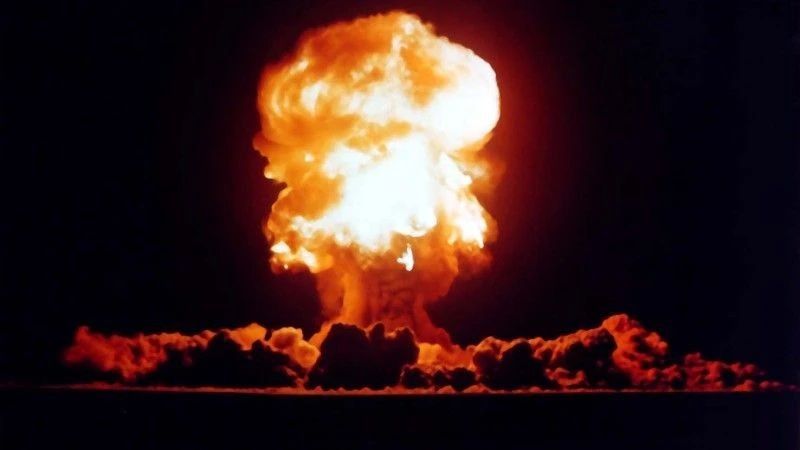
June 2026 brought two documents that together form a coherent picture of the global nuclear arsenal. The International Campaign to Abolish Nuclear Weapons published its annual survey of spending, and the Stockholm International Peace Research Institute released its yearbook. The first deals with money, the second with technology and warhead numbers. Together they show that the modernisation of nuclear arsenals, described for years as a process spread across decades, gathered pace in 2025 at a rate unmatched since these statistics began in 2020.
A record year for spending
The report “Premeditated: Nuclear Weapons Spending in 2025” finds that the nine states possessing nuclear weapons spent just under 119 billion dollars on their arsenals, 19 percent more than a year earlier. That works out at 3,768 dollars per second. An increase on the order of 16.8 billion dollars in a single year has no equivalent in any previous edition of the report.
The distribution of that sum remains markedly uneven. The United States spent 69.2 billion dollars, more than all the other nuclear-armed states combined, and recorded the largest increase in nominal terms at 12.4 billion dollars. China came second at 13.5 billion dollars, and the United Kingdom third at 12.6 billion. London thereby overtook Russia, which spent 9.5 billion dollars, a significant shift in the established hierarchy. France closed the top five at 7.7 billion dollars. The remaining four states, India, Pakistan, Israel, and North Korea, fall within a range running from 656 million dollars in the case of Pyongyang to 2.8 billion in the case of India.
The report draws attention to a dimension less often present in strategic analysis: the role of the defence industry as a political actor. At least 25 companies engaged in developing and maintaining nuclear weapons secured significant contracts in 2025, earning at least 38 billion dollars from that work and accumulating an order book worth no less than 394 billion. Lobbying expenditure in the United States alone exceeded 138 million dollars; in France it reached roughly 3.4 million euros; and in the United Kingdom representatives of these firms held 226 meetings with senior officials, including four with the Prime Minister’s Office. The political economy of nuclear modernisation is therefore becoming institutionalised, which matters for the durability of the whole trend irrespective of the prevailing geopolitical climate.
These outlays are long-term rather than incidental in character. Between 2021 and 2025 the nine nuclear-armed states spent roughly 471 billion dollars in total, and the Congressional Budget Office estimates that the United States alone will devote close to a trillion dollars to its nuclear capability over the decade from 2025 to 2034. Weapon systems now entering
service or still in development will remain in service until at least the middle of the century. Budget decisions taken in recent years are thus setting the framework for deterrence for decades ahead, regardless of how the security environment changes in the meantime.

What lies behind the numbers: the technical side of modernisation
The SIPRI yearbook answers the question of where those funds are going. In January 2026 the global inventory of warheads stood at approximately 12,187, of which 9,745 were held in military stockpiles intended for potential use. Some 4,012 warheads were deployed with missiles and aircraft, and between 2,100 and 2,200 of those were kept at high operational alert on ballistic missiles. The inventory remains heavily concentrated: the United States and Russia together hold almost 86 percent of all warheads worldwide. Those same two states are simultaneously responsible for the decline in the global total, since they dismantle retired units faster than they introduce new ones.
The largest spender also runs the most extensive modernisation programme. In 2025 the US National Nuclear Security Administration completed the first production unit of the B61-13, a higher-yield bomb intended against hardened and large-area targets. Its predecessor, the B61-12, had completed production and been forward deployed a year earlier. Production continues of the F-35A in the variant certified to carry nuclear weapons, alongside upgrades to bases in Europe. At the same time the Sentinel intercontinental ballistic missile programme, intended to replace the Minuteman III, is running late and over budget, which has forced its restructuring. Since New START lapsed, Washington has kept the number of deployed warheads near the former treaty ceiling, but it is examining the option of uploading stored warheads onto existing missiles. Such a step would allow a rapid increase in capability without building new systems, which is precisely why it is being watched closely in Moscow and Beijing.
Russian modernisation proceeded unevenly in 2025. Another test of the Sarmat intercontinental ballistic missile ended in failure, while sanctions and the burdens of the war in Ukraine took their toll on the pace of the programme. Moscow nonetheless made progress elsewhere. According to the Russian side, the nuclear-powered Burevestnik cruise missile completed a successful test over a distance exceeding 14,000 kilometres, following a series of earlier failures. In parallel, Russia began building a forward base in Belarus for the intermediate-range Oreshnik missile, capable of carrying both nuclear and conventional payloads. For NATO’s eastern flank, Poland included, this is a change with immediate operational significance.
China is expanding both its arsenal and its delivery systems. The Chinese warhead inventory grew from 600 in 2025 to 620 at the start of 2026. The programme includes the further deployment of dual-capable DF-26 missiles, the presentation of a silo-based DF-31B variant

and of the new DF-61 missile at the September 2025 parade, and the fitting of Type 094 submarines with longer-range JL-3 missiles. SIPRI maintains an important methodological reservation about the new silo fields, in particular about whether the missiles deployed in them actually have warheads mounted.
India, whose strategic calculations centre primarily on China, enlarged its arsenal by 10 warheads and for the first time deployed 12 of them on missiles, while continuing work on systems with ranges covering the whole of Chinese territory. Pakistan holds its inventory stable at around 170 warheads, investing in fissile material production and in delivery systems that could permit expansion over the next decade. Israel, in line with its policy of ambiguity, does not confirm that it possesses an arsenal, but SIPRI estimates it at around 90 warheads and points to intensified construction at the Negev Nuclear Research Centre near Dimona as a signal of long-term infrastructure modernisation.
In relative terms, the fastest-growing arsenal is North Korea’s. SIPRI raised its estimate from 50 to around 60 assembled warheads, against a fissile material stock sufficient for at least 90. Nearly all are believed to be lower-yield single-stage fission devices, with only a few of thermonuclear design. More important than the current state, however, is the rate of production. In March 2026 the International Atomic Energy Agency reported the uninterrupted operation of enrichment facilities at Kangson and Yongbyon, and the appearance at Yongbyon of a new building resembling the Kangson complex. The greatest uncertainty concerns stocks of highly enriched uranium, estimates of which range from 330 to 1,860 kilograms. The breadth of that range illustrates how limited knowledge remains of a programme formally subject to the most stringent sanctions.
The United Kingdom, which overtook Russia in spending terms in 2025, did not enlarge its arsenal. Its funds are consumed by rebuilding the maritime component: construction of Dreadnought-class submarines to replace the Vanguard-class, participation in the American life-extension programme for the Trident II D5 missile, and development of the new A21/Mk7 warhead in place of the Mk4A. To this was added the decision to purchase F-35A aircraft and to join the airborne component of NATO’s nuclear mission, marking London’s return to an air-delivered capability abandoned after the Cold War. The British case illustrates a mechanism visible in most states on this list: rising expenditure stems not from arsenal growth but from the overlap of several costly replacement programmes at the same time.
The most serious qualitative change, however, came from France. On 2 March 2026, speaking at the Île Longue submarine base, President Emmanuel Macron announced that he had ordered an increase in the number of warheads in the French arsenal and that Paris would cease making its size public. The retreat from transparency was accompanied by the concept of forward deterrence and an invitation to eight European states, Poland among them, to take
part in the undertaking. The scope of that offer requires precision: France envisages joint exercises, visits to strategic facilities and the temporary deployment of aircraft capable of delivering nuclear weapons, but it does not envisage sharing either the warheads themselves or the decision to use them. The result is an arrangement in which less is known about French capability than before, and more has to be inferred from political signals.

Implications for the non-proliferation regime and strategic stability
The convergence of the two reports confirms a diagnosis that arms control researchers have been advancing for years: the erosion of the non-proliferation regime is not the consequence of a single crisis but the sum of decisions taken independently in individual capitals. The expiry of New START in February 2026, preceded by the suspension of inspections as early as 2023, has deprived analysts and decision-makers of the tools for a reliable assessment of mutual capabilities. That uncertainty by itself raises the risk of miscalculation. Rising expenditure indicates, moreover, that none of the nine states currently treats arms limitation as a priority, whatever the obligations arising from Article VI of the Treaty on the Non-Proliferation of Nuclear Weapons.
For Poland and the Central and Eastern European region, three elements of this picture carry particular weight: the expansion of Russian dual-use infrastructure in Belarus, the French decision to enlarge its arsenal together with the offer of extended deterrence, and the general rise in modernisation spending by NATO states, the United Kingdom included. What follows is that the debate on strengthening the European component of deterrence will take place against budgets that are rising rather than levelling off. The Polish discussion of Nuclear Sharing and of the French proposal is therefore not an isolated episode but part of a wider process in which nuclear weapons are regaining a central place in the calculations of the major powers.


