












- ANALIZA
- WIADOMOŚCI
Russia prepares for another mobilisation

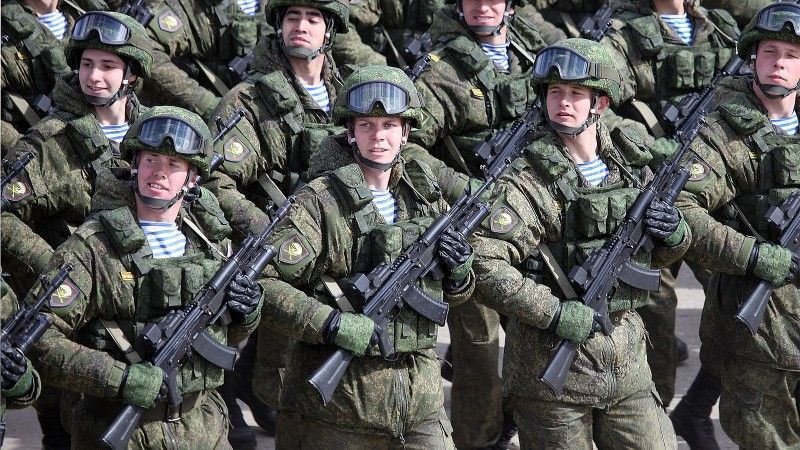
Russia is preparing its military and administrative structures for the possibility of another large mobilisation. There is still no evidence that Vladimir Putin has made the final decision, but the preparations are becoming increasingly difficult to describe as routine. The period immediately after Russia’s parliamentary elections in September may be decisive.
The Wall Street Journal reports that mobilisation-readiness exercises are being conducted across Russia. In July, military officers travelled from St Petersburg to the Kaliningrad region, where they supervised preparations for receiving large numbers of mobilised personnel, including procedures for accommodation, food, equipment and weapons. Similar exercises are reportedly taking place elsewhere in the country. This is important because Russia is not merely discussing another mobilisation at headquarters level. It is testing whether individual regions can actually absorb thousands of additional soldiers.
The reason is primarily manpower. Russia continues to recruit contract soldiers, but a significant part of this inflow is needed to replace battlefield losses rather than substantially increase the size of the force available for new operations. The Kremlin has so far preferred financial incentives and recruitment from poorer regions to another politically difficult mobilisation. However, if Moscow intends to maintain pressure in Donbas while simultaneously rebuilding units and preparing reserves for 2027, voluntary recruitment may eventually prove insufficient.
At the same time, Russia in 2026 is much better prepared for mobilisation than it was in September 2022. The first mobilisation exposed serious problems with military records, transport, equipment and the ability of regional administrations to process large numbers of recruits. Since then, Moscow has strengthened its mobilisation infrastructure, including databases and administrative mechanisms that give the state greater control over those liable for military service. Exercises such as those reported in Kaliningrad indicate that the authorities are now also testing the logistical part of the system. A new mobilisation could therefore be more gradual, selective and better organised than the chaotic operation carried out four years ago.

The most important indication concerning the potential scale came from Volodymyr Zelenskyy. On 23 August, the Ukrainian president said Kyiv believes that Putin intends to mobilise around 300,000 additional troops after Russia’s parliamentary elections, with further recruitment potentially bringing the number to around 500,000. According to Zelenskyy, Moscow would try to concentrate mobilisation in more distant Russian regions and limit its impact on Moscow and St Petersburg. This remains an assessment of the Ukrainian side rather than confirmation that a mobilisation decree has already been prepared.
The timing is nevertheless significant. Voting in the State Duma elections will take place on 18–20 September 2026, which gives the Kremlin an obvious political reason to avoid unpopular decisions before Russians go to the polls. Moscow continues to deny that another mass mobilisation is planned. Russia’s UN ambassador Vasily Nebenzya said on 21 August that there was currently no need for it, but at the same time added that it remained to be seen what would happen after the elections. The wording is particularly notable given that Russian officials also denied plans for mobilisation shortly before the September 2022 call-up.
See also 

A mobilisation announced in late September or October would not immediately produce hundreds of thousands of combat-ready soldiers. They would still have to be processed, equipped, trained and incorporated into existing or newly created formations. Its real significance would therefore be visible primarily in Russia’s ability to sustain the war into 2027. This is what makes the current preparations particularly important.


