












- WIADOMOŚCI
- KOMENTARZ
UK Armed Forces: Recruitment crisis & gap year fix

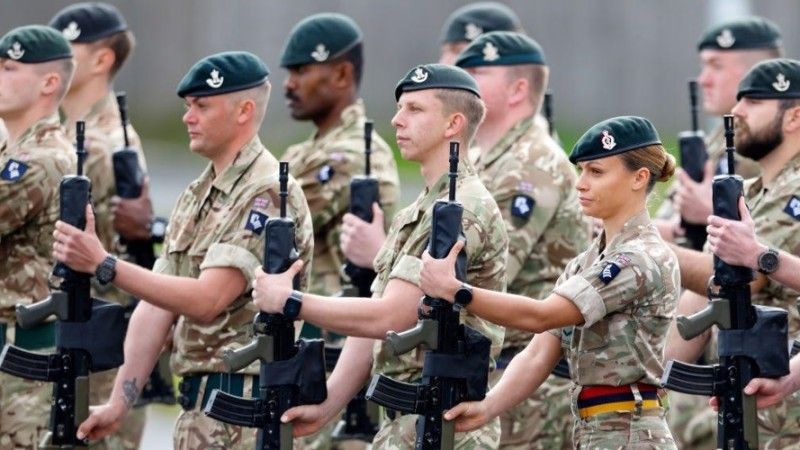
UK Armed Forces launch Gap Year scheme to close recruitment gaps, attract young talent and strengthen future operational readiness
Current Issues with Recruitment and Retention in the UK Armed Forces
Recruitment and retention shortfalls risk leaving the UK Armed Forces facing a critical ongoing challenge. Despite recent efforts to improve pay and streamline recruiting processes, the UK Armed Forces remain significantly below their targets. The 2023–24 statistics for recruitment reveal the extent of the crisis:
- The Army recruited 6,720 recruits against a target of 10,450 (64% of goal);
- The Royal Navy achieved 2,450 recruits against a target of 4,040 (60% of goal);
- The RAF achieved 1,800 recruits against 2,560 (70% of goal).
These figures illustrate a systemic problem that is not confined to only one branch but affects the entire UK defence structure.
As of April 2025, the strength of the full-time UK Armed Forces stood at approximately 147,300 personnel which is a figure that leaves the Services about 8,590 short of their combined trained-strength targets which is a deficit of 6%. The Army was 3% below its goal, the Royal Navy and Royal Marines were 8% short and the RAF lagged behind by 13%. These gaps are not just numbers on a spreadsheet but are signs of real limitations on the UK’s ability to project power and fulfil all of its obligations and commitments, both at home and abroad.
It has been found that delays in recruitment procedures as well as the complexity of entry requirements are playing a potentially unhelpful role in this whole crisis. Those motivated to join, who rigorously prepare themselves to be at the peak of performance- both mental and physical, find themselves up against such avoidable hurdles as excessive waiting times for medical checks and other administrative processes. As a result, these time-wasting obstacles can deter and demotivate potential high-calibre candidates and lose them to non-service careers. Therefore, streamlining and imparting these systems and procedures with a sense of urgency is now essential. However, even that may not be enough to reverse the trend without instituting some genuinely innovative solutions.
Retention Woes and Underlying Causes
However, the question of recruitment is only half the battle. Retention of trained and experienced service personnel continues to present a very real and pressing concern. The current statistics reveal that 14,590 personnel left the UK Armed Forces in 2024–25 period. Over 60% of these departures were recorded to be for voluntary reasons such as family pressures, better paid civilian career opportunities, and perhaps most concerning of all, due to a general dissatisfaction amongst many serving personnel with military life as it currently stands. The areas in which the departure rates are most acutely felt are in the skilled trades, such as engineering, cyber and medical roles. These roles, being hardest hit, could in turn lead to potentially very serious operational capability gaps since they are very difficult to refill and resource at pace should any major crisis occur.
Other factors are equally responsible for the drain of experienced personnel. For instance, the crucial factor of Morale, which is reportedly to be at a serious low point. This could be influenced by such factors as the general pace of Armed Service operations and their associated effects on family life or on individuals« mental health difficulties. In addition to these there are also generational expectations for more flexibility and work-life balance amongst younger recruits who often seek meaningful development opportunities and adaptable career paths. The discouragement can set-in upon realizing that these expectations are difficult for traditional military structures to adequately fulfil. To try and in some way alleviate the situation there were a recent series of pay rises and retention bonuses-some reportedly as high as £30,000, which whilst they, to some extents have helped, they cannot fully respond to issues of disaffection with overall Service culture and lifestyle expectation mismatches.

Operational Readiness Impacts of Recruitment Gaps
The consequences of these shortfalls extend far beyond just personnel statistics. Understaffing directly affects operational readiness of frontline units and capabilities. Units operating below optimal strength cannot deploy full formations, thus limiting the UK’s ability to sustain its overseas commitments or respond effectively to domestic emergencies. This is particularly concerning given the evolving nature of modern warfare, which demands rapid, flexible responses to the many hybrid threats that are now a constant reality.
Capability bottlenecks are another critical issue. The already mentioned shortages in cyber specialists, engineers and medical staff, weaken overall force resilience against increasingly high-tech adversaries and contribute to the reduction in the effectiveness of joint operations. Existing personnel face longer tours and heavier workloads, accelerating burnout and creating a vicious cycle of morale attrition. Training pipelines shrink as fewer recruits enter the system which then has the effect of undermining leadership development and long-term effective force sustainability.
At a strategic level, these persistent gaps are jeopardizing the ability of the UK to credibly honour its NATO obligations, resulting in both a possible confidence deficit amongst its Allies as well as leaving vulnerabilities that adversaries could exploit. In an era of heightened geopolitical tension, these risks cannot be ignored and must be immediately addressed by all means necessary.
The Armed Forces Gap Year Proposal: A Strategic Fix
To address these challenges, the UK Ministry of Defence is introducing a bold initiative which will be known as the Armed Forces Gap Year. Set to launch in March 2026, this program offers a one-year military experience for any individual under 25, with no long-term obligation to serve beyond the limited period. Participants will earn around £26,000, undergo basic training and gain transferable skills in such areas as leadership, teamwork and problem-solving. By providing an inclusive, flexible and rewarding experience, it could attract individuals who might otherwise overlook military service. It offers practical skills, personal development and above all a sense of purpose and all without the pressure of long-term commitment.
The scheme will initially involve 150 participants, but the plans are to expand to over 1,000 annually based on demand. Perhaps crucially, each particular Service will be able to adapt its approach according to its needs. From what is known so far, the Army will offer a 13-week basic training course within a two-year placement option, whilst the Royal Navy will provide a one-year integrated maritime experience. The RAF is understood to still be finalising its specific model.
This Gap Year experience was inspired by Australia’s successful Defence Force Gap Year. The UK program aims to broaden entry points for those who are perhaps hesitant about full enlistment, whilst also seeking to strengthen public-military engagement by reconnecting society with those who serve. By offering a low-risk, skill-building pathway, this scheme could attract new talent and help to scale the feeding of the recruitment pipeline. Many participants may choose to transition to full service after their initial experience, as has been seen in Australia.
Conclusion: Bridging the Gap Between Aspiration and Service
Recruitment shortfalls and retention challenges threaten not only the size of the UK Armed Forces but their operational effectiveness and strategic credibility. Traditional measures such as pay rises, bonuses and process improvements are all very necessary but are insufficient when the problems are looked at from a holistic perspective. Moving forward the UK Armed Forces are going to have to”fight the wars of the future and not of the past”. Consequently, there will need to be a corresponding and honest ongoing reflection about the direction of recruitment and retention strategy. New warfare domains will require adapting standards for certain critical roles. While overall standards should remain high, requirements may need to be tailored to specific tasks so that gifted and capable individuals are not excluded simply because they do not meet traditional criteria of more conventional roles. This is especially relevant to confronting the future threats that will be posed in the evolving GreyZone Hybrid warfare domain.
As an idea, the Armed Forces Gap Year initiative represents a small step to a potentially transformative approach, possibly aligning with the expectations of younger generations while addressing systemic barriers to entry. If implemented effectively, this programme could become one strand of future recruitment strategy. However, some senior ex-defence leaders are suggesting that this will only have a marginal impact as the numbers passing through are too little to be of the significance that is required in light of the current challenges faced.
Only one thing is certain, however, that overall, this is a problem with which there will be no easy answers or quick fixes. The solution ultimately will have to be sought across the board to include quite literally the whole-of -society as the experience of Ukraine war highlights.
Sources:
- UK Government, Armed forces to launch »Gap Year« scheme for young people. GOV.UK.
- UK Government, Quarterly Service Personnel Statistics: 1 April2025. GOV.UK.
- BBC News, UK to offer military „gap year” to boost recruitment
- Sky News, Details of military gap year for UK’s under‑25s revealed.
- UK Defence Journal, UK Armed Forces gain recruits but shrink overall in 2025.
- Forces News, 19% increase in people joining UK regular forces.
- Defence Eye, Military Recruiting and Retention Moving in Right Direction?.
- Daily Telegraph, Gap year soldiers to be trained to fight in war zones. The Telegraph,


