












- WIADOMOŚCI
Baltic Security Architecture

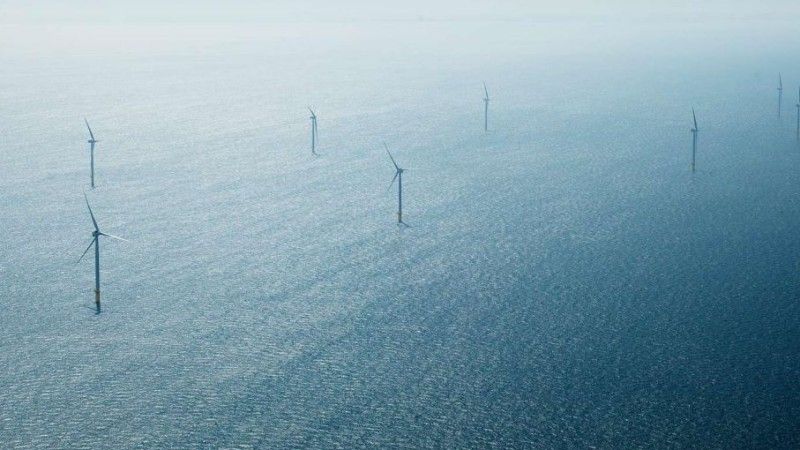
The experience of the Russian-Ukrainian war in the Black Sea demonstrates how easily an entire maritime basin, and even the airspace above it, can be shut down. As a result, the battle for maritime control is paradoxically fought primarily on land, for example through missile systems, drones, reconnaissance, and strikes on infrastructure.
Similarly, the Baltic Sea is not simply a „sea of peace” or a zone of free navigation, even in international waters. It is a closed theatre of operations where geography, short reaction times, and the weapons overload radically limit the traditional freedom of naval operations.
Increasingly, the future of Northern and Central Europe’s security is being decided in the Baltic space.
The question therefore arises: will the outcome of a potential conflict be determined by large fleets, or rather by geography, the range of strike systems, and the political and military readiness to use force? The most important factors may be the ability to quickly close a sea area, resistance to a first strike, superiority in reconnaissance and precision strikes, not the mere number of ships.

Pressure and escalation
The Baltic Sea has ceased to be a peripheral sea and has become a key military, energy, and logistical hub for Europe, operating in a state of permanent pressure below the threshold of open war. Since 2015, Russia’s increasing activity has been observed, which after 2022 has taken on a distinctly hybrid nature. GPS signal jamming, the presence of unmarked vessels near pipelines, fiber-optic cables, and power installations, and the use of a so-called „shadow fleet” to circumvent sanctions pose a real threat to the security of European Union infrastructure, including Poland.
Russia systematically tests the readiness of NATO member states through an intensive naval and air presence, military exercises, and provocations in close proximity to the alliance’s borders. The Baltic Sea, as a confined water body, minimizes response times, and any incident at sea, in the air, or underwater can quickly gain strategic significance. The sabotage of infrastructure, symbolized by the Nord Stream incident, has highlighted the vulnerability of the seabed to hybrid activities and the difficulties of rapid response and clear attribution of responsibility.
Protecting the densely distributed critical infrastructure, including gas pipelines, power and telecommunications cables, LNG terminals, and developing offshore installations, remains a particular challenge. At the same time, the Baltic Sea is a space for hybrid operations, including cyberattacks on port and logistics systems, pressure on commercial shipping, disinformation, and irregular activities such as smuggling and organized crime. The line between the military and civilian spheres is increasingly blurred, necessitating close cooperation between the armed forces, state administration, and the private sector.
Against these threats, the weakness of Poland’s maritime capabilities is particularly evident. The Navy possesses outdated equipment and limited patrol capabilities. Implemented and announced purchases (including submarines) will not change this situation anytime soon. Modernization programs are progressing slowly, and a capability gap persists in responding to maritime incidents and protecting the country’s exclusive economic zone. As a result, the risk of energy and military pressure from Russia and a gradual loss of control over key areas of national security in the Baltic Sea is growing.

How to build a shield here and now?
Baltic Sea security is no longer a future problem. Threats are present here and now, requiring urgent and coordinated action by regional states and allies. A sustained NATO presence in the region, implemented through permanent naval and aircraft patrols, rotational deployments, and regular multinational exercises, is crucial. These are not merely a demonstration of force, but a practical test of interoperability and the ability to respond quickly in crisis situations.
At the same time, effective Baltic Sea protection requires joint surveillance of maritime, air, and underwater spaces, supported by satellites, drones, sonars, and autonomous surface and underwater units. Only such a system can timely detect threats, identify hybrid activities, and effectively protect key infrastructure, including gas pipelines, submarine cables, LNG terminals, and energy platforms. Cyber resilience and incident response coordination are also essential, encompassing ports, navigation systems, maritime logistics, and energy grids. Countries in the region must possess rapid crisis response capabilities, including maritime rescue and environmental disaster response. Full integration of situational awareness systems is becoming essential, enabling real-time data exchange between navies, coast guards, and civilian institutions. Autonomous technologies capable of long-term patrolling and protecting critical infrastructure will play an increasingly important role, and a unified legal framework for responding to crises, including hybrid operations operating in legal grey areas, will be essential for effective action.
The new Baltic defence architecture should be based on a regional command centre and permanent cooperation between national headquarters, enabling coordination of operations and rapid response to crises. Joint logistics bases, modernization of military and civilian ports, and maintaining the readiness of rapid reaction units would ensure efficient deployment of forces and continuity of defence. Protecting critical infrastructure requires surveillance systems, sabotage attack simulation, and the use of autonomous technologies, while cyber defence and electronic warfare protect navigation, communication, and military systems from interference such as GPS spoofing. Political and legal harmonization is essential to enable the rapid deployment of allied forces and a coherent response to hybrid threats. Cooperation with the defence industry and the development of innovations that enhance operational and reconnaissance capabilities, among other things, must not be overlooked.
The effectiveness of these actions will depend on close cooperation between the countries of the region-Poland, Sweden, Finland, Germany, Denmark, and the Baltic states-while supporting other NATO allies. The integration of military and civilian capabilities within NATO and the EU remains essential to maintaining Baltic stability. Only a coherent, multi-layered defence strategy can create a regional „shield” protecting critical infrastructure and ensuring the security of a sea region currently under constant military, hybrid, and cyber pressure.

Integration of forces in the shadow of Kremlin aggression
Integrating capabilities across all operational domains (sea, air, land, and even cyber and satellite) in the Baltic Sea region can create a new level of security, based on cooperation between allied states in interconnected areas: joint procurement, shared infrastructure, and industrial and research and development cooperation. Joint procurement of military equipment, including patrol vessels, sonar systems, unmanned surface and submarine vessels, ammunition, and missiles, will reduce costs, increase interoperability, and gradually standardize equipment. Such activities can be implemented both within EU instruments, such as EDIRPA and the European Defence Fund, and NATO mechanisms, including the NATO Support and Procurement Agency, which should ensure faster replenishment and reduce fragmentation of the defence market.
The second pillar could be a common infrastructure of bases, enabling the reception, support, and maintenance of allied forces and the conduct of regional operations. Modernizing military and selected civilian ports, constructing warehouses, fuel and weapons depots, and developing infrastructure for autonomous systems and command centres can increase flexibility and readiness to respond to crisis situations. Financing for these projects could come from both European and NATO funds, strengthening the alliance dimension of the entire endeavour.
The third area should encompass joint industrial production and research and development, aimed at increasing the region’s technological sovereignty, developing innovative solutions, and maintaining a maritime advantage. Collaboration between national defence industries, such as PGZ, SAAB, Patria, Kongsberg, and ThyssenKrupp, already focuses on unmanned surface and underwater platforms, mine countermeasures systems, advanced electro-optical and radar sensors, and solutions utilizing artificial intelligence and big data analysis. EU and NATO programs, including PESCO, the European Defense Fund, and DIANA, could enable technology transfer and the rapid implementation of innovations in operational practice.
The synergy of these three pillars allows not only for increased interoperability and resilience of naval forces but also for strengthening the entire Baltic Sea region against military, technological, and resource crises. Priority operations must include the protection of critical infrastructure, reconnaissance and maintaining situational awareness, mine countermeasures, counter sabotage operations, and crisis response, including search and rescue and ecological operations. The use of autonomous systems (e.g. drones), sonar sensors, and reconnaissance networks, cooperation between navies and air forces, and the integration of air defence and electronic warfare enhance the region’s deterrence and resilience to pressure from Russia.
The effectiveness of these operations requires a shift away from a purely national approach and the adoption of a functional division of roles. The so-called eastern flank states, including Poland and the Baltic states, bring experience with direct threats and a readiness to respond quickly. The Nordic states, on the other hand, offer advanced maritime, technological, and reconnaissance capabilities. The integration of these approaches should begin now through joint operational planning, interoperable command systems, and permanent information-sharing mechanisms within NATO. Such regional cooperation formats allow for faster, flexible operational actions, while NATO provides a broader deterrence framework and strategic coordination.
The decision by Finland and Sweden to join NATO has changed the security dynamics in the region. Both countries, with their defence experience and societal resilience, are aware of the risks of the Kremlin’s hybrid actions, including cyberattacks, disinformation, and information pressure. Their integration within NATO structures strengthens the alliance’s cohesion, simultaneously demonstrating that enhancing European defence capabilities is not incompatible with maintaining strong transatlantic ties.
As a result, the combination of integrated military, infrastructure, and industrial capabilities with European strategic autonomy and enduring transatlantic ties has created a cohesive, resilient, and long-term Baltic security ecosystem. The Baltic Sea is ceasing to be a collection of national spheres of responsibility and becoming a common space of deterrence, defence, and resilience, where cooperation, interoperability, and technological innovation mutually reinforce each other.

Differences as strategic assets
Effective defence of the Baltic Sea requires treating the strategic differences of the region’s states as advantages, not obstacles. Poland views the Baltic Sea primarily through the prism of land threats and the importance of logistical routes for NATO’s eastern flank. Finland and Sweden are focusing on defending their own territory, rapid response, and integrating military, civilian, and reconnaissance defence. The Baltic states must counter hybrid pressure and enhance early warning, while Germany and Denmark emphasize interoperability, command, and operational support. Instead of artificial uniformity, a modular security architecture is necessary, in which each state develops its advantages but operates in close synchronization with its partners.
Joint planning and regional strategy already encompass cyclical threat assessments, integrated maritime and coastal operations, and coordination within NATO and the EU. The countries complement each other in terms of competencies. Poland provides land and sea defence, Sweden provides submarine capabilities and special forces, Finland provides electronic and coastal defence, the Baltic states provide monitoring and asymmetric warfare, Denmark provides logistics operations and strait security, and Germany provides command, communications, and a significant support potential. Each country develops its own niche, but within a single operational plan.
Further integration must encompass joint forces and infrastructure. Strong links between military planning, industry, and research would enable the development of unmanned systems, sensors, and mine warfare systems through joint test laboratories and EU funding. The foundation of this system must be integrated situational awareness, compatible C4ISR systems, and coordinated cyber defence of maritime infrastructure.
A key element must be joint exercises in realistic scenarios, including infrastructure sabotage, landing, strait blockade, and cyberattacks, linking NATO, the EU, public administration, and the private sector. The strategic unification of the Baltic Sea is not based on a single fleet, but on agreed diversity, complementary capabilities and common tools, creating a coherent vision and actually increasing the security of the region.
Fleet strength or other capabilities?
Although Russia ranks second in the world in Global Firepower statistics, with regional states such as Germany (14), Poland (21), Sweden (27), Denmark (45), Finland (48), Lithuania (88), Latvia (99), Estonia (107) - ranking significantly lower, the combined capabilities and strategic positions of the Baltic states and their allies form a real defence backbone. The combined defence budgets of the eight countries surrounding the Baltic Sea exceed Russian military spending, which likely also provides an advantage and strengthens the region’s resilience (although the accuracy of Russian data is uncertain regarding its amount and funding sources). I addition, it’s not just the number of ships that matters, but also the utilization of the potential of other types of armed forces, the Baltic’s geography, distances, islands, and the way we utilize all the instruments discussed above.
The Baltic Sea is not neutral and has ceased to be a mere body of water. It has become a kind of „weapons system” in which the key factors are isthmuses, straits, islands, and airspace control, not necessarily the size of the fleet, which can be sunk with a single salvo from any shore.
Shouldn’t we consider combining the efforts of our country in the southern Baltic Sea with the country on the opposite side, Sweden? In essence, this would be a meridional maritime axis of cooperation, which could be reinforced by Germany and Denmark from the west and Lithuania, Latvia, Estonia and Finland from the east, protecting Russia’s access to the Baltic Sea from the Gulf of Finland.
For security reasons, the Königsberg Oblast is of key importance to Poland - analogous to the role of Crimea, which remains in Russian hands, for Ukraine. These are areas from which it is possible to control the entire sea basin and influence airspace. US National Security Advisor (NSA) Robert O’Brien reportedly said in an interview with the German press, describing Kaliningrad’s importance in the context of strategic threats to Europe, that it was a „dagger in the heart of Europe.” It should be noted, however, that this quote comes from Russian-sponsored press materials and should be treated with great caution. Theoretically, Russia’s forward position in the Königsberg Oblast constitutes a tool of strategic pressure, but in practice it also poses a significant liability: isolated, with limited mobility, and constantly monitored by NATO, the exclave could prove a trap rather than an asset in a conflict.
The aforementioned Warsaw-Stockholm axis, thanks to the integration of all capabilities, could make the Baltic Sea an operationally hostile area for Russia. The Warsaw-Stockholm axis, complemented by all Baltic countries, ISR systems, logistics, and interoperable command, would create a real security backbone for the region. This axis could define a new military backbone for the region, with every chokepoint, island, and port becoming a point of strategic control.
Will the „Baltic axis of cooperation” be able to close the gap and deny the enemy manoeuvre before the first shot is fired? Are we able to fully utilize the potential of combined capabilities, or are we leaving gaps for the enemy to exploit? Deterrence works best when it doesn’t have to be used. Geography, concentration of capabilities, and combined resources will make the Baltic a line of defence, not just a space for dialogue. Here, an invisible yet effective Baltic A2/AD zone is emerging (this time on our side), whose presence could determine the security of the entire region.
In the new order, political declarations matter less, but readiness, range, and cooperation. In the region, the advantage will belong to those who combine their capabilities into a single, efficient system. The Baltic Sea is becoming an instrument of deterrence, and the Poland-Sweden axis may be its best guardian.
Is Poland ready to exploit its chokepoints, reconnaissance capabilities, and the capabilities of its Coastal Missile Squadrons? Are we doing enough within NATO and the EU to stop aggression so that the first shot is not fired?
Dr. Andrzej Fałkowski, Lieutenant General (retired), began his career in the Navy and wore a naval uniform for over two decades. He is former Deputy Chief of the General Staff of the Polish Armed Forces.


