












- WIADOMOŚCI
Belarusian cigarette-smuggling balloons in the Polish airspace. How should NATO respond?

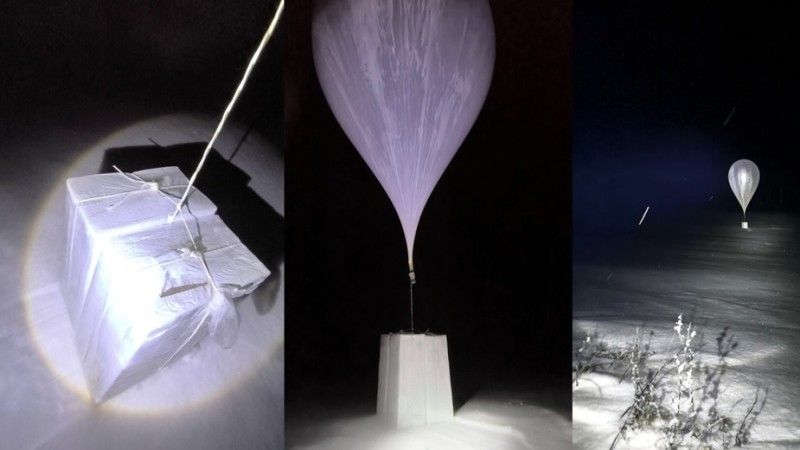
The Belarusian cigarette-smuggling balloon incursions continue in Europe, entering the Polish airspace for the third consecutive night, according to the Armed Forces Operational Command.
Although the objects reportedly posed no direct threat to air traffic safety, their presence caused a temporary limitation on civil aviation in the Podlaskie region. Despite their non-lethal nature, these incidents represent a sustained campaign of airspace violations from Belarus, likely enabled by the broader Minsk-Kremlin axis.
Testing Poland and NATO
The primary objective of these incursions is twofold to test Polish and allied air-defence systems, and to sow intra-alliance friction. Using balloons to achieve these aims generates several benefits. First, balloons carry lowered escalatory potential as they are not traditionally associated with military operations. Furthermore, the ability to attach payloads while obscuring their origin further complicates state-attribution, which is already problematic in the grey zone context. Consequently, balloons represent a low-cost and low-risk asset for influencing European states, especially the frontline ones.
To answer these challenges, the Alliance should not only continue investing in air defence and monitoring capabilities; member states should also act more proactively. One option that is currently discussed is to neutralize the balloons by shooting them down. However, this solution has a particular drawback: the balloons fly at an altitude so high that it complicates their effective interception, making it economically unviable. In response, the Lithuanian government, for example, has offered a €1 million prize for the development of more effective balloon interception technologies. In the interim, prioritising the identification, interception, and sanctioning of smugglers could generate a limited deterrent effect. Such measures improve situational awareness, facilitate attribution by mapping criminal networks and potential state involvement, and, over time, strengthen the evidentiary basis for recognising Belarus as an active enabler of Russian hostile activities.

What will NATO do?
Apart from their destabilising effects, the balloon incidents highlight a rhetorical problem linked to using the term „hybrid warfare,” which continues to be an ill-defined concept, often moulded in line with particular interests and narratives. In response, the Institute for the Study of War proposes framing such activities as Russia’s and by extension other belligerent states«, like Belarus’s phase zero of conflict with NATO.”
This terminology underscores that, through sustained below-threshold actions, NATO is already engaged in a form of conflict with Russia, whether it formally acknowledges it or keeps it purposefully ambiguous. Such a shift in conceptualisation, though theoretical in nature, will underscore the urgency that could translate into more timely and effective policies. But conceptual clarity is insufficient if not matched by action. NATO should therefore both become bolder in its strategic communication and find practical solutions to balloon-interception difficulties. Failure to respond with resolve risks further normalisation of malign airspace violations, as well as lowering the threshold for more aggressive actions in the future.
Author: Karolina Kisiel


