












- WIADOMOŚCI
- KOMENTARZ
More Bismarck, less Hitler. AfD targets Germany’s Nazi memory

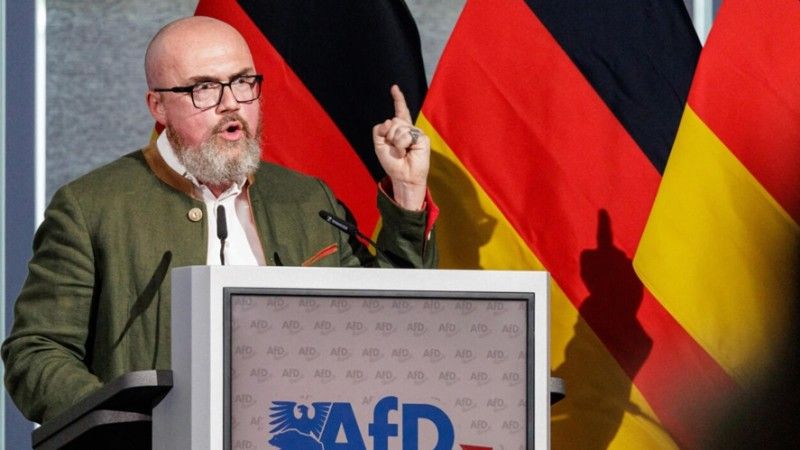
Photo. X.com
Surging to 42% in Saxony-Anhalt, the AfD is preparing to reshape Germany’s postwar memory culture with a push for „more Bismarck, less Hitler.”
Just days ahead of Saxony-Anhalt’s September 6 election, AfD politician Hans-Thomas Tillschneider argues that the Nazi era should occupy a less prominent role in German public life. With his party currently polling at 42 percent, this push to reshape Germany’s postwar memory culture could soon be backed by state power.
Serving as the regional party’s deputy leader and education spokesman, Tillschneider told POLITICO that Nazi history lingers in the national consciousness „like a zombie.” While he believes schools should continue teaching the Third Reich, he wants the curriculum fundamentally rebalanced. He summarised his approach with a simple formula of „more Bismarck, less Hitler.”
During a recent campaign event in Querfurt, he proposed dedicating a month to celebrating German heritage alongside a festival of German music. He argued that the Nazi period should no longer feel so immediate or dominant. Reducing its prominence, he insisted, would not amount to forgetting the past.
The party’s broader policy blueprint pushes these ideas even further. A failed 2025 AfD motion attempted to redirect funding away from school trips to Nazi memorials, channeling it instead toward visits associated with the party’s #deutschdenken campaign. Furthermore, the party’s adopted 2026 platform champions the „success story” of the German Empire. It advocates for a patriotic cultural policy and the restoration of memorials dedicated to soldiers killed in both world wars. The platform also outlines plans to replace the existing state civic education agency with a new institute focused on political education and cultural identity.

Because Germany’s federal system grants individual states control over education and culture, a regional government holds direct authority over school curricula, memorial funding and public institutions. This structural reality makes the AfD’s agenda highly actionable at the state level.
Saxony-Anhalt’s domestic intelligence service has officially classified the regional AfD as a confirmed right-wing extremist organisation. Despite this, the party currently leads the CDU by 20 points. Whether their 42 percent polling translates into an absolute majority of seats will depend on how many smaller parties manage to clear the 5 percent electoral threshold. Reflecting on these developments, Josef Schuster, president of the Central Council of Jews in Germany, warned that such a shift would effectively abandon a core consensus of the postwar era.


