- WIADOMOŚCI
- WYWIADY
Germany must turn defence spending into military power

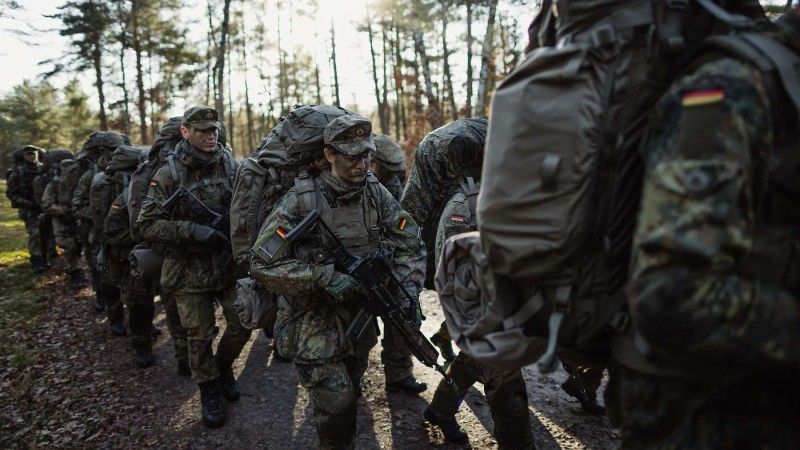
Germany is entering the most demanding phase of its defence transformation in decades. After the NATO summits in The Hague and Ankara, the challenge is no longer to announce higher spending, but to translate political commitments into combat-ready forces, ammunition stocks, industrial capacity and resilience. In an interview with Dr Aleksander Olech, Col (retd.) Ralph Thiele explains what Berlin must do next, how the war in Ukraine is changing German defence planning and why Germany’s role on NATO’s eastern flank will continue to grow.
This transformation also has direct consequences for Central and Eastern Europe. Germany is expected to become not only a larger military power, but also one of NATO’s principal logistics and industrial hubs, responsible for moving Allied forces towards the eastern flank and sustaining them during a prolonged conflict. The permanent German brigade in Lithuania is the most visible example of this shift, while closer cooperation with Poland in air and missile defence, ammunition, logistics and military mobility could become another important element of the regional defence architecture.
Following the NATO Summit in Ankara, what should be Germany’s main defence priorities in the coming years? Is Germany now ready to translate the commitments made in The Hague and Ankara into real military capabilities?
The recent summits confirmed that NATO is moving decisively from crisis management towards collective defence and long-term strategic competition. For Germany, this marks the transition of theZeitenwende from a political and financial commitment into a demanding implementation phase. The challenge is no longer to announce ambition, but to generate combat-ready forces, industrial capacity and national resilience. NATO itself has now shifted its emphasis from setting targets to delivering results.
Germany’s foremost priority should be to establish itself as Europe’s leading framework nation for NATO’s collective defence. This requires rebuilding the Bundeswehr’s ability to conduct and sustain high-intensity operations while simultaneously strengthening Germany’s role as the Alliance’s central logistical hub and a key element of its defence-industrial base.
Three priorities are standing out:
First, Germany must restore military readiness by fully equipping its combat formations, rebuilding ammunition stocks, increasing availability rates and accelerating procurement. Ultimately, deterrence is measured by deployable combat capability—not by budgets or force structures on paper.
Second, Germany must expand its defence-industrial base. The war in Ukraine has demonstrated that industrial capacity is itself a strategic capability. Long-term procurement commitments, resilient supply chains and substantially increased production of ammunition, missiles, drones and spare parts are now as important as force structure.
Third, Germany must strengthen national resilience. Future conflicts will extend far beyond the battlefield, targeting critical infrastructure, logistics, cyber networks and public confidence. Military strength and societal resilience have therefore become inseparable elements of credible defence.
Germany has the economic weight, industrial capacity and geographic position to play a leading role. The decisive question is whether it can now convert political ambition and financial resources into military output at sufficient speed and scale.

Germany has announced ambitious plans to strengthen its defence capabilities and substantially increase defence spending. In your view, which areas require the most urgent investment: air and missile defence, ammunition and long-range strike capabilities, armoured forces, drones, cyber, or military logistics?
The war in Ukraine, NATO’s regional defence plans and the evolving Russian threat point to a clear hierarchy of priorities. These capabilities should not be viewed as competing investments: their value depends on how effectively they are integrated into a functioning warfighting system.
The first priority is the digital backbone. Future warfare will be characterised by multi-domain operations in which the ability to observe, orient, decide and act faster than the adversary creates a decisive advantage. Secure, resilient and interoperable connectivity must therefore become a foundational capability. Modern armed forces increasingly operate as integrated networks rather than collections of individual platforms. Tanks, aircraft, ships, drones, satellites, sensors, electronic-warfare systems and headquarters must be able to exchange and exploit information across domains. Without resilient connectivity, even sophisticated weapons operate in isolation and deliver only a fraction of their potential.
A modern digital backbone enables information superiority by fusing data from satellites, drones, radar, electronic warfare, intelligence and frontline units into a common operational picture. It accelerates decision-making, improves targeting and enables distributed operations under contested conditions.
Beyond this foundation, Germany should prioritise integrated air and missile defence, ammunition and long-range fires, drones and counter-drone capabilities, electronic warfare, and military logistics. Armoured forces remain essential for high-intensity land warfare, but their effectiveness increasingly depends on the digital, logistical and protection architecture surrounding them. The key is therefore not simply to buy more platforms, but to build a connected, resilient and sustainable combat system.

How realistic is the current pace of Bundeswehr modernisation? Is the main challenge today still funding, or rather personnel, procurement procedures, infrastructure and the ability of German industry to deliver equipment at the required scale?
The Bundeswehr is undergoing its most significant transformation in decades. However, the security environment is evolving faster than most institutional processes in Germany. The central challenge is therefore no longer simply providing financial resources but converting political will and funding into deployable military capability.
The primary bottleneck is procurement. Germany’s acquisition system remains too slow and procedurally complex for an environment in which military requirements and technologies are changing rapidly. Future procurement must place operational relevance, speed, interoperability and life-cycle sustainability above procedural perfection.
The second constraint is industrial capacity. For decades, Germany’s defence industry was structured around limited peacetime demand. Expanding production requires long-term government commitments that justify investment in production lines, skilled personnel, technology and resilient supply chains. Industrial capacity has become an integral component of military capability.
Personnel remains equally critical. Demographic change, competition for technical specialists and increasing demand for cyber, engineering, maintenance and logistics expertise make recruitment and retention more difficult. Modern equipment generates no combat power without sufficiently trained personnel to operate and sustain it.
Infrastructure is another strategic constraint. If Germany is to function as NATO’s principal reinforcement and logistics hub, investment is required in barracks, training areas, ammunition storage, maintenance facilities, digital networks, railways, roads and military transport infrastructure.
Finally, logistics integration requires greater attention. Ukraine has demonstrated that operational endurance depends on resilient logistics.
Germany is therefore moving from an era of underinvestment towards regeneration. The opportunity is substantial—but success will depend on whether the state can remove the institutional bottlenecks that prevent money from becoming military output.
What lessons should Germany draw from the war in Ukraine when it comes to military transformation and readiness for high-intensity conflict? Has the Bundeswehr adapted quickly enough to the growing importance of drones, electronic warfare and mass production of relatively inexpensive systems?
Ukraine has fundamentally changed Western assumptions about warfare. It is not merely another regional conflict; it is a large-scale industrial war in Europe that demonstrates how technological innovation, mass, industrial endurance and rapid adaptation interact. The central lesson is that future wars will not be won by technological superiority alone, but by the ability to combine innovation with scale and sustained combat power with operational art.
The Bundeswehr has recognised this transformation and begun adapting. Here are key insights:
First, high-intensity conventional warfare has returned as NATO’s central planning challenge. Readiness cannot be measured simply by the ability to deploy. It must include the ability to sustain combat operations for months, absorb losses and regenerate combat power.
Second, the battlefield has become increasingly transparent. Reconnaissance drones, loitering munitions and FPV systems have transformed tactical warfare. Concealment, dispersion, mobility, deception and signature management have consequently become fundamental survival skills for every formation.
Third, electronic warfare has become a decisive combat function. Control of the electromagnetic spectrum increasingly determines the effectiveness of drones, communications, navigation and precision weapons. Electronic warfare must therefore be integrated throughout the force rather than treated as a specialised niche capability.
Fourth, Ukraine has demonstrated the importance of affordable mass. Inexpensive drones, autonomous systems and expendable sensors can generate disproportionate effects when produced and employed at scale. Future forces therefore need a combination of sophisticated high-end systems and large numbers of rapidly replaceable low-cost capabilities.
The most important lesson, however, is organisational. Logistics, industrial production, innovation, command structures and the ability to learn must operate as one system. The force that develops superior situational awareness and adapts faster will gain a decisive advantage.

How do you assess Germany’s current and future military support for Ukraine? Should Berlin now focus more on direct deliveries, joint production, training, or long-term defence-industrial cooperation?
Germany’s support for Ukraine has evolved from emergency assistance into a long-term strategic partnership. Having become one of Ukraine’s principal military supporters, Berlin now faces the challenge of helping Ukraine build sustainable military capacity while simultaneously strengthening Europe’s own defence-industrial base. The emphasis should therefore progressively shift from transfer to transformation.
Direct deliveries remain essential, particularly for air defence, ammunition and selected high-value capabilities that Ukraine cannot rapidly replace itself. However, this cannot remain the sole foundation of long-term support without placing increasing pressure on the readiness of donor nations.
The strategic priority should therefore be joint defence-industrial production. Expanding ammunition manufacturing, establishing joint ventures, creating maintenance and repair facilities and enabling licensed production would strengthen Ukraine’s ability to sustain its defence while increasing Europe’s overall industrial resilience.
Training should remain a second pillar. Beyond individual military training, Germany should increasingly support Ukraine in institutionalising NATO-compatible doctrine, professional military education, logistics, maintenance and command structures. The objective should be long-term integration into the Euro-Atlantic security architecture.
Cooperation should also become reciprocal. Ukraine has accumulated exceptional operational experience in drone warfare, electronic warfare, battlefield innovation and rapid adaptation. Germany and its European partners should systematically incorporate these lessons through structured exchanges, joint experimentation and defence-industrial cooperation.
After the NATO Summit, do you see a stronger role for Germany in European defence and particularly in strengthening NATO’s eastern flank? Is Germany prepared to become one of the principal European military pillars of the Alliance?
Yes. Germany’s role within NATO is becoming more consequential. Following the decisions taken at The Hague and Ankara, Germany is increasingly expected not simply to contribute to European security but to help lead its implementation. NATO itself has highlighted Germany’s contributions, including the permanent brigade in Lithuania and the German-Netherlands Corps’ role in NATO’s regional command arrangements.
Given its economic strength, geographic position and industrial capacity, Germany is indispensable to NATO’s European pillar. Its future role extends beyond providing combat forces. Germany must simultaneously act as a framework nation, a central logistics hub, a major contributor to NATO command structures and a leading defence-industrial power.
The priorities are therefore clear:
defending NATO’s eastern flank; enabling the rapid reinforcement of Allied forces across Europe; leading multinational force generation and integration; and expanding Europe’s defence-industrial capacity.
The permanent German brigade in Lithuania is the most visible symbol of this transformation. If current reforms are sustained and accelerated, Germany can emerge over the coming decade as NATO’s leading European framework nation—not replacing Poland, France or the United Kingdom, but complementing them as one of the indispensable pillars of European collective defence.
The real test, however, will be whether Germany can sustain the forces, infrastructure, logistics, ammunition and industrial capacity required to make this leadership credible.

Poland and Germany are two key states for NATO’s security in Central and Eastern Europe. In which areas could Polish-German military and defence-industrial cooperation be developed most effectively? Do you see particular potential in air defence, ammunition, logistics, armoured forces or joint procurement?
Germany and Poland have become indispensable pillars of NATO’s Central European defence architecture. Poland provides substantial frontline combat power, high readiness and operational urgency. Germany contributes strategic depth, industrial capacity, logistics and multinational command experience. Their strengths are complementary rather than competitive. The greatest opportunity therefore lies in integrating capabilities.
The first priority should be integrated air and missile defence. Both countries face the threat of long-range missiles and increasingly sophisticated drone attacks. A shared air picture, interoperable command-and-control, coordinated deployment of air-defence assets and joint procurement where appropriate could create a much more coherent defensive architecture extending towards the Baltic region.
The second priority is military mobility and logistics. In a major crisis, Germany will be a principal reinforcement corridor, while Poland will be a key forward logistics area. Investment in rail interoperability, roads, ammunition depots, fuel infrastructure, maintenance facilities and digital logistics management would significantly strengthen NATO’s ability to reinforce its eastern flank.
Third, Germany and Poland should expand defence-industrial cooperation, particularly in ammunition, missiles, maintenance, drones, electronic warfare and resilient supply chains. Long-term framework agreements would give industry the planning certainty required to expand production.
Fourth, there is substantial potential in next-generation military technology. Joint development of autonomous systems, artificial intelligence, counter-drone technologies and electronic warfare could combine Poland’s rapid modernisation and operational experience with Germany’s technological and industrial strengths.
Joint procurement should be pursued wherever it creates genuine operational value—particularly for ammunition, logistics, communications and support systems—while recognising that national requirements may justify separate choices for some major combat platforms. The objective should be a genuinely integrated Polish-German defence architecture rather than simply closer bilateral cooperation.
The German brigade in Lithuania is continuing to grow and is expected to reach full operational capability in the coming years. How do you assess its development so far? Is this becoming a genuinely combat-ready permanent German presence on NATO’s eastern flank?
The German brigade in Lithuania represents one of the most consequential strategic decisions in German defence policy since reunification. It is the clearest manifestation of Germany’s transition from crisis management towards permanent forward defence and demonstrates that Berlin increasingly regards the security of the Baltic region as inseparable from Germany’s own security.
The project has made substantial progress. Permanent command structures are being established, personnel numbers are increasing, infrastructure is expanding and integration with Lithuanian forces and NATO’s regional defence plans is advancing. Germany has also demonstrated a sustained political commitment to a permanent presence rather than relying exclusively on rotational deployments.
Nevertheless, combat credibility depends on more than permanence. A permanently stationed brigade must be fully manned, equipped, supplied and capable of sustained operations under wartime conditions. This requires adequate ammunition stocks, robust logistics, maintenance capacity, protected infrastructure, family support, high-intensity exercises and the ability to receive rapid reinforcement from Germany and other Allies.
The brigade is well on its way to becoming a genuinely combat-ready permanent presence. It is becoming a cornerstone of NATO’s forward defence architecture with its ultimate effectiveness built on close integration with Allied air and missile defence, long-range fires, intelligence, logistics and multinational command structures.
See also 

Russia is increasingly combining conventional military pressure with sabotage, cyber operations, disinformation and other hybrid activities inside Europe. Is Germany sufficiently prepared to protect its military infrastructure, defence industry and critical infrastructure against these threats?
Russia’s strategy seeks not only to destroy but to disrupt. Sabotage, cyber operations, disinformation, economic coercion and attacks on critical infrastructure are designed to slow mobilisation, undermine political cohesion and complicate NATO’s ability to reinforce its eastern flank. Today Germany is considerably better prepared than it was before 2022. Yet it remains at an early stage in developing the resilience required to withstand the scale, persistence and sophistication of a sustained hybrid confrontation. The principal challenge is no longer recognising the threat but building the capacity to absorb disruption and continue functioning under pressure.
To this end, Germany has strengthened counter-intelligence, cyber capabilities, critical-infrastructure protection and cooperation among security agencies and with NATO partners. Political awareness has also increased, and hybrid threats are now recognised as a permanent feature of the European security environment. Hybrid defence therefore extends well beyond the armed forces. It requires the coordinated efforts of intelligence services, police, civil protection, the Bundeswehr, defence industry, critical-infrastructure operators and society as a whole.
Nevertheless, important vulnerabilities remain. Critical infrastructure is largely operated by private companies, making effective public-private cooperation indispensable. Defence industry is becoming a strategic target and therefore requires stronger physical, cyber and supply-chain security. Germany’s role as a major NATO logistics hub also makes transport corridors, rail networks, fuel infrastructure, ammunition depots and military headquarters attractive targets.
Cyber resilience deserves particular attention. The objective can no longer be to prevent every intrusion, but to ensure that military operations, defence production and government decision-making continue despite persistent attacks. Operational continuity should become the defining measure of resilience. Ultimately, resilience is itself a component of deterrence. The more effectively Germany can absorb disruption, recover rapidly and continue functioning, the less attractive hybrid warfare becomes as an instrument of coercion.
What should NATO do next to ensure that the decisions made at recent summits are translated into real military capabilities, production capacity, ammunition stocks and credible deterrence rather than remaining primarily political commitments?
The recent NATO summits have established the Alliance’s strategic direction. The decisive challenge now is implementation. Credible defence is no longer measured primarily by declarations or spending targets, but by combat-ready forces, industrial capacity, stockpiles and the ability to sustain operations over time. This is also the central message of Ankara: the focus has shifted decisively from commitments to delivery. And clearly, NATO should institutionalise the lessons of Ukraine. Operational experience must be translated rapidly into doctrine, procurement, force development and industrial planning.
As the Alliance is entering a new phase, the coming decade must be characterised by implementation. NATO’s credibility will ultimately be judged by its ability to generate combat-ready forces, expand industrial production and sustain deterrence over time. Action speaks louder than words.