












- WIADOMOŚCI
NATO expands Baltic Air Policing into a defense mission

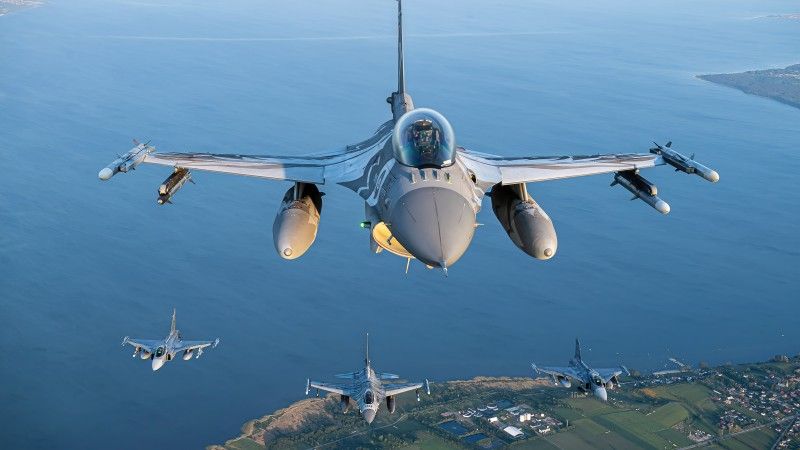
Initiated in 2004, Baltic Air Policing will be expanded into an air defense mission. This decision was made by representatives of NATO member states during the North Atlantic Alliance summit in Ankara, which concluded on Wednesday.
„NATO has agreed to upgrade the status of the air policing mission over the Baltic states to an Alliance air defense mission,” Lithuanian President Gitanas Nausėda told Reuters on Wednesday during the Alliance summit in Ankara.
The expansion of the mandate signifies a transition from the current mission, which focused on air patrolling and intercepting unidentified aircraft, to a broader air defense mission. What will the „expansion” of the mission change? As stated by Estonian Minister of Defense Hanno Pevkur, transforming the air policing mission into an air defense mission will grant NATO commanders and pilots participating in Baltic Air Policing broader powers, and their responses to threats will be even faster. He explained that after identifying a foreign object that has entered the airspace of a NATO country, pilots will be able to use weapons more quickly to shoot it down or neutralize it, ensuring only that collateral damage is minimal.

The Baltic Air Policing
The Baltic Air Policing mission was established after Lithuania, Latvia, and Estonia joined NATO in 2004. Since the Baltic states do not possess adequate air forces to independently perform tasks related to protecting their airspace, these responsibilities are carried out by other Alliance members on a rotational basis. NATO air contingents serve from bases in Šiauliai, Lithuania, and Ämari, Estonia, rotating every four months.
Aircraft remain on standby to scramble at the command of NATO’s Combined Air Operations Centre (CAOC) in Uedem, Germany. Lithuania, Latvia, and Estonia provide host nation support by providing command and control infrastructure and personnel.
One of the primary tasks of the aircraft participating in the mission is the identification of Russian aircraft approaching NATO airspace. The Alliance notes that Russian aircraft regularly perform flights between the Kaliningrad Oblast and the rest of Russia, often without transponders turned on, without establishing communication with air traffic control, and without a filed flight plan.


