- WIADOMOŚCI
F-35, Apache and allied tankers over Warsaw. Air parade of the Polish Army

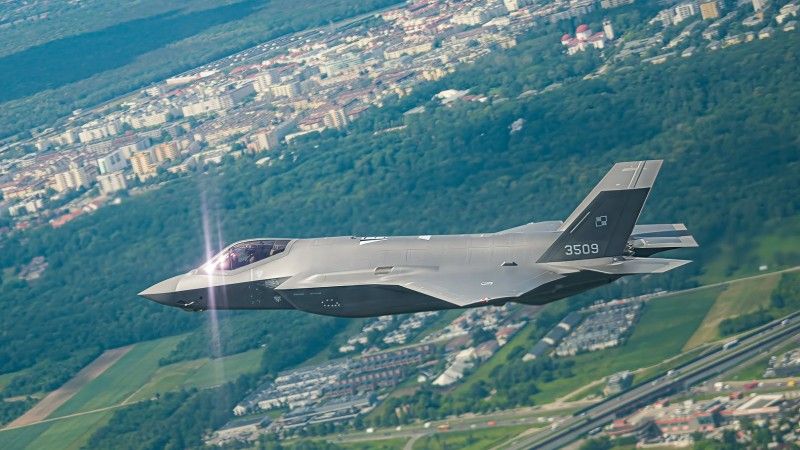
Photo. chor. Piotr Gubernat, Combat Camera Poland
Polish F-35A Hussar, AH-64D Apache helicopters, F-16, FA-50, and M-346 aircraft, as well as a French A330 MRTT tanker and Spanish and German A400Ms – this was the aerial component of the parade held on the occasion of Polish Armed Forces Day. Over Warsaw, machines from the Polish military aviation and the air forces of allied nations were presented.
The aerial part of the parade was opened by a formation of three AW149 multi-role helicopters from the 25th Air Cavalry Brigade in Tomaszów Mazowiecki. The machines are manufactured at the PZL-Świdnik plants, and the Polish Armed Forces have ordered a total of 32 units.
The AW149s are intended to increase the capabilities of airmobile troops in terms of soldier transport, conducting operations by day and night, and cooperation with other branches of the armed forces.
Special forces helicopters
Two Mi-17 helicopters from the Air Special Operations Unit and two S-70i Black Hawks belonging to Military Unit GROM also appeared over Warsaw.
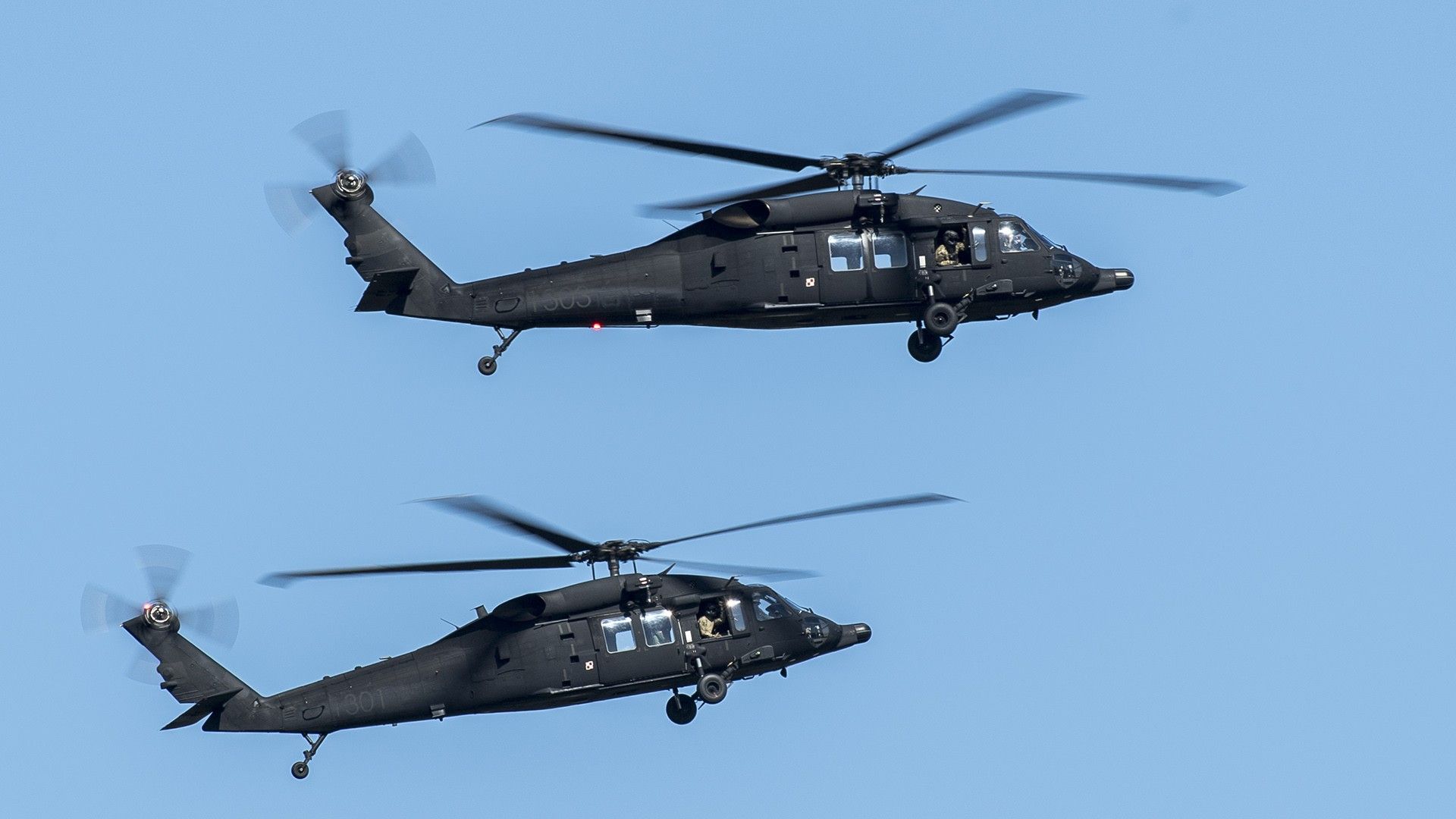
Photo. Mirosław Mróz.
For years, Mi-17s have been used for the transport and support of special forces soldiers. They are being supplemented by the more modern S-70i helicopters produced at PZL Mielec. The Aviation Team of JW GROM currently has eight machines of this type at its disposal.
Apaches over Warsaw
One of the most important elements of the aerial part of the parade was the flypast of three AH-64D Apache attack helicopters. These machines were acquired by Poland under a lease from the United States and are primarily used for training pilots and technical personnel before the delivery of the target AH-64E Apache Guardians begins.

Photo. 1 Brygada Lotnictwa Wojsk Lądowych/Facebook
Poland has ordered 96 AH-64E helicopters, which will replace the decommissioned Mi-24s and become the primary strike platform for the Land Forces Aviation. The Apaches are armed with, among other things, a 30 mm cannon, guided anti-tank missiles, and unguided rockets.
Technical facilities for the new machines are also being developed. Military Aviation Works No. 1 in Łódź are to obtain capabilities related to the maintenance and servicing of the AH-64 family of helicopters.
Orliks and transport aviation
Four PZL-130 Orlik trainer aircraft from the 4th School Aviation Wing presented themselves in the air. These machines are used for basic and advanced training of future military pilots.
Another formation was formed by three M28 Bryza/Skytruck aircraft. In the Polish Armed Forces, machines of this type perform transport, paratrooping, training, patrol, and rescue tasks.

Photo. Mirosław Mróz.
A C-130 Hercules heavy transport aircraft also flew over Warsaw, accompanied by two C-295Ms. These machines are used to transport soldiers and equipment, support Polish Military Contingents, and evacuate citizens from conflict zones. Transport aviation also participates in Action Heart, transporting organs for transplantation and medical personnel.
A400Ms from Spain and Germany
Two allied Airbus A400M Atlas transport aircraft participated in the aerial part of the parade – one belonging to the Spanish Air Force and the other to the German Luftwaffe.

Photo. Mateusz Broncel
The A400M can carry up to 37 tonnes of cargo and operate from short and unpaved runways. Machines of this type can perform both strategic transport flights and tasks directly supporting troops in the area of operations.
The participation of aircraft from Spain and Germany highlighted the allied nature of the parade and the cooperation of NATO countries in securing the eastern flank.
Aircraft for the highest state officials
Aircraft used for the transport of the most important people in the state (VIPs) also appeared over Warsaw. A Gulfstream G550 led two FA-50 light combat aircraft, followed by a Boeing 737 in HEAD configuration – with another two FA-50s.

Photo. st. kpr. Łukasz Marzec / Combat Camera DO RSZ / zoom.mon.gov.pl
Poland has two Gulfstream G550s and three Boeing 737s. The machines are equipped with, among other things, military communication systems and solutions that increase flight safety.
French tanker and Polish F-16
One of the most impressive formations was formed by a French Airbus A330 MRTT escorted by a Polish F-16 Falcon. The A330 MRTT is used for aerial refuelling of other aircraft, as well as for transporting soldiers and cargo, and conducting medical evacuations.
Air tankers have repeatedly supported the activities of Polish aviation and NATO operations over the eastern flank. The ability to refuel in the air allows combat aircraft to remain in the area of operation longer and conduct missions at much greater distances.
Poland plans to acquire four A330 MRTT+ aircraft, which are to become one of the key elements in the development of domestic transport and combat aviation.
Bieliks, FA-50s, and F-16s
Four M-346 Bielik (Goshawk) aircraft, used for advanced pilot training, flew over the capital. The training system in Dęblin also includes extensive flight, ejection, and emergency procedure simulators. The Bieliks prepare pilots for the transition to combat aircraft, primarily the F-16 and F-35.

Photo. Mirosław Mróz.
The next formation was formed by four FA-50 Fighting Eagles. Poland possesses 12 FA-50GF aircraft and has ordered a further 36 machines in the final FA-50PL version. These are to receive increased capabilities in terms of armament, avionics, radar, and conducting operations over longer distances.

Photo. Mirosław Mróz/Defence24
Next, four Polish F-16 Jastrząbs appeared over Warsaw. These multi-role machines can conduct air combat, attack ground and sea targets, perform reconnaissance tasks, and provide direct support to land forces.
Polish F-16s will undergo modernisation, which is intended to increase their combat capabilities and enable effective cooperation with fifth-generation F-35A aircraft.
Polish F-16s and German Eurofighters
The allied nature of the parade was highlighted by the flypast of a formation consisting of two Polish F-16s and two German Eurofighter Typhoons.

Photo. Mateusz Broncel
The Eurofighter is a multi-role combat aircraft used by several NATO countries. German Luftwaffe machines participate, among other things, in activities related to strengthening the protection of the air space of the Alliance’s eastern flank.
F-35A Hussar in the parade finale
The culminating moment of the aerial part of the parade was the flypast of two Polish F-35A Hussar aircraft accompanied by two F-16s. At the controls of the F-35s were Polish pilots who had undergone training in the United States.

Photo. Mateusz Broncel
The F-35A is a fifth-generation stealth aircraft, equipped with advanced sensors and data exchange systems. It can conduct reconnaissance, engage air and ground targets, suppress enemy air defences, and relay information to other participants in an operation.
The joint flypast of the F-35 and F-16 symbolically showed the direction of the transformation of Polish combat aviation – from the currently used Jastrząbs to an integrated system in which the F-35 is to simultaneously serve as a combat aircraft, a reconnaissance platform, and an aerial data exchange centre.