












- WIADOMOŚCI
Preserving peace - defence readiness roadmap 2030

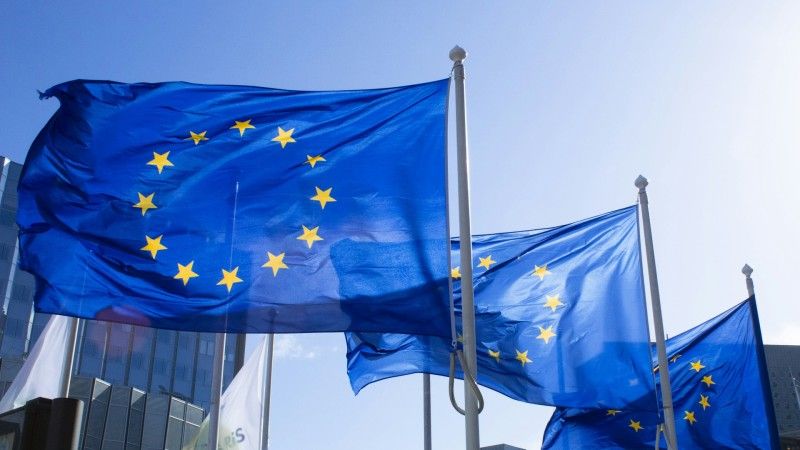
Photo. ALEXANDRE LALLEMAND/Unsplash
The Defence Readiness Roadmap 2030 is the European Union’s strategic blueprint for ensuring Europe’s preparedness by 2030. It is aimed to build capabilities that allow the UE to independently deter and respond to security threats while complementing NATO efforts. It operationalises theWhite Paper on Defence Readiness by setting clear objectives, milestones with specific deadlines, measurable targets, and flagship programmes. The roadmap includes concrete deliverables and indicators to track progress, focusing on strengthening military capabilities, industrial capacity, innovation, and cooperation among member states.
Security context for Readiness 2030
Defence Readiness Roadmap 2030 should be perceived as a comprehensive and concrete answer to escalating threats, particularly Russia’s militarisation and imperialist posture, which undermine European security architecture. Therefore, to ensure peace through deterrence member states must urgently equip themselves with an independent interoperable strategic capacity. European Union has to prevent aggression, defend EU borders across all domains (land, air, sea, cyber, space), and act autonomously when needed.
The Defence Readiness Roadmap 2030 is also emphasising technological innovation, strategic autonomy, and EU-NATO cooperation as pillars of security. Member states must remain sovereign in defence decisions while acting jointly to avoid fragmentation and dependency on non-EU suppliers.
Defence readiness – what does it mean?
In terms of Roadmap for 2030 defence readiness means fully equipped, trained, and interoperable armed forces capable of rapid crisis response. The fundaments for this are: strong European Defence Technological and Industrial Base (EDTIB), robust civil-military cooperation, societal resilience as well as integrated European-level monitoring combined with the coordination of national capabilities through the EU Military Staff (EUMS) and European Defence Agency (EDA).
Closing Capability Gaps by 2030
Member states is constantly increasing their defence budgets – comparing EUR 218 bln in 2021 to EUR 343 bln in 2024 and projected to reach EUR 392 bln in 2025. Nevertheless, money spend on military equipment is not enough to close the gaps. Therefore, EU should establish Capability Coalitions focused on priority areas (see below). Each coalition should be coordinated by lead and co-lead nations, responsible for guiding development and procurement efforts. The goal is for 35% of total defence investment to be collaborative, and for 55% of defence procurement to come from the European defence industry.
European Readiness Flagships
To establishReadiness 2030, EU needs more pan-European flagship initiatives. The fundament for this will be built on the several projects. The first one – European Drone Defence Initiative – perceived as an answer against last violations of many European countries airspace made by Russia. Through this idea member states supposed to implement 360° system of detection, tracking, and neutralisation of drones. This program is linked to the Drone Alliance with Ukraine and dual-use civil applications. Thanks to that the counter-drone network will be adaptable for dual use purposes and help deal with non-defence related threats common to every EU border. This includes border protection, weaponisation of migration, protection of critical infrastructure and transnational organised crime.
The subsequent flagship is Eastern Flank Watch aimed at strengthening EU’s eastern borders and integrating air defence, maritime surveillance, border security, and hybrid threat responses. The EU plans to launch the European Air Shield, a multi-layered air and missile defence system designed to be fully interoperable with NATO and the European Space Shield. Its primary goal is to protect EU space assets and strengthen their resilience. All flagships are to be launched between late 2025 and mid-2026, with operational capacities phased in through 2028–2030.
Defence Industrial and Technological Dimension
Brussels would like to establish a single EU market for defence equipment by 2030. To enhance the defence capabilities, it is planned to create an EU-wide military mobility area by 2027, enabling free movement of troops and materiel within 3–5 working days.
European Union in its effort toward building deterrence capability is also highlighting the need to develop the innovations and scalability of defence industrial base. Besides the launch of the European Defence Industry Programme (EDIP) and SAFE instrument Brussels is aimed at supporting innovation through Horizon Europe, the Competitiveness Fund, and the European Innovation Council. What is more, it is planned to Tech Alliances for Defence linking start-ups and military users, reskill 600,000 workers for the defence sector by 2030. Thanks to Defence Readiness Roadmap EU is performing Multiannual Financial Framework (MFF) which means €131 billion for defence & space via the Competitiveness Fund. Worth noting that Brussels also addressed critical raw materials dependencies via the Critical Raw Materials Act.
Partnerships
Regarding the partnerships Ukraine is perceived as Europe’s ”first line of defence.” The EU’s goal is to help make Ukraine a”steel porcupine” - fully capable of deterring future aggression. The key elements of this plan include integration of the Ukrainian defence industry (UADTIB) into the EU system. Brussels has also proposed the Reparation Loan Mechanism, funded by immobilized Russian assets, alongside the Ukraine Support Instrument under EDIP. In addition, it is facilitating access to SAFE funding and supporting innovation and battlefield technology through the Drone Alliance and Brave Tech EU programs. As a consequence of these actions, fully integrate Ukraine in EU capability coalitions will be achieved by 2026.
Besides Ukraine it is assumed to enhance the cooperation with NATO, UK, Canada, Japan, and emerging partnerships with India and Moldova.
Summary
Defence Readiness Roadmap 2030 should be perceived as a strong and comprehensive plan to strengthen deterring and responding to security threats. Worth noting that almost every initiative supposed to be interoperable with NATO Command. Certainly, this is good start, but now it is time to act and implement these assumptions into reality. The EU and its member states must coordinate investments, pool demand, and develop joint capabilities to close critical military gaps. Moreover, there is a strong need to scale up defence manufacturing, reduce external dependencies, and secure critical supply chains (including raw materials) as well as modernise industrial support instruments (SAFE, EDIP, Competitiveness Fund), not just for equipment purpose but also to promote innovation, AI, and dual-use technologies\ To sum up – EU needs toinvest more, invest together, and invest European.


