












- WIADOMOŚCI
- WYWIADY
Russia isn’t waiting. Gen. Potrzuski: Accelerating procurement is a necessity [INTERVIEW]

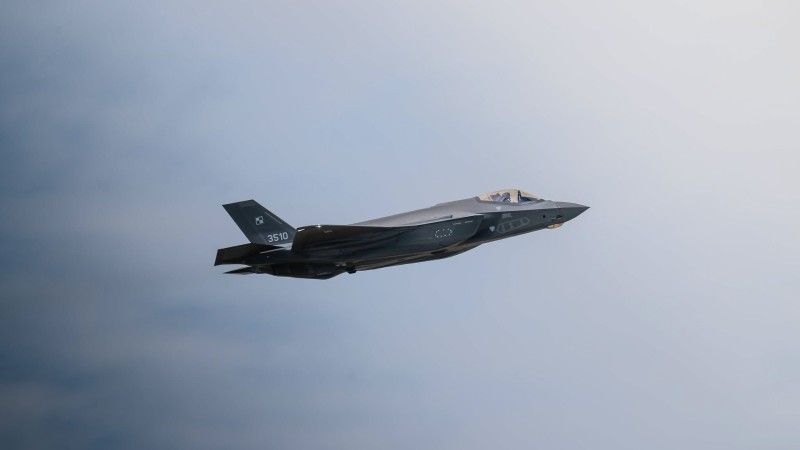
Photo. kpr. Dawid Ograbek
“Russian reconnaissance and sub-threshold activities are continuous. This makes it absolutely necessary to prioritise and accelerate procurement,” Brig. Gen. Grzegorz Potrzuski, Head of the Armed Forces Development Planning and Programming Directorate (P5) of the General Staff of the Polish Armed Forces, tells Defence24.pl. The General confirms plans to acquire 96 Apache helicopters and explains why, in Poland’s circumstances, developing layered armoured and anti-armour engagement capabilities is an absolute requirement.
Jędrzej Graf, Editor-in-Chief at Defence24.pl: In Ukraine, loitering munitions are increasingly performing missions traditionally assigned to anti-tank guided missiles, yet conventional guided-missile programmes continue to be developed. What role do you envisage for conventional anti-tank guided missiles such as the Spike systems already in service and the smaller number of Javelins, as well as, in particular, Poland’s Moskit and Pirat programmes?
Brig. Gen. Grzegorz Potrzuski, Head of the Armed Forces Development Planning and Programming Directorate (P5), General Staff of the Polish Armed Forces: From the General Staff’s perspective, diversification of effectors is a key principle in the development of operational capabilities. We cannot limit our modernisation efforts exclusively to autonomous and unmanned weapon systems. Balanced development across all domains of warfare is essential.
The evolution of the battlefield is inevitably shaped by a dynamic competition between offensive means and defensive systems. This is evident from experience in current conflicts, where the development of unmanned systems is accompanied by a growing effectiveness of countermeasures against them. For this reason, retaining and developing layered armoured and anti-armour engagement capabilities is an absolute requirement. Our objective is to build capabilities suited to the battlefield of the future, rather than to an operational environment projected on the basis of the past. These capabilities must complement one another and be supported by an advanced reconnaissance system.
Apache helicopters are intended to become one of the Army’s most powerful anti-armour assets, but they will have to operate in an environment saturated with Russian air defences. Is Poland considering weapons for them that would allow targets to be engaged from distances of up to 50 kilometres?
Yes. Relevant analyses and conceptual work are underway. We take a systemic approach to introducing new combat platforms, such as the F-35 aircraft, AH-64E Apache helicopters and Homar rocket-artillery systems by creating a coherent operational ecosystem. As a fifth-generation, low-observable platform, the F-35 acts as a force multiplier for our capabilities in a multi-domain environment. Integrating the F-35 with AH-64E and Homar systems creates an advanced sensor-to-effector architecture, significantly shortening the decision-making cycle and enabling key threats to be neutralised. Fielding these systems represents a qualitative leap in the combat potential of our tactical formations.
Naturally, full integration requires precise co-ordination, particularly in terms of Airspace Control at sub-unit level. The concentration of unmanned aerial vehicles at battalion level requires the implementation of strict procedures in order to prevent friendly-fire incidents. We are conducting intensive work on procedures for the precise allocation of responsibilities within the three-dimensional operational battlespace.

Photo. Reporting Team of the 1st Legions Infantry Division/Facebook
Following the outbreak of the full-scale war in Ukraine, Poland purchased an unprecedented number of 155 mm artillery systems. Various opinions have been voiced, including critical ones. With the benefit of hindsight and the experience of the war in Ukraine, was that the right decision?
Those decisions were fully justified from an operational standpoint and were consistent with the implementation of our NATO commitments, under which 155 mm is the standard calibre for artillery. Today, 155 mm is the predominant calibre in Polish artillery. At the same time, we are not abandoning the 122 mm and 152 mm assets being withdrawn from active service. This equipment remains in the modernisation and mobilisation reserve. From the perspective of long-term planning, the key objective is to build a credible deterrence capability that will effectively prevent a potential adversary from deciding to launch an act of aggression.
The newly acquired artillery platforms provide a basis for the introduction of precision-guided and long-range ammunition. Experience from the conflict in Ukraine clearly demonstrates that despite the intensive use of drones, artillery remains a major means of delivering fires. Unmanned systems complement, rather than replace, traditional fire-support assets, particularly in an environment characterised by intensive electronic warfare.
What have the recent artillery acquisitions changed?
These investments are enabling artillery battalions and brigades to be re-equipped with modern platforms offering a service life of at least 30 years and substantial modernisation potential. Systems such as Krab, K9, HOMAR-K and Gladius enable artillery brigades to engage targets at ranges that were unattainable only a few years ago, fundamentally changing their operational capabilities. In addition, we are reorganising anti-tank units and equipping them with the integrated Gladius system. Experience from exercises clearly confirms that a layered fires architecture constructed in this way can neutralise the enemy’s reserves and main forces before they enter brigade defensive areas. Today, despite the changing paradigm of warfare and the shift away from a linear battlefield, the capabilities of these systems provide complementary fire support at the highest tactical echelons.
So Homar-K and Gladius are intended to stop the enemy before it reaches the brigade defensive line, while 155 mm artillery destroys whatever manages to get through?
Yes indeed! That is the correct concept of layered fires. We are developing a flexible capability that will allow commanders to respond dynamically depending on how the tactical situation develops.

Photo. Robert Suchy / Defence24
And is TOPAZ intended to serve as the digital backbone of the entire sensor-to-shooter chain – from the sensor all the way down to an individual gun?
Yes. The TOPAZ+ system currently under development will provide an integrated command-and-fire-control environment, linking sensors and effectors from brigade level down to individual weapon systems. It will enable reconnaissance data and targeting information to be transmitted in near real time. Tactical-level units will have organic fire-support assets and the ability to shift fires flexibly. At the same time, we are carrying out a dynamic process of integrating unmanned systems into the Missile Forces and Artillery, combining Gladius systems, FlyEye unmanned aerial vehicles and Artillery Reconnaissance Vehicles into a coherent architecture, together with the assumptions of Model 44.
The Polish industry is starting with the CGR-80 and a range of around 80 kilometres. The capabilities of K9 and Krab howitzers are also being expanded, and there is discussion of extending their range further. What role can Polish industry play here, particularly with regard to laser-guided 155 mm ammunition?
The General Staff of the Polish Armed Forces is fully open to co-operation with the domestic defence sector. However, the solutions offered must meet operational requirements and deliver capabilities corresponding to the challenges of the future battlefield rather than those of the past. Every system undergoes verification through exploratory studies and field trials.
We operate within defined budgets while ensuring the cost-effectiveness of the programmes being implemented. The Armed Forces Development Programme through 2039 provides for a 250% increase in combat potential, encompassing comprehensive development of armoured and mechanised forces, artillery and the remaining operational domains.
Poland has moved faster than most of Europe in terms of procurement, but at the same time it has created an expensive mix of South Korean, American and domestically produced equipment. Can we afford to sustain it for 30 years? And has the pace increased the risk of mistakes? Germany is only now beginning to place equipment orders, primarily with its own industry. It has the money, although the equipment has not yet been delivered.
Our geostrategic position – directly bordering the Russian Federation and Belarus – imposes a different timetable on us from that adopted by countries located deeper inside Europe. We cannot delay the development of operational capabilities. The world has changed, and the security environment in the immediate vicinity of our borders has changed in particular. The transformation must be carried out effectively because what is at stake is the stability and security of the state. The cost of failing to build an adequate deterrence capability would be incomparably higher.
You have said explicitly that war is not far away. Are the Polish Armed Forces capable of deterring Russia today, or only once the programme through 2039 has been fully implemented?
The point is not to frighten anyone, but rather to build public awareness in the event of potential threats. The Armed Forces of the Republic of Poland continuously maintain the level of readiness required to carry out deterrence and defence missions. The present security environment is characterised by continuous adversary activity in the cyber domain, operations below the threshold of war and activity in the air domain. Building a secure environment is a continuous process requiring capabilities to be constantly adapted to identified threats.
Is Russia already testing Poland almost every day?
Yes. Russian reconnaissance and sub-threshold activities are continuous. This makes it absolutely necessary to prioritise and accelerate equipment acquisition processes and to build a credible deterrence and defence capability.

Photo. Tomek / 12th Mechanised Brigade
For years, the military has been carrying out missions on the border with Belarus at the expense of training for its primary mission. When will technology genuinely make it possible to reduce the number of soldiers deployed to the border, rather than simply adding further duties to their workload?
Our ultimate objective is to increase the density of fixed and autonomous reconnaissance and surveillance systems along the border. This will make it possible gradually to relieve troops deployed there. Furthermore, introducing unmanned systems into sub-units carrying out border missions is contributing to a gradual reduction in the number of personnel required to perform those tasks. The use of unmanned systems in carrying out operational tasks also makes it possible to provide their operators with continuous training.
Is the Army not beginning to assume the role of a drone manufacturer and systems integrator, thereby competing to some extent with industry?
This is a deliberate course of action based on lessons learned from the conflict in Ukraine. The establishment of additive-manufacturing, or 3D-printing, laboratories within sub-units is intended, to a certain extent, to provide logistical self-sufficiency at tactical level – primarily through the rapid production of spare parts and the modification of equipment directly in the area of operations. Modern battlefield logistics must be based on flexible solutions.
I would like to return briefly to anti-tank defence, because this also illustrates the issue of flexibility. The Ottokar-Brzoza programme was not implemented in its original form, yet the Army still required an anti-tank capability. Was the reassignment of Gladius systems a contingency plan? And does the military now have a mechanism allowing it quickly to abandon an ineffective programme before it consumes several more years?
It was a flexible response to changing circumstances and an opportunity to achieve a qualitative technological leap. Rather than reproducing concepts based on obsolete platforms, we decided to introduce long-range drones capable of destroying armoured targets at significant distances. Tank-destroyer programmes must reflect the realities of the contemporary battlefield – previous-generation equipment has no combat value. The credibility of the deterrence system requires investment in modern and effective solutions.

Photo. Ssgt. Charlie Duke/US Army
I would like to return briefly to aviation capabilities. General, you mentioned airspace co-ordination involving unmanned systems operating in proximity to Land Forces operations. Helicopters are also an important element of Land Forces operations. We have purchased 96 Apache Guardians. Does Poland still intend to maintain that number?
Yes. The plans in this area remain unchanged. Operational requirements indicate the need to equip each of the six divisions with a component consisting of 16 helicopters. The key challenge remains adapting organisational structures for airspace management. Introducing three-dimensional Battlespace Management procedures will enable commanders at the respective echelons fully to co-ordinate the helicopter and unmanned assets under their command.
The Chief of the General Staff recently said that heavy helicopters – Chinooks – would be required to support and sustain Apache operations. Is their acquisition planned?
The General Staff is conducting detailed analytical work concerning the logistical support required for AH-64E helicopter operations. This requires appropriate transport support. We are analysing the optimum options for acquiring heavy transport platforms in order to ensure the operational continuity of the attack-helicopter component.
Thank you for the interview.


