












- ANALIZA
- WIADOMOŚCI
Russia sends 120,000 conscripts to units. The promise is not the whole story

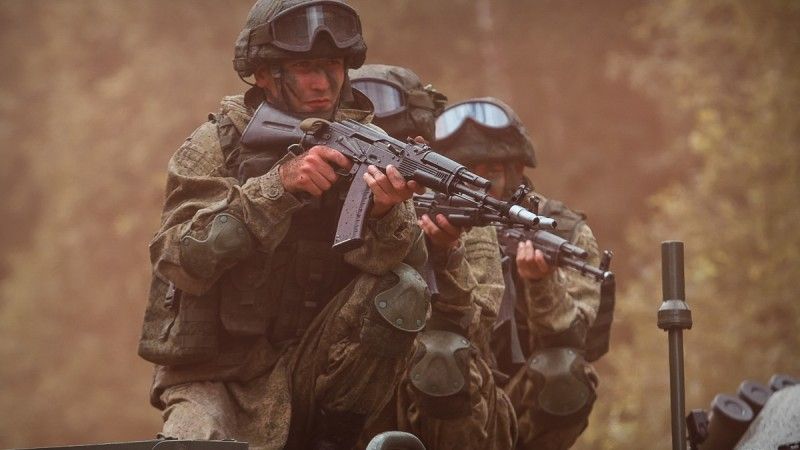
Russia is sending another 120,000 conscripts to military units while again promising that they will not be deployed to fight in Ukraine. Formally, this is part of Russia’s regular conscription system, but the timing, the new year-round model and the recent increase in the authorised size of the armed forces show that the Kremlin is continuing to build a much larger military machine for a long war.
Russia is not launching a new mobilisation in the legal sense. The country still has compulsory military service, and every year young men are called up for twelve months. What has changed is the system around it. Since 2026, Russia has moved to a year-round conscription model. The autumn phase is therefore no longer a separate draft in the old sense, but the period in which another large group of men is physically sent to units. This autumn, around 120,000 conscripts are expected to enter service. Together with the spring phase, this brings the 2026 total to about 261,000.
The official message from Moscow is again reassuring. Russian authorities say the new conscripts will not be sent to combat operations in Ukraine or to the occupied Ukrainian regions which Russia claims as its own territory. This is the line that the Kremlin wants Russian families to hear. It allows the authorities to present conscription as routine military service rather than a direct channel to the war. The problem is that this distinction has already proved weaker than Moscow admits.
The Kursk region showed why the promise is not enough. A conscript does not need to be sent “to Ukraine” to find himself in a war. When Ukrainian forces entered Russian territory in 2024, young Russian conscripts serving on the Russian side of the border were suddenly caught in combat. Some were killed, some were taken prisoner, and some had only limited preparation for the situation in which they found themselves. The Kremlin could still say they had not been sent to fight in Ukraine. For their families, that distinction was of little value.
There is also a second mechanism which matters even more. A conscript who signs a professional military contract can then be sent to the front. This creates space for pressure, manipulation and coercion. Russian independent media and organisations helping servicemen have repeatedly described cases in which young conscripts were pushed into signing contracts. One 2026 case reported by Mediazona concerned a conscript from Khabarovsk Krai who, according to his family, was forced to sign such a contract and later ended up near Mariupol. This is not the same as a court finding, but it shows how the system can work in practice.
See also 

The broader context is even more important. Only days before the autumn phase of sending conscripts to units, Vladimir Putin signed a decree increasing the authorised size of the Russian Armed Forces to 2,441,630 positions, including 1,550,500 military personnel. This is not a minor administrative detail. It shows that Russia is still expanding the formal structure of its armed forces, even as it avoids declaring another politically costly mobilisation.
That also corrects a common mistake. The increase to 1.5 million military personnel did not come from the 2022 decree. The decree signed in August 2022 raised the authorised number of military personnel to about 1.15 million. The level above 1.5 million came later, through subsequent expansion. The September 2026 decree takes the figure even further, to 1.5505 million military personnel.
The autumn conscription phase should therefore not be read as proof that Russia is immediately sending another 120,000 men to the front. That would be too simple. It should rather be seen as part of a wider manpower system. Russia needs soldiers for training units, rear structures, border regions, domestic deployments and the broader military machine that supports the war. At the same time, the boundary between ordinary service and war remains unstable. Kursk demonstrated that geography can change the situation overnight, and contract pressure can move a conscript from compulsory service into combat.

Russia wants to reassure society that the draft remains normal and controlled. Yet the state is expanding the army, absorbing hundreds of thousands of young men into the military system and preserving ways to move some of them closer to the war. In a long conflict, the most important issue is not only how many men are called up today, but how easily the system can turn routine conscription into a reserve of manpower for tomorrow. For the Kremlin, “tomorrow” means another day of war in Ukraine, where it suffers heavy losses without batting an eye.


