












- WIADOMOŚCI
- ANALIZA
Security measures undertaken by international organizations with regard to Central and Eastern Europe - Part II

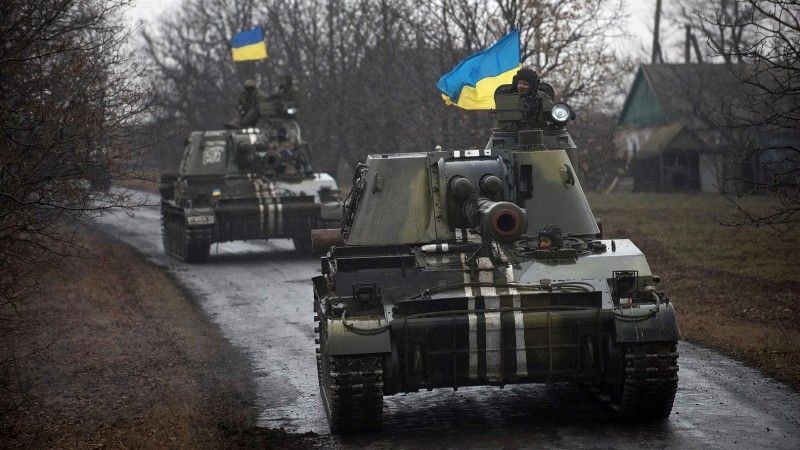
Photo. OSCE SMM
At the level of the United Nations (UN), security measures undertaken with regard to Central and Eastern Europe cover various dimensions of security, including political, military-defense, economic, and social aspects. It should be noted that specific actions may change depending on the current international situation, regional crises, and the priorities of global powers.
The most important security-related activities undertaken by the UN with respect to Central and Eastern Europe include:
- Conflict resolution: The UN engages in mediation efforts and deploys peacekeeping missions in the region, particularly in cases of armed conflict. These missions may involve monitoring ceasefires, supporting peace processes, and assisting in post-conflict reconstruction;
- Humanitarian aid: In the event of humanitarian crises, the UN provides aid such as food, medicines, and shelter. The organization also works to protect human rights in the region;
- Promotion of democracy and the rule of law: The UN is involved in promoting democratic institutions and supporting the rule of law in Central and Eastern European countries. As part of these efforts, the organization offers assistance in building democratic institutions, monitors electoral processes, and supports the development of civil society;
- Arms control and disarmament: The UN conducts efforts aimed at arms control and disarmament in the region. This includes engagement in negotiations on weapons of mass destruction treaties, as well as actions intended to limit the proliferation of conventional weapons;
- Support for economic development: The UN supports economic development programs aimed at increasing economic stability in the region. These initiatives focus on poverty reduction, the promotion of sustainable development, and strengthening countries' capacity to manage their own resources independently;
- Cooperation with other regional organizations: The UN cooperates with regional organizations such as the OSCE, the European Union, and NATO in order to strengthen joint efforts to promote security and stability in Central and Eastern Europe.

In the context of the war in Ukraine, a certain degree of institutional inefficiency has become apparent: the Russian Federation, as a permanent member of the UN Security Council—and moreover one that has chaired its proceedings, has effectively blocked decisive UN action in the Central and Eastern European region.
The OSCE is one of the international organizations focused on promoting security, stability, and cooperation among European states. In the context of Central and Eastern Europe, the OSCE undertakes various security-related measures aimed at supporting stability, democracy, and respect for human rights through the following activities:
- Monitoring elections and democratic processes: The OSCE frequently deploys observation missions to monitor elections and assess whether democratic processes are conducted in accordance with international standards. This serves as a preventive mechanism against potential irregularities and violations of democratic principles;
- Political dialogue and preventive diplomacy: The OSCE engages in political dialogue with Central and Eastern European states, supporting diplomatic processes aimed at resolving conflicts and preventing tensions between countries;
- Support for political and institutional reforms: The OSCE assists Central and Eastern European states in political and institutional transformation processes. By providing expertise, training, and technical assistance, the organization helps build democratic institutions, strengthen the rule of law, and promote good governance;
- Human rights monitoring and protection: The OSCE monitors the human rights situation in Central and Eastern Europe and undertakes actions to protect these rights. This includes combating discrimination, promoting media freedom, supporting civil society, and countering intolerance;
- Disarmament and arms control: The OSCE is involved in efforts aimed at arms control. The organization cooperates with Central and Eastern European states to promote regional and international security through arms limitation measures;
- Countering terrorism and organized crime: Security cooperation also includes counterterrorism and efforts against organized crime. The OSCE works with states in the region through information exchange, training for security services, and joint actions to counter security threats.

From Ukraine’s perspective, international institutions—apart from the undisputed engagement of NATO and the EU—are unable to undertake effective actions to halt Russian aggression. This assessment is confirmed, inter alia, by the lack of response to repeated appeals by President Volodymyr Zelensky calling on the UN to establish an international tribunal to prosecute Russian crimes, to strip Russia of its veto power, or to reform the UN Security Council.
Although the inadequate response to Kremlin aggression in 2014 did not occur on the same scale in 2022, historical experience has led Ukraine to view the effectiveness of international organizations in providing security with skepticism. In the longer term, this undermines the effectiveness of the entire current international security architecture.


