- WIADOMOŚCI
The Pentagon and Lockheed Martin sign a decade-long agreement
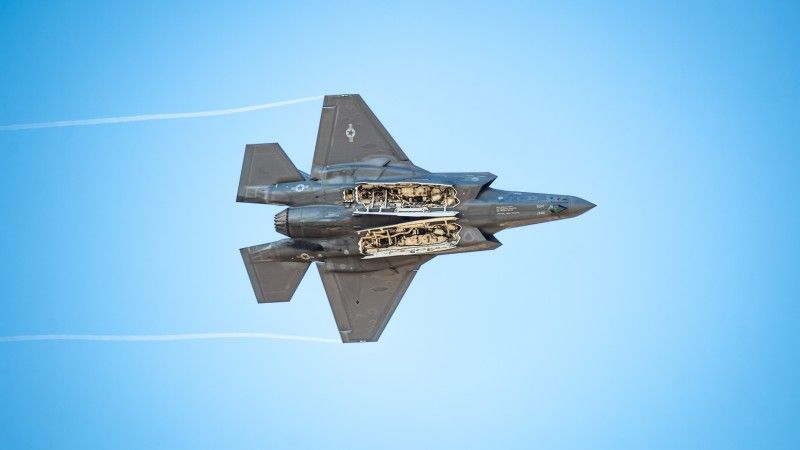
At least 850 F-35 fighter jets for the US armed forces and a minimum of $7 billion in investment from Lockheed Martin’s own funds – these are the key objectives of a ten-year framework agreement between the corporation and the Pentagon. It covers aircraft production, modernisation kits, and fleet sustainment support. Its implementation requires Congressional approval and the securing of funding.
The agreement, announced on 22 October, is intended to provide the manufacturer and its suppliers with a more stable order outlook. The multi-year plan aims to facilitate investment decisions, production organisation, and the security of component supplies. In exchange for such a commitment, Lockheed Martin is to allocate at least $7 billion of its own funds to initiatives supporting the F-35 programme. This amount refers to the company’s investments rather than the value of the aircraft purchased by the Pentagon.
We signed a new agreement with the DOW to build a multiyear contract for the F-35, designed to reinforce our longstanding partnership and save billions in taxpayer dollars. https://t.co/cK1Sdo2PjY
— Lockheed Martin (@LockheedMartin) October 22, 2026
Lockheed Martin assumes maintaining F-35 production at a level of 156 aircraft per year, combined for the United States and foreign customers. The minimum of 850 aircraft specified by the Pentagon applies exclusively to the US armed forces over a ten-year horizon. International orders are expected to increase the total number of aircraft produced under the programme beyond the quantity earmarked for the USA.
The agreement also covers an initial stock of spare parts, along with ten-year deliveries of modernisation kits and sustainment support for the global F-35 fleet. Linking these purchases with aircraft production is intended to allow for the ordering of larger quantities of components on more favourable terms. Lockheed Martin expects this to translate into lower costs and greater availability of parts required to maintain aircraft readiness.
The implementation of the planned purchases will depend on Congressional approval and the allocation of funds. Only then will the F-35 Joint Program Office and Lockheed Martin agree on prices, schedules, and detailed contract terms. The announced minimum of 850 fighters sets the scale of US purchases envisaged in the framework agreement but does not yet constitute a final production order.

Foreign F-35 operators are also expected to benefit from the expansion of production and service infrastructure. Investments in facilities and increased parts availability should facilitate the maintenance of the growing fleet and reduce repair times. The expected result is therefore both the securing of new aircraft deliveries and an improvement in the readiness of aircraft already in service.