












- ANALIZA
- WIADOMOŚCI
Why didn’t Poland shoot down the Russian Mi-8? Next time could be different

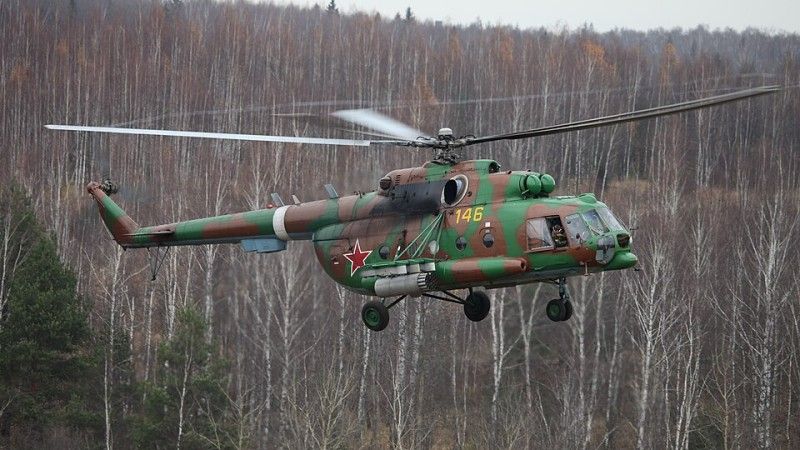
Photo. Vitaly V. Kuzmin / Wikimedia Commons / CC BY-SA 4.0
After every Russian violation of Polish airspace, the same comment returns: “we should have shot it down”. No, it does not work like that. On 23 September, a Russian military Mi-8 entered Polish airspace by around 300 metres and remained there for 42 seconds. This was an incident that required a response, but not the automatic use of force against a manned aircraft. The helicopter was tracked, fighter aircraft were scrambled and ground-based systems remained on alert. Poland’s Operational Command assessed that Russia was once again testing the readiness of our air defence.
A drone, a missile, a transport helicopter and an armed combat aircraft cannot be treated as the same category of threat. The level of danger, the time available to react and the possible consequences are different in each case. In peacetime, the priority is identification, threat assessment, contact with the crew, an order to leave the airspace and, if necessary, interception and escort. Opening fire is the final stage. A violation of airspace does not automatically mean that an aircraft should be shot down.
The Turkish case from 2015 is cited most often. But the situation was fundamentally different. The Russian Su-24 was operating close to the Turkish-Syrian border, directly next to an active war zone and while conducting a combat mission. It was also not the first incident. On 3 and 4 October, Russian Su-30 and Su-24 aircraft had already violated Turkish airspace despite what NATO described as clear, detailed and repeated warnings from Ankara.
Those previous warnings are crucial. Turkey argued that its rules had been clearly established in advance and that Russia had been informed of the consequences of further violations. Prime Minister Ahmet Davutoğlu said after the shoot-down that Moscow had been informed of those rules three times – in Ankara, Antalya and Moscow. NATO later stated that Allied data were consistent with the Turkish account of the airspace violation. At the same time, after the Su-24 was shot down, the Alliance did not call for further use of force, but for restraint and de-escalation.
This is why it is wrong to say: “Turkey shot one down, so Poland should do the same.” In the Turkish case, there was a war zone, an armed combat aircraft, previous violations, growing military tension and a clearly communicated red line. Near Braniewo, the Russian Mi-8 entered Polish airspace by around 300 metres and left again after 42 seconds. Shooting down a manned aircraft in such circumstances would mean killing Russian servicemen and immediately moving to a much higher level of escalation. That is fundamentally different from neutralising a drone or missile posing a direct threat.

This does not mean tolerance. A day earlier, Polish aircraft had reacted to Russian activity over the Baltic Sea, and now a Russian military Mi-8 physically crossed the border. There will be more flights, more approaches to the border and more attempts to violate NATO airspace. The existing pattern on the eastern flank shows that Moscow will continue to test reaction times, procedures, systems, political messaging, public behaviour and the overall resilience of NATO states. The Polish Operational Command itself treats the latest incident as another test of air-defence readiness.
That is why the next stage – if Poland and NATO want to respond more aggressively – has to be clear. If the Alliance wants to retain the option of shooting down Russian manned aircraft during future provocations, it must first define the conditions for the use of force and communicate them clearly to Moscow. This is not about automatically firing at every object that crosses the border. It is about establishing a red line after which Russia knows that the next incident may end with the loss of an aircraft.
Russia will continue to test us, and it will do so in many domains. Our response cannot be panic, but neither can it be passivity. We need defence, deterrence, diplomacy and – once a clearly defined line has been crossed – the readiness to destroy the threat.


