












- WIADOMOŚCI
- ANALIZA
A French nuclear umbrella for Europe?

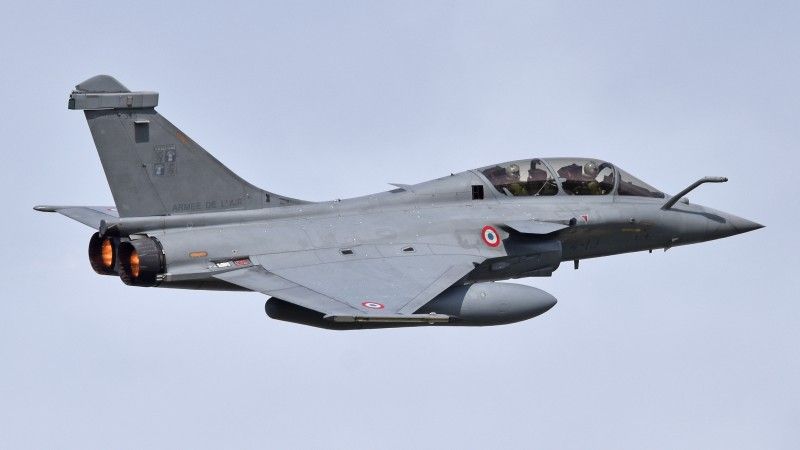
Photo. Alan Wilson from Peterborough, Cambs, UK/Wikimedia Commons
France has a very long history of nuclear deterrence. The subject recurs regularly on the agenda, and allied countries could be placed under a nuclear umbrella. Early conclusions point to the possibility of extending a doctrine that is currently, under American arrangements, limited eastward only to Germany — for example to Poland, the Czech Republic or the Baltic states. Paris could, in practice, use Rafale fighters to demonstrate its capabilities and enter a level of competition that the Russian Federation finds alarming.
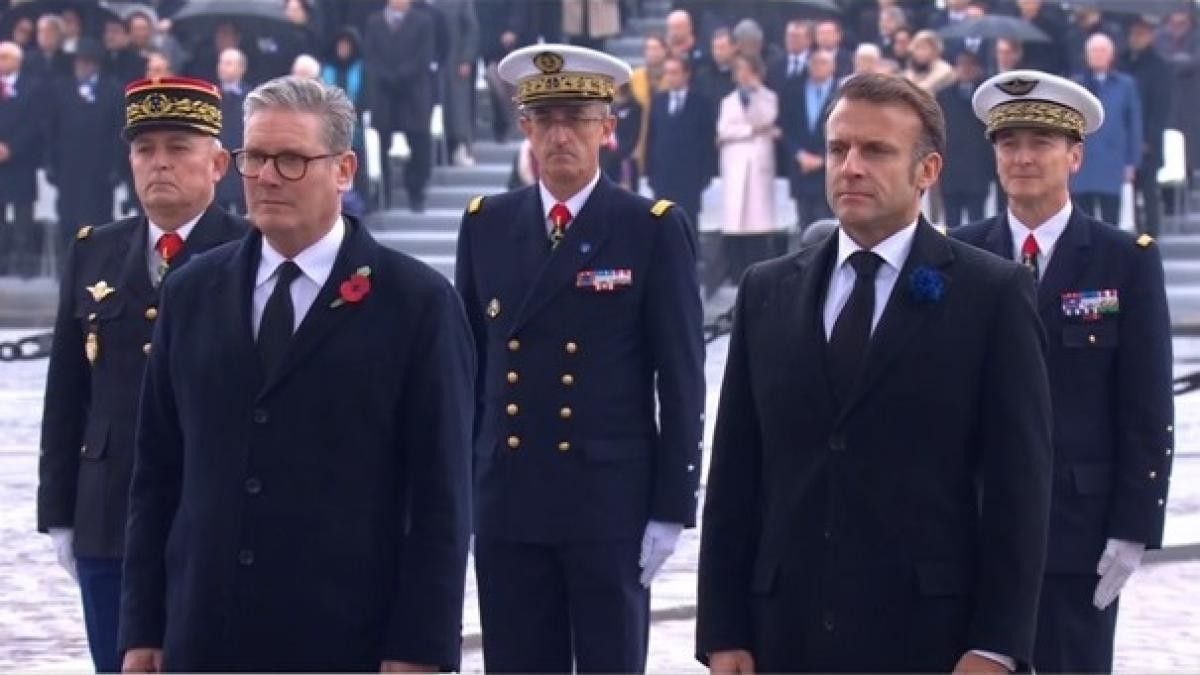
In response to the evolution of Russian nuclear doctrine, notably the lowering of the threshold for nuclear weapons use announced by President Vladimir Putin in November 2024, France’s foreign minister Jean-Noël Barrot described that decision as mere rhetoric and assured that the Fifth Republic would not be intimidated by such actions. President Emmanuel Macron reinforced that message in early March this year, speaking directly of a threat to France and the French people and of the possibility of extending French nuclear deterrence to the rest of Europe. He expressed the hope of reaching cooperation by the end of the first half of 2025 after technical talks with other leaders, including Poland. That, of course, did not materialise, but the door is said to remain open.
Growing doubts in Europe about the durability of American nuclear guarantees have led to a lack of trust in the United States. Moreover, statements and actions by the Donald Trump administration, including increasingly strident rhetoric towards Europe, have strengthened uncertainty over any US willingness to defend allies in the event of nuclear escalation with the Russian Federation. As a result, ideas are emerging of obtaining a „nuclear umbrella” from another party or of creating one’s own weapons.
A brief history
With the start of the atomic age in 1942 and the intensification of nuclear research, demand for uranium rose. For France the solution was found in its former African colonies, principally Niger and Gabon, where deposits exist. France exploited Gabonese uranium deposits from 1957 to 1999, until a fall in commodity prices. Today it imports ore from Kazakhstan, Australia and Uzbekistan, and retains some residual interests in Niger — a relationship that was severed completely after the coup d«état in July 2023. Another major investment is planned in Mongolia, where contracts for uranium extraction have been signed.
France has a nuclear doctrine based on the principle of strategic deterrence, established in the 1960s at the initiative of General de Gaulle. It rests on the idea that any aggression against France would prove too costly for an adversary because of the threat of nuclear retaliation.
Since 1996 France has no longer possessed a classic nuclear triad, having withdrawn the S3 land-based ballistic missiles from Plateau d’Albion. As the term indicates, a nuclear triad consists of three components — sea, land and air — i.e. thermonuclear warhead-equipped missiles launched from submarines, aircraft and land-based launchers.
See also 
The French nuclear arsenal in 2026
In this context, European analysts have begun to consider greater reliance on France’s nuclear potential. France possesses nuclear weapons and retains autonomy in decisions over their use, although its capabilities remain limited compared with the United States arsenal. This means France cannot fully substitute for American deterrence, but it can complement it, notably at the political level and as a deterrent vis-à-vis the Russian Federation.
In 2026 France possesses approximately 290 nuclear warheads, deployed across two main pillars of its arsenal.
- The first pillar comprises M51 ballistic missiles carried by four Le Triomphant-class nuclear submarines. Each submarine has 16 launch tubes for M51 ballistic missiles — 64 launch positions in total — although the number of missiles held at operational readiness is lower than the maximum number of tubes.
M51 SLBMs have a classified range that open sources estimate at roughly 8–10 thousand kilometres. Each missile delivers a multiple-warhead thermonuclear payload in a MIRV configuration, typically carrying between six and ten independently guided warheads; detailed technical parameters and the yields of those warheads remain partially secret.
The four nuclear submarines — Le Triomphant, Le Téméraire, Le Vigilant and Le Terrible — are powered by a K15 reactor with a thermal output of 150 MW. Each vessel is 138 metres long, with a submerged displacement of around 14,300 tonnes, and a crew of roughly 110 sailors. They constitute the principal element of the French sea-based deterrent.
- The second pillar of the French nuclear arsenal consists of ASMP-A cruise missiles carried by Rafale B aircraft of the Air Force and Rafale M aircraft of the Navy. France is estimated to possess about 70 such missiles.
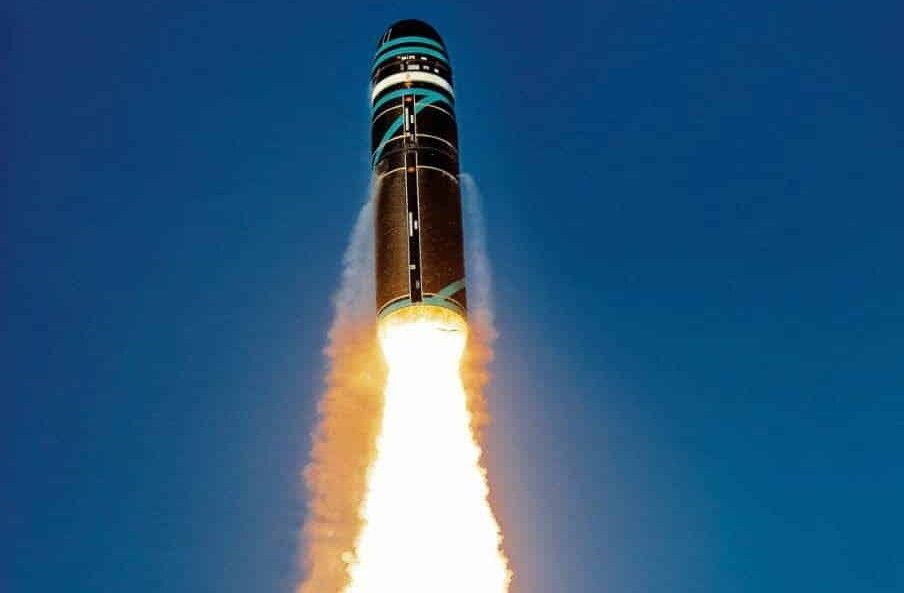
Photo. Arianespace
The fighters are equipped with the ASMP-A (Air-Sol Moyenne Portée-Amélioré) medium-range air-to-surface cruise missile, fitted with the TN 81 variable-yield warhead, adjustable between 100 and 300 kt, and with a range of approximately 500 km. Their use is planned for later stages of an escalating conflict; they can serve as a tactical nuclear strike option.
In November 2023 France tested a modernised version of the M51 ballistic missile, confirming continued development of the maritime deterrent. The new variant is intended to provide extended range, improved penetration of anti-ballistic defences and adaptation to successive generations of warheads, although precise technical parameters remain classified. The M51.3 programme is being developed to preserve the credibility of French deterrence over the long term and to ensure compatibility both with current Triomphant-class submarines and with future third-generation nuclear submarines (SNLE 3G), due to enter service in 2035.
See also

Deterrence = response?
France does not renounce the right to use weapons first, including against states that threaten France’s vital interests, but Paris maintains strategic ambiguity about what precisely constitutes „vital interests”. An attack on, or the threat of an attack against, an allied EU/NATO country is intended to fall within this scenario.
This is the so-called ultime avertissement, in line with French nuclear doctrine, which allows for the execution in self-defence of a single nuclear strike as a final warning. If such a measure failed, the subsequent phase would be a total nuclear strike on the opponent’s principal military targets and, likely, population centres on its territory.
At the same time, there is growing consideration among European states of developing technological capabilities that would allow them to potentially acquire nuclear weapons without immediately deciding to manufacture them. Such steps would not directly violate the obligations under the Treaty on the Non-Proliferation of Nuclear Weapons, but they would strengthen rhetorical leverage in discussions about nuclear armaments. Nordic countries, led by Denmark, are increasingly vocal on this matter.
One of the pillars of French doctrine is strategic independence, including within NATO: France makes decisions about its nuclear arsenal entirely autonomously. The concept of use also encompasses a notion of „final warning” — a critical threat to the French nation in which France could contemplate a limited nuclear strike to demonstrate its resolve.
The French president has said that Russia is taking an escalatory stance and has called on Moscow to exercise restraint. Macron emphasised that Paris will continue to support Kyiv in order to achieve a settlement of territorial issues that establishes respect for international law and provides Ukraine with security guarantees.
Three themes recur in Russian strategic thinking:
- Threats that undermine Russia's political independence (sovereignty) and, consequently, its status as a great power;
- Nuclear weapons and the potential use of them against Russia; and
- Rapid technical-military development that upsets the balance of forces, for example through the stationing of troops close to Russia's borders. Moreover, in November 2024 Russia adopted changes to its doctrine that lowered the threshold and broadened the grounds for the employment of its own nuclear weapons.
Points 2 and 3 fit with President Macron’s current rhetoric, who has simultaneously initiated the deployment of forces on Ukrainian territory, advocated the extension of a nuclear umbrella and supported accelerated rearmament within European Union states, including a French mobilisation of the wartime economy. France adopting such a resolute stance is perceived by Russia as a significant threat.

At present the permanent stationing of nuclear warheads on the territory of Poland or the Baltic states is excluded. Nevertheless, Rafale fighters in Polish airspace are a perfectly realistic option. With an American umbrella remaining over Germany and the United Kingdom becoming more active in nuclear deterrence, NATO’s nuclear deterrence doctrine is beginning to feel tangible.
The debate on European nuclear deterrence shows that states in Europe have started to prepare various scenarios in the event of a significant reduction in the American presence and a change in US rhetoric towards Russia Even if nuclear weapons in Europe today seem like a pipe-dream, recent frictions within NATO have demonstrated that national interest is increasingly dominant. Therefore, if several European states desire nuclear weapons, the discussions and initial steps have already been taken. Perhaps the next move is to go considerably further and start building them.


