












- ANALIZA
- WIADOMOŚCI
A Vision for a Modern NATO

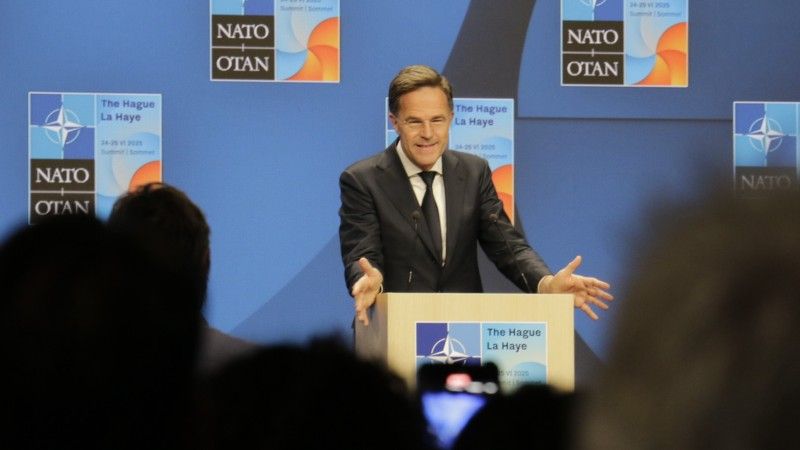
Photo. Jakub Borowski, Defence24.pl
Winston Churchill once pointed out that „there is only one thing worse than fighting with allies, and that is fighting without them.” Today, some Western leaders seem determined to test that proposition. The transatlantic alliance, a bedrock of global stability for more than seven decades, is at a critical inflection point. Anchored by NATO, this partnership defeated Soviet tyranny, secured unprecedented prosperity and upheld democratic values across the West.
Yet the geopolitical landscape of today—marked by a resurgent Russia, a rising China and shifting U.S. priorities—demands a fundamental recalibration of NATO. Failure to adapt risks fracturing the alliance and empowering adversaries.
Russia, although no longer a global colossus, remains prepared to wield military force to advance its interests, as seen in Ukraine. Europe’s strategic challenges extend beyond Moscow, however. The Asia-Pacific region, accounting for 55% of global GDP and growing, has eclipsed Europe’s 17% share and sluggish 1.8% growth. Demographic shifts further diminish Europe’s weight. The volatile Middle East, meanwhile, poses persistent risks, particularly for Europe.
The U.S. is redirecting its focus to counter China. That reduces Europe’s centrality in Washington’s strategic calculus, exposing NATO’s European members« inability to project credible power independently. Despite defense spending three times and GDP 10 times that of Russia and superior military assets—1.9 million active-duty personnel to Russia’s 1.3 million and 2,100 combat aircraft to Russia’s 1,500—NATO’s European members lack the cohesion, capacity and resolve to deter Russia. Economic sanctions and proxy warfare in Ukraine have failed to counter Russian aggression decisively.
Europe’s strategic malaise stems from structural and cultural deficiencies. Decades of prosperity have dulled the urgency that once drove leaders like Churchill or Charles de Gaulle. „My generation never had to fight for this freedom,” a Dutch political leader recently noted. „It was offered to us on a silver platter by people who fought for it with their lives.” Moreover, given its past, military integration under Germany, Europe’s largest economy, remains unthinkable for many, even Germans. Furthermore, defense is a national rather than European prerogative, leading to a hodgepodge of incompatible equipment and duplicative capabilities.
A perhaps bigger issue is the misguided measuring of defense by GDP percentage. Even as NATO considers raising the 2% spending goal to 3-3.5%, such guideposts prioritize budgets over outcomes, yielding neither equity nor efficacy. Under any future geopolitical scenario, U.S. security will be best served if it remains the dominant global military power. The goal must be to have strong regional allies and alliances with partners that share core values, none more significant than NATO. A stronger and confident European NATO is in the U.S.« long-term interest.
To secure NATO’s future, the alliance must transform into primarily a European defense alliance, tasked principally with preserving peace on the continent. This demands a framework in which each member has a clear defense mission—not only a financial target—and a budget tied to capability. The U.S. must remain as architect and anchor, given that no European member can play that role.
Here is a six-point plan for NATO leaders set to meet this month in what could be a pivotal summit:
- Strategic Realignment – Redefine NATO's mission to address modern hybrid warfare threats—such as cyber, border security and regional aggression.
- Tailored Missions – Assign each European and Canadian member specific roles with budgets tied to outcomes, not arbitrary GDP targets.
- Alliance Adjustment Fund – Mandate an additional 0.5% of GDP, pooled under NATO command, to bridge mission-specific capability gaps.
- U.S. Leadership – Washington should provide coordination, intelligence and reinforcement to bind the alliance and share military planning data, so NATO can be compatible with U.S. combat commands. The supreme commander of NATO remains an American.
- Flexible Ambition – Allow states like France and the UK that have broader interests to exceed baselines, inspiring others to bolster contributions.
- Industrial Integration – Standardize procurement and deepen transatlantic defense industry base collaboration, reducing redundancies and enhancing interoperability.
The stakes are existential. A reinvigorated NATO, cemented by U.S. commitment and deepened European integration, will align resources with strategic priorities. Without decisive action, drift or miscalculation could unravel the alliance and undermine both European and global stability.
Author: Joseph Schneider grew up in Communist Romania, graduated from West Point, served in the Green Berets during the Cold War, earned an MBA from Harvard University, worked as a defense consultant and is an entrepreneur.


