












- ANALIZA
- OPINIA
- WIADOMOŚCI
Audit or amnesty? Ukraine’s peace plan revisions trigger debate over accountability

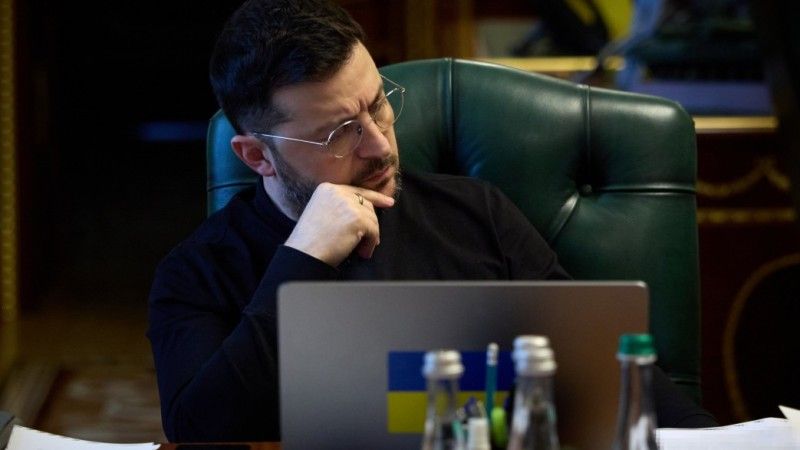
Photo. president.gov.ua
According to The Wall Street Journal and The New York Post, the original version of the U.S. 28-point peace plan for Ukraine contained a provision for a full audit of all international assistance provided to that country.
That mechanism was intended to increase transparency, counter corruption, and allow the West to precisely verify how the funds transferred to Ukraine were being used. Later reports, however, indicate that this key provision was removed in a newer version of the document and replaced with a clause providing a „full amnesty for actions during the war” for all parties — including Russia.
This would mean that Russian crimes, including those committed in Bucha, Irpin and other sites of mass killings, could remain without any criminal liability. Kyiv Post and The Kyiv Independent, among others, reported this information, citing anonymous U.S. sources. RBC-Ukraine also states plainly that „instead of an audit of international assistance, full amnesty for actions during the war was proposed.”
Other Ukrainian media paint the same picture. Censor.NET reports that it was Ukraine that struck the mandatory audit clause from the American plan. In its place an amnesty clause appeared. Similarly, LB.ua says the newer version included wording on a „full amnesty for one’s actions during the war.” The aforesaid outlet also mentions that Rustem Umerow was allegedly overseeing part of the negotiations, a claim the minister vehemently denies. Ukr.net, in an article titled „Full Amnesty Instead of an Audit: Kyiv Made Changes to the American Peace Plan,” reports that the Ukrainian side removed the audit requirement, emphasizing a possible connection between that decision and an ongoing corruption scandal. Gazeta and Zhitomir-Online state outright that Kyiv „caused the audit requirement to be removed” — implying it actively lobbied for the deletion of that point.
All of these sources agree. The original draft contained a clause mandating a comprehensive verification of foreign supplies, whereas a later version replaced it with a provision on „full amnesty for actions during the war.” In practice, this means abandoning a robust control mechanism in favor of a solution critics describe as political „sweeping under the rug.”
The dispute also concerns who is responsible for the change. The WSJ and media citing it suggest that the correction was introduced by the Ukrainian side during talks with Americans. Some accounts point to Rustem Umerov as the person who accepted or proposed the new wording — which the minister firmly denies, saying he did not approve any points and that the reports are unverified.
Some media outlets — especially The Kyiv Independent — link the matter to ongoing corruption investigations in Ukraine, including the high-profile so-called Mindichgate at the state company Energoatom and allegations against individuals close to President Zelensky. The scale of the alleged abuses exceeds $100 million, and Mindich himself fled to Israel via Poland. In this context, the question arises whether the weakening of anti-corruption provisions in the peace plan stems from parts of the Ukrainian elite fearing their own criminal liability.
More broadly, reports that an audit was replaced by amnesty raise serious doubts about the transparency of spending international assistance — particularly in net-contributing countries like Poland. Critics warn that such a change could undermine public trust and fuel debates about continued funding for Ukraine.
If the leaks are taken as credible, the original clause on a full audit signaled that fighting corruption and ensuring transparency remained a U.S. priority. Removing that mechanism and replacing it with „full amnesty for actions during the war” looks, from a transparency standpoint, like a step backward — a relinquishment of firm safeguards in favor of a politically convenient but far less transparent solution.

From the donors perspective — including Poland’s — removing the audit clause symbolically weakens the message of „zero tolerance for corruption.” Even if other control mechanisms exist, politically it appears that the Ukrainian side sought to reduce oversight. From Kyiv’s point of view, however, one can understand concerns that a full audit could be used politically, expose weaknesses on both the Ukrainian side and among Western suppliers, and, in wartime conditions, lead to individual criminal proceedings. For that reason, a „broad amnesty” might seem to some elites the safer option.
In Poland, where the government plans to provide Ukraine with another $100 million (about PLN 368 million) in military aid, the whole affair evokes particular emotions. News that the U.S. peace plan abandons a full audit in favor of amnesty only intensifies them — especially since Poland has already provided hundreds of millions of zlotys while Kyiv is negotiating less transparent rules for accounting for assistance.
All these reports — about the deletion of the audit, the introduction of broad amnesty, and the discrepancies between Ukrainian official statements and U.S. sources — form an image of growing uncertainty over the use of international assistance.
Combined with the fact that Poland has pledged $100 million to Ukraine, this raises questions about the control mechanisms over the funds and whether the countries financing the war can count on full transparency from the Ukrainian side. Such a context naturally heightens tensions and fuels calls in Europe for a review or greater conditionality of aid to Ukraine — even though key elements of the peace plan remain unofficial and are based on leaks.


