












- WYWIADY
- POLECANE
- WAŻNE
Autonomy or alliance? Poland between the United States and Europe

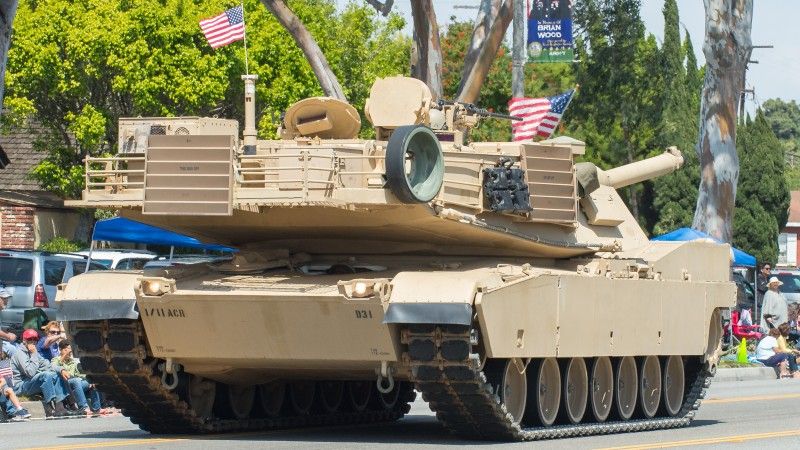
Photo. mark6mauno/WIkimedia Commons
Poland is strengthening its position as a key U.S. partner in armaments procurement. At the same time, tensions are growing between the concept of European autonomy and transatlantic relations. Is this a zero-sum game, or rather an attempt to reconcile the interests of Europe, the United States and Poland?
The debate on the direction of Poland’s security policy is increasingly focused around two axes: cooperation with the United States and Europe’s growing ambitions to build its own capabilities. Poland is currently at the centre of this discussion, simultaneously strengthening ties with Washington and operating within European structures. On the one hand, this creates political tensions at the domestic level (government–president), but on the other it opens space for developing a model of cooperation that is not based on choosing one ally over another. Smart foreign policy is the key here.
Dr. Aleksander Olech (AO): In recent years, Poland has opted for very extensive armaments procurement deals involving the United States, ranging from Patriot and HIMARS systems, through Abrams tanks, to F-35 aircraft. What explains the scale of this defence cooperation with the U.S., and what are its main advantages from the perspective of Poland’s security?
Damian Ratka (DR): This cooperation results from several key factors. On the one hand, the United States remains the world’s largest manufacturer of modern military equipment, offering systems regarded as among the most technologically advanced – and in many categories virtually unrivalled, such as the Patriot PAC-3 system or the F-35 multirole aircraft. These are obvious arguments. However, there are also less visible factors that shape this cooperation to an equally significant degree.
The fact is that after the end of the Cold War, the collapse of the Warsaw Pact and the Soviet Union, Western states made a number of poor decisions. One could even argue that Western Europe committed a series of catastrophic mistakes with serious consequences for defence capabilities. These included, among other things, far-reaching reductions in the size of armed forces, cuts to active military units, and the near-total elimination of equipment reserves.
Of course, these practices did not bypass the United States, but American decision-makers nevertheless retained common sense, which is why the US still maintains relatively large strategic equipment reserves and, crucially, sufficiently large defence-industrial production capacity.
A good example is Poland’s acquisition of M1 Abrams tanks. The first contract, for 250 M1A2 SEPv3 tanks (the most modern variant currently in production), was signed on 5th April, 2022. The second contract, for 116 used M1A1FEP tanks (ex-U.S. Marine Corps), was signed on 4th January, 2023. Deliveries of the 366 tanks will be completed by the end of 2026, meaning in just four years. In addition to the tanks, both contracts covered the purchase of 49 M88A2 vehicles, 25 M1110 JAB and 25 M1150 ABV systems, an extensive logistics and training package, and the total cost amounts to USD 6.15 billion.
Given that the United States is delivering tanks not only for its own armed forces but also for allies, production volumes remain very high. Even so, the US is able to deliver significant numbers of these systems in a relatively short time without using its full production capacity. I would even cite data published inARMOR Magazine in November/December 1996. The article Building Tanks at Lima” by Captain Todd Tolson states that by the end of 1986, the Joint Systems Manufacturing Centre plant (formerly the Lima Army Tank Plant) in Lima, Ohio, had reached a peak production rate of 120 tanks per month in peacetime.
If we compare U.S. production capacity with the capabilities of the only tank manufacturer currently operating in Europe – the German company KNDS Deutschland (formerly Krauss-Maffei Wegmann) – the difference is clear. The company is able to deliver to customers only a single tank battalion (depending on the organizational structure, 44 to 58 tanks) in around 6–8 years. For example, Norway ordered 54 Leopard 2A8 tanks in 2023; the first tank will be delivered in 2026 and deliveries are scheduled to be completed in 2031.
There is another important reason why Poland decided to buy tanks in the United States: the philosophy of maximizing soldier survivability. American M1A1 and M1A2 tanks provide the best protection for the health and lives of serving soldiers among all series-manufactured designs.
Therefore, defence procurement and cooperation between Poland and the United States are beneficial for both sides at many different levels.
AO: Looking ahead to the modernization of the Polish Armed Forces, what other weapon systems or technologies could Poland still acquire from the United States? In which areas could this cooperation deepen further?
DR: Before moving on to potential further procurement processes, I would like to return once more to the issue of Poland’s purchase of American tanks. In the case of this programme, an opportunity window has opened that could be beneficial in a win-win formula for both Poland and the US.
Under the agreements concluded between General Dynamics Land Systems and the Polish Armaments Group, a Regional Service Centre for American heavy equipment is being established in Poland at the Military Automotive Works \[WZM\] in Poznań.
Moreover, GDLS has concluded additional agreements with eight Polish companies, which are being integrated as subcontractors and suppliers into GDLS’s global supply chain and are gradually beginning production of 52 different Abrams tank components.
This is a favourable situation for both sides, because Poland is a partner unlike the existing Abrams users. With its own extensive defence industry, Poland can support not only the operation of US Army equipment in Europe, but also support the US military, and the American defence industry both in production and in design work.
This is therefore an opportunity window that both sides should use. There is still room for further MBT acquisitions for the Polish Armed Forces, although the optimal solution would be to implement them in a Polish-American coproduction formula, with a simultaneous expansion of technology transfer. Within this programme there are many possibilities for further strengthening cooperation that is beneficial to both sides.
This cooperation could also be deepened in other areas, for example aviation, and not only in the F-16 modernization programme or the purchase and introduction of F-35 aircraft. Cooperation could also be expanded within helicopter programmes, whether attack aircraft such as the AH-64 Apache or transport helicopters. Poland will need heavy transport assets such as the CH-47 Chinook.
Another important area is cooperation in the unmanned systems domain, which could be mutually beneficial. This stems from the significant experience of the Polish industry in developing smaller reconnaissance and strike systems.
AO: In public debate, we often talk about what Poland buys from the Americans. Are there, however, areas in which the Polish defence industry could offer something to the United States or become more deeply embedded in the supply chains of the U.S. defence sector?
DR: Yes, absolutely. Thanks to the fact that Poland has a fairly well-developed defence industry, the United States can benefit from this cooperation. A good example is the development of a self-propelled mortar based on the AMPV (Armoured Multi-Purpose Vehicle) platform. Poland could offer the combat-proven M120 Rak system, tested in Ukraine, or its development version designated M69, developed by Huta Stalowa Wola (HSW).
The Rak system is a 120 mm mortar loaded by an autoloader, which makes it highly automated, gives it a high rate of fire, and allows it to be integrated with wheeled platforms (for example, Stryker), tracked platforms (the aforementioned AMPV platform), and even naval platforms or stationary artillery positions.
That is one possible scenario. Another, less obvious one, is cooperation with HSW in the production of gun barrels or complete gun assemblies. HSW already holds a license for Rheinmetall technology and can manufacture Rh120 tank gun barrels, from which the Abrams tank’s M256 gun is derived.
Thus, HSW could produce in Europe, for the needs of the Polish Armed Forces, the U.S. Army or the Romanian Army, barrels or complete M256 guns, supporting the United States in rapidly replenishing stocks. The possibilities for cooperation do not end there.
BAE Systems offers a straightforward modernization of the M109A7 self-propelled howitzer under the designation M109-52, under which it proposes replacing the M284 gun with a 39-caliber barrel with a new 52-caliber gun, which is today the NATO standard.
BAE Systems« current offer assumes the use of the Rheinmetall-produced L52 gun. Alternatively, HSW could propose its own solution – the gun used in Krab self-propelled howitzers, which has been combat-tested in Ukraine. This system is distinguished by high accuracy and, equally importantly, a very long barrel life and broad compatibility with 155 mm ammunition from various manufacturers.
It should also be remembered that for some time now the Polish company Nitro-Chem has been producing explosives for the US armed forces, as well as U.S. allies. Poland is therefore an important link in the global US supply chain and alliance structure.
AO: In Europe, the SAFE programme and the broader discussion about strengthening the European defence industry have recently emerged. How could the United States engage in such initiatives or cooperate with them?
DR: One possibility that would be beneficial not only industrially but also politically is the establishment of joint ventures between American and Polish companies. Within these joint ventures, with appropriate technology transfer and production scale, the American industry could benefit from EU subsidies.
The political factor plays an important role here, because cooperation based on partnership principles would not only be accepted and viewed positively by political elites, but, equally importantly, also by public opinion, whose mood can influence decision-makers.
The US already has a foothold – the aforementioned Abrams tank procurement programme. With appropriate support from the US government, and by convincing the Polish government to expand it, this could become the first step toward establishing further joint ventures and broadening multidomain cooperation.
It should be remembered that Polish society is extremely sensitive to issues such as fair treatment of Poland as a partner, which is why industrial cooperation that enables Poland to develop is so important. Good examples are countries such as the Republic of Korea, Japan, and Israel, which have benefited from cooperation with the US, developed thanks to it, and are valuable allies. Poland shares these aspirations as well, which is why it has taken on a heavy burden for many years in order to achieve this goal.
Another area in which the U.S. could participate is licensed production of selected types of weaponry, which Poland has long been seeking, although negotiations are still ongoing. First are the 30 mm Bushmaster Mk44S chain guns, manufactured by Northrop Grumman.
Poland has long been seeking a license for these guns, which would also be beneficial for the U.S., given the potential demand. This concerns more than 300 Rosomak armoured personnel carriers with Hitfist-30P turrets, 128 Rosomak vehicles with ZSSW-30 turrets, and 80 Rosomak-L vehicles, also with ZSSW-30 turrets.
In addition, there is demand for more than 1,000 Borsuk infantry fighting vehicles and another 700 Ratel heavy infantry fighting vehicles. In total, therefore, we are talking about 2,208 vehicles armed with American Mk44S guns. Unfortunately, the lack of a license may prompt the Polish government and defence industry to look for alternatives, such as Leonardo’s Italian X-Gun or German solutions such as the Rheinmetall MK30-2/ABM gun.
The situation is similar with the further acquisition of M142 HIMARS launchers. At present, signing additional contracts is being held up by protracted negotiations over licensed production of GMLRS missiles for these launchers. The American industry may also lose out here, because the lack of a licensing agreement could force the Polish government and industry to choose alternatives such as Korean systems or those of other manufacturers.
AO: At the same time, critical voices are also being heard in the US regarding European programmes such as SAFE or efforts to build greater European industrial autonomy. Why does this cause such concern in Washington, and why not establish production in Poland?
DR: In my view, the problem is a lack of synergy between the United States and Europe. During the Cold War, such synergy and cooperation existed, and as a result both US and European defence industries developed. In many cases, these industries also cooperated, exchanging experience and technology.
Today, some of the stronger European states speak frequently about strategic autonomy, but in my opinion that is also a mistake, stemming from a failure to understand that today we are not only dealing with conflicts between states, but also between civilizations. The United States, Canada, the EU member states and NATO members are all part of the same Western civilization and should cooperate to protect our existence, security and interests.
Today China is the greatest existential threat and rival from the US perspective. China itself constitutes a separate civilization, but in Europe it is often forgotten that China is also a threat to Europe. Germany is an excellent example, losing the battle in the automotive market to China. Germany is, of course, also a victim of its own mistakes, such as cooperation with China and the relocation of the automotive industry to China.
Even so, relations between the US and Europe can be improved. As I mentioned earlier, Poland is a valuable U.S. ally with ambitions to develop. By establishing joint ventures with the Polish industry in many different domains, the US can gain not only broader access to the European market, but also improve political relations. In addition, such action, as part of broader soft power, can positively affect the image of the United States in Europe, especially in Poland and the region.
From the Washington’s. perspective, it would be worthwhile for DC as well to make a gesture of goodwill toward Europe and attempt to negotiate the inclusion of American industry in the SAFE programme. This could be done on terms similar to those under which Canadian industry has been admitted to SAFE.
Cooperation and good relations between the US and Europe are in the best interests of all of us, as allies and members of the same civilization, especially in such uncertain and unstable times as today.
AO: Do the United States remain absolutely key to Poland today in the area of security, especially in the context of growing polarization in US-European relations? How should Poland position itself in this situation?
DR: Good relations between Washington and Warsaw can influence relations with Europe. If this cooperation were well designed – if I may use that term – it would be based on partnership relations and a win-win philosophy. It could become a model for building US relations with other European states.
It should be emphasized here that the European Union should not be treated as a federal state, because it is not one. The EU consists of many nation states with different languages, cultures, mentalities and interests. Paradoxically, for the U.S. the most valuable partners are located on the so-called eastern flank of NATO, namely the countries of Central and Eastern Europe, with Poland as the strongest representative of these states.
The countries of Central and Eastern Europe face an existential threat from the Russian Federation, which is why they seek U.S. support as the leader and strongest member of NATO. This does not mean that countries such as Poland do not want to develop their military capabilities; on the contrary, they are fully aware that to be valuable allies, they must develop their capabilities.
Washington must nevertheless remember that these states have different potential, and the development of their own capabilities, as well as the pace of that development, depends on many factors and must be spread over time. Hence the need for American assistance. However, this assistance must be directed not only toward the expansion of military potential, but also industrial and economic potential, which will help maintain armed forces commensurate with each country’s capabilities.
As we know, Poland has done more than any other country in the region; one only needs to look at the purchases made in the U.S., the Republic of Korea, and the Polish defence industry. Let us mention here the largest and most expensive acquisitions: 726 main battle tanks (366 M1A1/M1A2 from the U.S. and 360 K2GF/K2PL from Korea), 430 self-propelled howitzers (212 Krab and 218 K9A1), 310 rocket launchers (20 HIMARS, 290 Homar-K), 96 AH-64E Apache attack helicopters, 32 F-35A multirole aircraft, and 3 Wicher-class missile frigates (Miecznik programme) – and these are only the largest programmes.
Poland is therefore a valuable ally, taking on the burden of shared work for security within NATO, and deepening cooperation between Washington and Warsaw is in the interests of both capitals.
Thank you for the conversation.


