












- ANALIZA
- WIADOMOŚCI
Behind the scenes and prospects for a thaw in Polish-Syrian relations

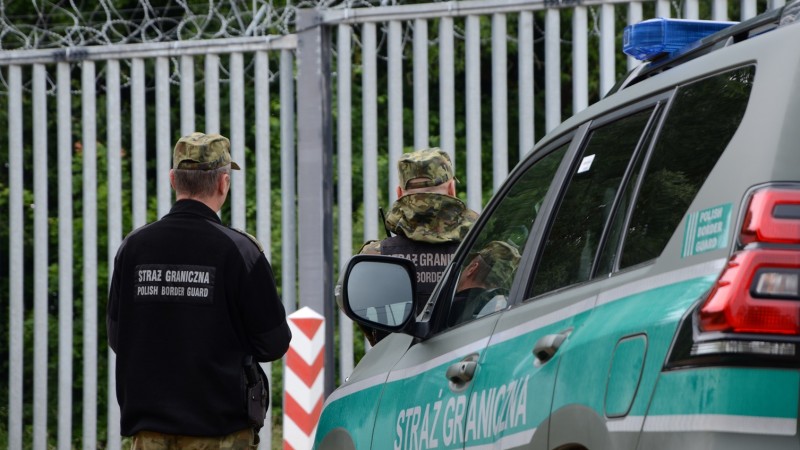
Photo. @Straz_Graniczna / X.com
After years of diplomatic freeze and the isolation of the regime in Damascus, European Union member states, including Poland, are gradually but noticeably redefining their policy towards Syria. Although the official narrative remains cautious, there is growing behind-the-scenes recognition that establishing working contacts with the central government is necessary from the perspective of the hard-security interests of Central Europe. For Warsaw, the main catalyst for change is not economic interests, but the need to manage the migration crisis and obtain critical intelligence.
The evolution of Poland’s approach to the Syrian Arab Republic forms part of a broader trend initiated in Europe by countries including Italy, Greece, and Cyprus. Faced with pressure from smuggling routes, these states have concluded that ignoring the fact that President Bashar al-Assad remains in power is no longer a useful foreign-policy instrument. From Warsaw’s perspective, the persistent destabilisation of the Levant and the absence of communication channels with Damascus generate direct threats to the security of NATO’s eastern flank, particularly through hybrid migration routes.

Migration diplomacy and identity verification
The main factor driving the cautious resumption of contacts at the consular and working levels is the issue of controlling population flows. Polish border services and the Ministry of the Interior and Administration are struggling with the identification of thousands of people attempting to cross the Polish border illegally, a significant proportion of whom claim Syrian citizenship to avoid deportation.
The absence of formal relations with the central authorities in Syria has so far prevented effective verification of documents and the implementation of readmission procedures (the return of migrants to their country of origin). Establishing unofficial administrative cooperation gives Polish services access to Syrian civil registries. In exchange for the gradual recognition of passports and documents issued by Damascus, Warsaw gains a tool enabling it to effectively distinguish Syrian nationals from economic migrants from other countries in the region, significantly streamlining deportation procedures and relieving pressure on the asylum system.
Intelligence cooperation: terrorism and combating smuggling
The second, considerably more discreet pillar of the emerging cooperation is the intelligence sphere. The Syrian security apparatus possesses one of the most extensive databases in the Middle East concerning smuggling networks, organised criminal groups and, most importantly, individuals linked to jihadist extremist groups.
For Poland’s Intelligence Agency (AW) and counter-terrorism services, this information is of critical value. Syrian services can provide precise data on smuggling routes organised by groups operating from Turkey and the Middle East, which subsequently feed into smuggling channels along the Balkan and Eastern European routes (particularly the Belarusian corridor). Information exchange in this area is strictly transactional—Damascus provides operational data while expecting, in return, a softening of Poland’s position in EU forums on sanctions issues and support for stabilisation programmes.
Demining and dual-use infrastructure
Although the EU embargo on arms and advanced military technologies for Syria remains in force, the Polish defence and technology industries are seeking niches that would allow them to establish a foothold before sanctions are potentially lifted in full in the future. The main area of interest is not offensive systems but broadly understood stabilisation and engineering technologies.
After more than a decade of civil war, Syria is one of the most heavily mined territories in the world. Polish capabilities in the production of demining equipment (e.g. unmanned engineering platforms), ground-penetrating radar, and CBRN contamination-detection systems constitute an attractive offer that can readily be incorporated into international humanitarian and stabilisation assistance frameworks. The same applies to supplies of mobile water-treatment stations and emergency communications systems. By engaging in the reconstruction of critical “soft security” infrastructure, Polish entities can build relations with the Syrian government and local decision-makers, laying the groundwork for future broader economic expansion in the region.
Observing the gradual thaw in relations between Warsaw and Damascus, we must separate moralising from cold geopolitical analysis. For more than a decade, the West based its Syria policy on the assumption that the current authorities would inevitably fall. That assumption proved incorrect, and clinging to it indefinitely now brings losses exclusively to European states. The absence of Western diplomatic presence in Syria has not weakened Damascus but merely pushed it into complete dependence on Russia and Iran, giving them a monopoly over shaping the security architecture in this part of the Mediterranean.

Deciding to establish working and intelligence contacts with Syria represents a return to the classical concept of realpolitik. The Polish state, whose territory is the target of organised migration operations, cannot afford the luxury of ignoring states that are key to the dynamics of this process. The Syrian state apparatus, regardless of the assessment of its domestic methods, possesses instruments necessary to manage population flows and combat cross-border terrorism. Establishing limited, pragmatic cooperation in these areas is evidence of the maturity of Polish diplomacy, which can define and protect its own national security interests, even when this requires difficult compromises on the international stage.


