












- WIADOMOŚCI
- ANALIZA
China’s rise still depends on the West

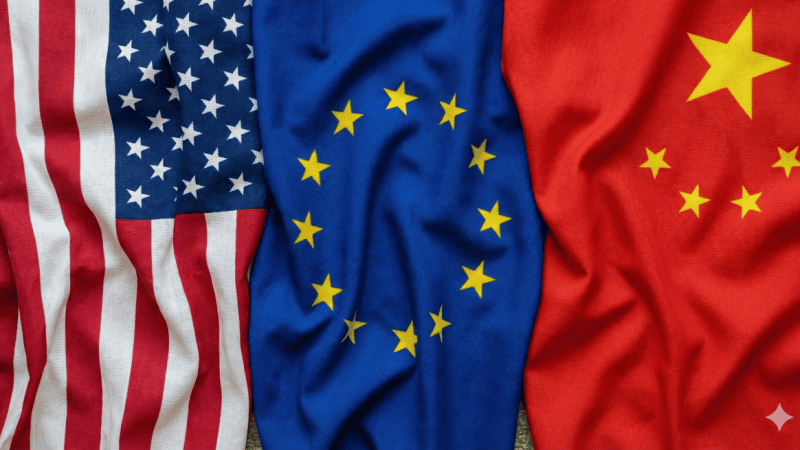
China presents its economic success as proof that its political and industrial model is superior to the systems built by the United States and Europe. The problem is that Beijing’s rise has depended heavily on access to Western markets, technologies and capital, while its current policies are steadily weakening the very international order that made this rise possible.
As Enrico Fardella and Sergey Radchenko argue in Foreign Affairs, China did not build its power outside the existing international system. It first used Soviet support and later benefited from integration with the Western-led economy. Since the reforms launched by Deng Xiaoping, access to foreign markets has allowed Beijing to develop its industry, accumulate capital and transform itself into a global military and economic power.
China now believes that the West is in structural decline and that Beijing can gradually replace the American-led order without entering into direct confrontation. This conviction is strengthened by China’s dominant position in important supply chains and by the political divisions visible between the United States and Europe.
However, the Chinese model continues to depend on weak domestic consumption and very high industrial production. Chinese households receive too small a share of national income, while companies and local authorities retain much greater resources. The result is excess production that must be sold abroad.
This is becoming an increasingly serious problem for Europe. As the United States reduces its dependence on Chinese imports, more Chinese goods are being redirected towards the European market. Cheap and often state-supported production places European industry under growing pressure and may accelerate deindustrialisation, unemployment and political tensions.

Beijing is creating its own resistance
China continues to describe this situation as the result of its competitiveness and innovation. It does not want to acknowledge that other countries cannot indefinitely absorb Chinese surpluses while losing their own industrial capacity.
This approach is already producing a response. The United States and the European Union are expanding trade-defence instruments, investment screening and policies intended to reduce dependence on Chinese supply chains. Similar measures are also appearing in India, Brazil, Turkey and Indonesia.
Europe remains more vulnerable than the United States because its members have different economic interests. Some countries depend heavily on trade with China, while others are more concerned about the loss of domestic production. Beijing can use these divisions to weaken a common European response.
Finally, China’s greatest problem may not be how to overtake the West, but how to continue growing when Western markets are no longer willing to absorb its excess production. Beijing can delay this moment, but it cannot avoid it indefinitely. If China refuses to increase household consumption and rebalance its economy, its pursuit of industrial dominance may ultimately undermine the foundations of its own success.


